The social giant Facebook always wanted to be a place to talk about live TV while users are watching live TV, but it was never that good in delivering such ability. On January 20th, 2016, Facebook announced a new feature under its sleeves to help it out, and that is tackling the sports arena with a new platform called Facebook Sports Stadium.
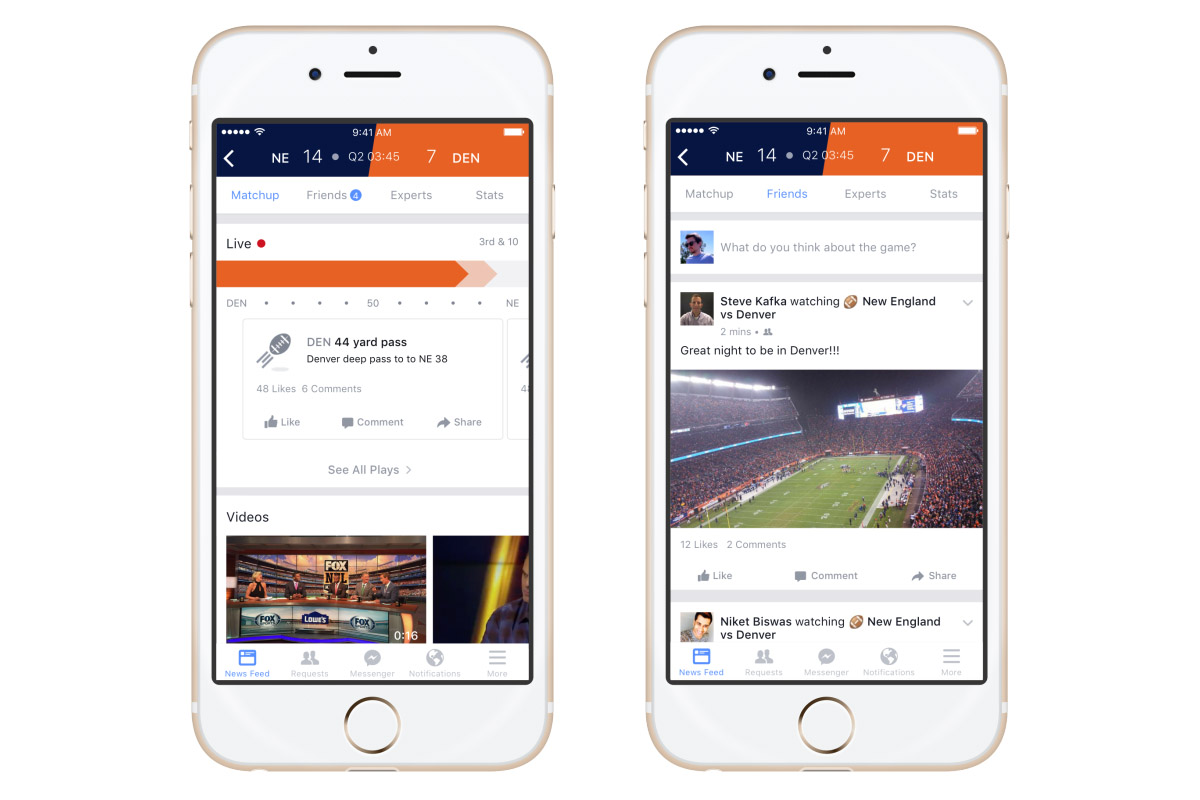
As Facebook calls it, the feature is "a place devoted to sports so you can get the feeling you're watching the game with your friends even when you aren’t together." The Sports Stadium is providing real-time updates on games, popular posts from fans, statistics and commentaries from experts.
With the feature, Facebook wants to become a place where users can go to follow major sporting events, stats, videos and contents from other people that are following. Because it's built upon Facebook, the feature is integrated with the service.
One tab that houses the things Facebook friends are saying about the game; and a separate tab for things that "experts" (verified Facebook users) are saying.
"With 650 million sports fans, Facebook is the world’s largest stadium," wrote Facebook announcing the feature.
At the moment of the launch, Facebook didn't have a content partner yet. But it is licensing the data data from a company called Sportradar.
With Facebook entering the real-time engagement ins sports, the company is entering the already crowded market space where other services have thrived in providing such features. And when Facebook wants to be the real-time source of information delivery, people are already having one good service they can rely on. And it's called Twitter.
What makes Facebook's Sports Stadium compete directly with Twitter is because Twitter's key selling point is creating social conversation around live TV. Twitter has done this a lot longer than Facebook, and it's doing it very well.
A Battle For Real-Time Games And Real-Time Conversations
Twitter is somehow undisputed in terms of real-time feed. And what Twitter users and journalists call "Sports Twitter", has been around to bring sports on-the-go. For many sports fans, Twitter is already the platform they rely on for real-time, instant commentary and analysis about games as they watch.
Facebook may have a lot more to say about these things, but Twitter's feed is a lot more straightforward.
But with the new feature, Facebook clearly wants to make this a more of a priority. The company announced a partnership with Nielsen to start incorporating user conversation data into Nielsen's social TV ratings. Facebook is trying to convince advertisers that spending money where people are talking about live TV is just as valuable than advertising on TV.
"[It's a complement] to the television experience and even the in-game experience," said Dan Reed, Head of Global Sports Partnerships at Facebook. "It provides information about the game, but it also provides you that vital conversation and interaction around the game which we think is really critical to consuming live sports."
Facebook believes that its Sports Stadium will benefit everyone from contents owner, broadcasters to publishers. To make that happen, Facebook is entering the competition by relying on its influence, not its real-time ability.
With its big influence across media, channels and society, Facebook has the potential to attract more sports influencers and journalists from other platforms (ie. Twitter) to share their insights during a game by providing incentive to those influencers, and giving them dedicated sports hub. This influencers can then help Facebook in bringing a lot more users from competitors.
Twitter is all about real-time engagement. It has been great in doing that and it never fails to do so. This is Twitter's key point that made it comparable to even Facebook in terms of bringing actual data that people actually care. Snapchat also offers Live Stories to highlight major sporting events.
Facebook is not just competing with Twitter or Snapchat. It's major jump to sports is making it enter a crowded field of other competitors that also feature real-time sports chatter. From GameOn, Bigger, ESPN to Thuzio, Crowd Cam, Whistle Sports, Periscope and CBS among others. Almost every one of these services have some kind of involvement from a pro or former pro athlete.
Even Instagram which is owned by Facebook is also reliable by some sports league.
They all want to lure more people from the TV screens by supplementing them more related contents that people really want to see.
Read: Facebook In Allowing Live Broadcast: Aiming To Be The Direct News Source
Even if some might say that sports fans who love Twitter are liking Twitter for its short 140-character bursts it is known for, and other services that have proven themselves well, Facebook has an instant competitive advantage simply because of its sheer size. Compared to most others, Facebook is a titan; big enough to make many people to at least try any new feature no matter what.
With 1.5 billion monthly active users, Facebook has a whole lot more users than any of its competitors. With that fact in hand, Facebook sees itself to have the power to compete with almost anyone.

















































































































































































































































































