 WordPress is a free and open-source content management system (CMS), regarded as one of the most popular way for publishing, editing, modifying, organizing, deleting, and maintaining contents on websites. Its massive popularity has made it populate many of the internet's pages.
The social giant Facebook that is on its way to roll out Instant Articles to all publishers, on March 7th, 2016, said that it's partnering with WordPress.com's parent Automattic to release a WordPress plugin dedicated to Instant Article.
What the plugin does, is to create a special RSS feed that automatically optimizes WordPress posts so they can appear as Instant Articles. The plugin is open-source and customizable, and its documentation is available on GitHub.
"The idea is it takes 30 seconds. You check a box and install plugin, and from there you have an Instant Articles feed ready to go," said Paul Maiorana, Vice President of Platform Services at Automattic.
As a start, Facebook said that it worked with "a small number group of publishers" that run WordPress for their websites, including Foreign Policy and Tribune Media’s Zap2it.
Instant Articles is similar to Google's AMP (Accelerated Mobile Pages) that allows any publisher to publish a post to target mobile users. The posts are optimized for bandwidth so readers can open a page significantly faster than previous means.
Instant Articles on its own is indeed a good news to many publishers, but they still need some coding skills in order to implement it correctly. To counter the problem, Facebook that realized the issue teamed up with WordPress to create the plugin that has some built-in tools to streamline the process and ease publishers.
WordPress powers more than 25 percent of websites (not just publishers), according to Facebook. So it does make sense that Facebook teaming up with WordPress could increase more sign ups for Instant Articles. This is inline with the company's goal to become the all-in-one news source.
While publishers have the ability to make design tweaks to their Instant Articles page layouts straight within WordPress, Automattic explained that anyone using the Instant Articles plugin will have to undergo review by Facebook to ensure that their pages are "properly formatted and adhere to their community standards and content policies before you’ll be able to start pushing content to the platform."
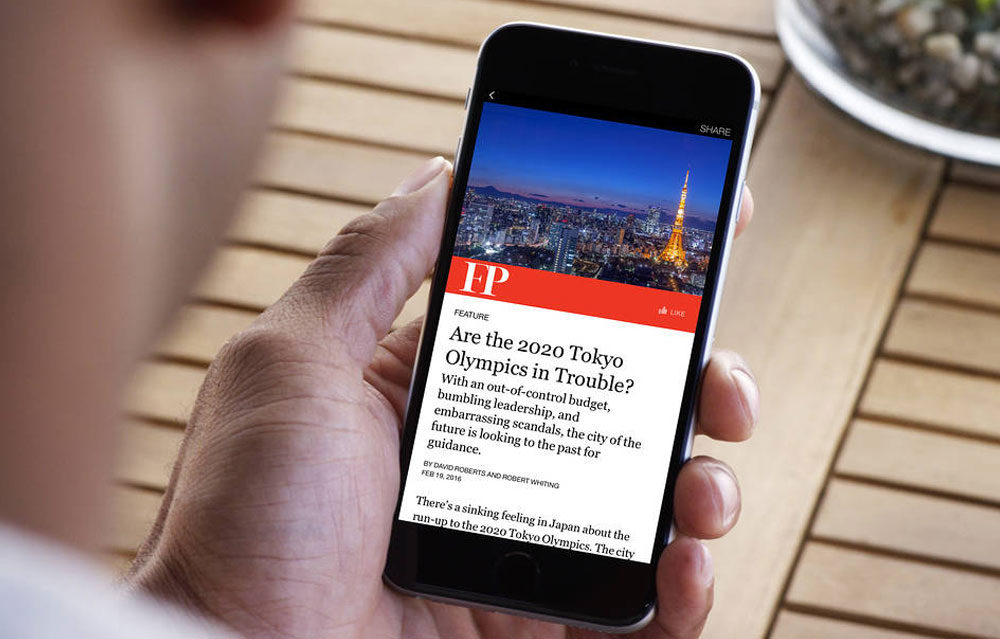
In a blog post, Facebook noted how the plugin formatted a Foreign Policy story for Instant Articles:
For example, the plugin recognizes the image found in this Foreign Policy article and specifies the correct markup so the photo renders properly in the Instant Article. The photo expands to fill the screen when tapped and allows exploration by simply tilting the phone.
Facebook further noted that the plugin "also supports native autoplay video as well as social and interactive graphic embeds."
Standard WordPress templates should work out-of-the-box, but those with customized sites will need to extend the platform to support any extra features.
Instant Articles vs. AMP
Facebook's Instant Articles is its move to make publishers easier to post create posts on its platform. It's the social media giant's answer to Google's Accelerated Mobile Pages that went live on February 2016.
AMP that is also open-sourced, is having more than 80 contributing developers since it was first announced. Facebook also encouraged developers to contribute to the plugin's development on Github, similar to how Google did. It notes that the "plugin is still in early stages and the underlying APIs (like filters, classes, etc.) may change."
To perfect Instant Articles, Facebook continues its efforts to tweak it based on feedback the company receives from numerous news organizations already using the product.
Facebook now allows publishers solicit email newsletter signups in Instant Articles, and in December 2015, the company made it easier for publishers to generate ad revenue from Instant Articles. Facebook sell advertising into their Instant Articles through its ad network product, the Facebook Audience Network. Facebook will keep 30 percent of the revenue generated by the sale and placement of those ads, with 70 percent being paid out to publishers on a monthly basis.
At the moment, only a small number of publishers are able to serve up news articles quickly for mobile devices, but from April 12th 2016, the technology opens to anyone - including bloggers.
In addition to Facebook's Instant Articles, WordPress is also supporting Google's AMP.




















































































































































































































































































