
Counting the years since Facebook was born out of a dorm room until August 19th, 2016, it quickly became the ubiquitous social giant. Taking on anything in its path and no comparable competitor to "play" in its level, the company thrives on its throne.
Whatever it makes during its life, it's all about creating a platform to socialize. Facebook probably excels this more than anything else out there, but somehow it is quite "dull" to some people for some reasons.
To make it more more appealing to the masses, Facebook releases a new app for iOS called Lifestage. What it does, is taking social networking as a video-first take rather than status updates. More specifically, it's for those under 21.
Users of Facebook are already familiar with posts and sharing things. But beside filling biography profile and things like that, Lifestage asks for happy face, sad face, likes, dislikes, best friends, dance and more. All that users can engage using videos.
Lifestage turns their videos into a video profile that others can watch.
Lifestage is just for teens, aimed to make them learn more about their friends in a more expressive way. This is certainly an engaging strategy that could capture the attention of teens that Facebook fears might go to Snapchat.
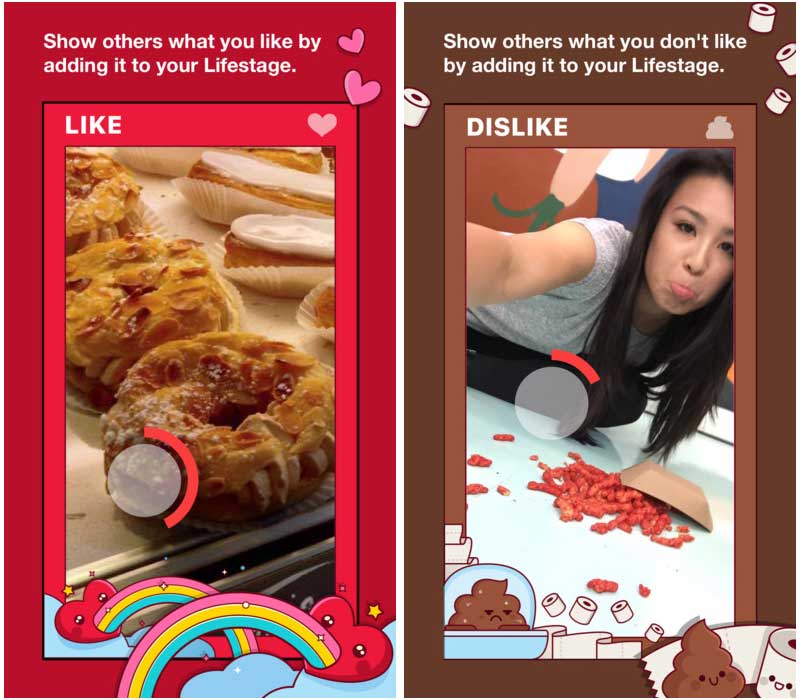
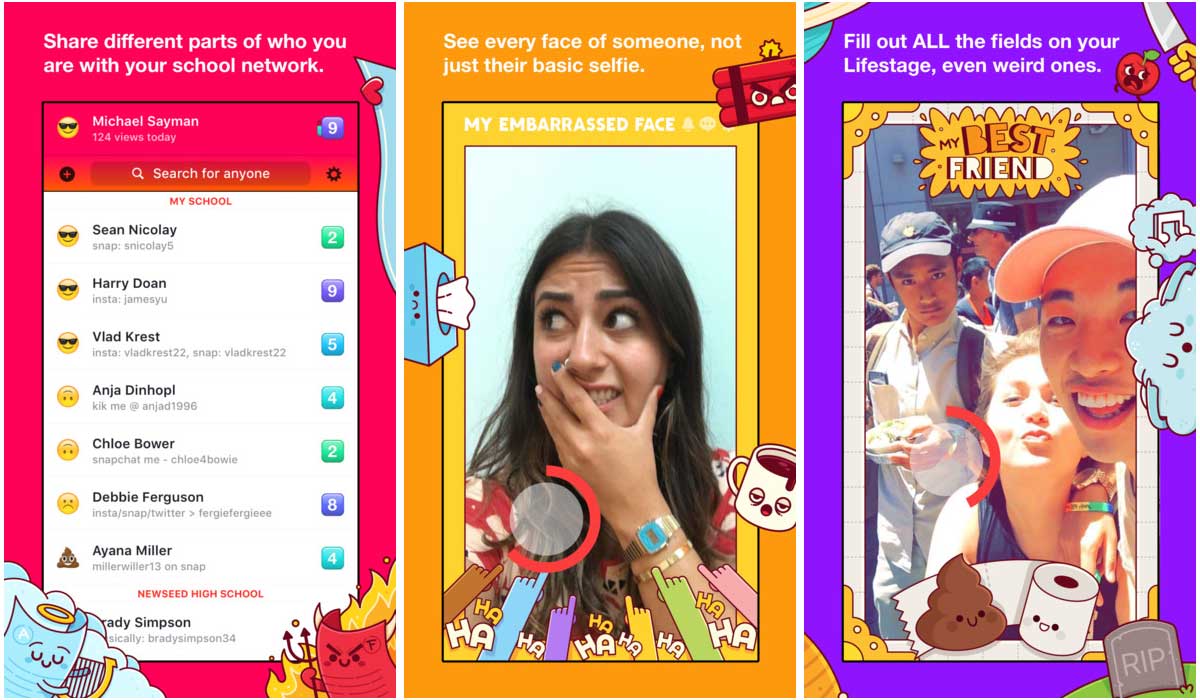
Lifestage is a simple app, initially launched for users using Apple's iOS. When first using the app, users will be asked for their high school. After that, Lifestage will show them a list of video profiles made by other users at their school or those that are nearby. And for an added viral ability, Lifestage only shows other users only when they are at least 20 people that attend the same school. This way, teens will spread the words about Lifestage, nagging their friends to join.
In the app, users will see a list of bio questions they can answer with videos. The more they fill in, the more questions are unlocked.
In the feed, users will see people from their school who have recently updated their profiles. Tapping on them will show their friends' answer for that specific question. A simple swipe will skip the question to a different category.
Users that are active, will have a sunglasses-smile emoji. And those that have languish will have a frown or even a poop emoji on their profile.
As a video-focused social media for teens, Lifestage has no features to contact other users directly. According to Facebook, there are already many messaging apps out there people love and use. They is no point of having another messaging app. Instead, Lifestage users get a "Reach Me" line of text that appear below their name. Users can use this to show their Snapchat or Instagram profile handle. They can also add other things like contact info.
As simple as it can be, Lifestage indeed takes an innovative stance. It's an idea that can make Facebook fresh again.
Lifestage is a product that came out from Facebook's Product Manager Michael Sayman. Born in August 1996, he taught himself how to code at the age of 13 from information he learned from the internet and Google. His first product was the Club penguin app game which cost $1. He earned thousands of dollars, and with it, he has helped his family out during the recession after his family's house was foreclosed upon.
Sayman then created 4Snaps which is a photo-charades app. When the app was overloading Facebook's backend hosting service, Sayman negotiated a discount with Facebook so he can keep operating 4Snaps. But rather than giving him what he asked, Mark Zuckerberg invited Sayman to Facebook to become an intern.
During his time in Facebook, he came up with the idea for Lifestage.
"I wanted to work on an app that my demographic would relate to, or at least that my friends would want to use," Sayman said. To build Lifestage, "I went back and looked at Facebook from 2004. At the time I was in second grade."
Lifestage is like other apps Facebook created that are a separate brand from its core. In line with its attempt to separate the big blue app, users don't need a Facebook account to use Lifestage. The strategy is similar to Facebook when it was originally launched; it was dedicated to only specific people.
Facebook knows that social apps are no fun if users don't know anyone using them. And by having Lifestage, Facebook is like giving the "fun" back to social media. As a massive platform, Facebook should be a place where socializing is an interesting thing to do.
While it certainly be a new beginning of social networking, more or less, it also makes older people, feel a lot older. And for that reason, Lifestage's major uniqueness also poses its biggest concern.
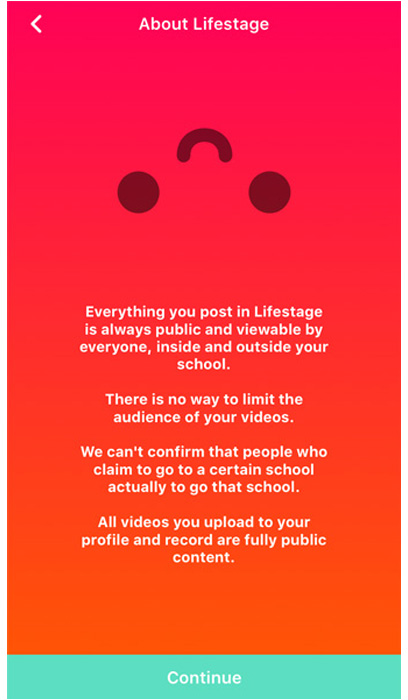
Lifestage is dedicated to those that are 21 years old or younger; those that are 22 or older will only be able to see their own profile. So no adults are qualified. But in fact, anyone can technically download the app. This issue can make Lifestage a place for adults to meet kids. While adults can indeed try and meet teens for reasons on Snapchat, Facebook, Twitter or other social mediums, Lifestage's problem is because it's a teen-only social app. So Lifestage has a risk of becoming a precursor to that activity.
Adults can pretend to be a teen on Lifestage, and they can certainly just as easy fake an identity elsewhere to lure a child into something wicked.
But rather than acknowledging this problem, Facebook is simply asking Lifestage's teen users to report anything suspicious. To those that are familiar with the web and its flaws, this is certainly not enough to protect those youngsters.






















































































































































































































































































