Some things stay, and some things got to go.
And this time, despite having a huge focus on developing Copilot, Microsoft is killing off its consumer-facing feature for making custom versions of its Copilot AI service. Called the 'Copilot GPT Builder', the product is only months old, before Microsoft announced its demise.
Microsoft announced the news in an email to Copilot Pro subscribers, as well as on a dedicated web page, saying that:
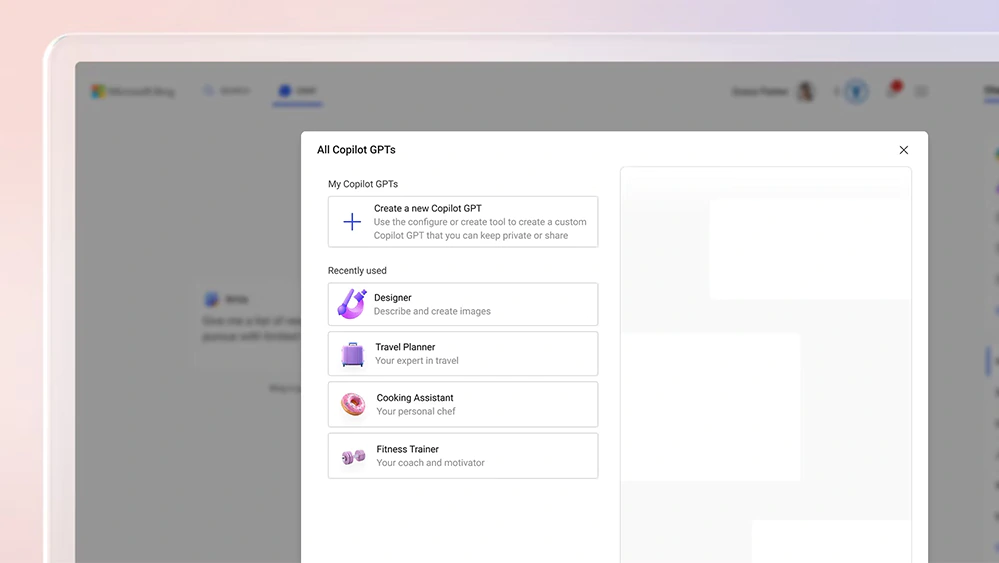
The Copilot GPT Builder feature allows Copilot Pro subscribers create and share customized, task-specific chatbots, similar to Microsoft investment OpenAI’s custom GPT Builder and GPT Store.
It features a 'Create' tab for building and a 'Configure' tab for further customization, including retrieval augmented generation (RAG) for integrating external data and toggling web browsing and image generation capabilities.
GPT Builder allows people to put together their own tailor-made chatbots for different use cases.
In short, the tool literally opened up possibilities for users to create apps suited to their job roles without technical expertise.
And this time, the company is retiring this product.
As for why it is doing this, Microsoft explains its shifting focus as the reason.
"We are continuing to evaluate our strategy for consumer Copilot extensibility and are prioritizing core product experiences, while remaining committed to developer opportunities. To this end, we are shifting our focus on GPTs to Commercial and Enterprise scenarios and are stopping GPT efforts in consumer Copilot."
After all, Microsoft Copilot AI shares the same GPT language model as ChatGPT, so it has many of the same features.
In such a short notice, Microsoft is getting rid of GPT Builder as quickly as possible, while also giving users time to make other arrangements if they need to keep using those GPTs, such as moving them to ChatGPT.
After the aforementioned date, by the time the Copilot GPT Builder is retired, all data collected by the tool shall be deleted.
"Copilot GPTs created by customers will be deleted," said Microsoft, adding that users will not be able to access their custom GPTs after that date.
Microsoft is not providing any detailed explanation on why it's retiring the GPT Builder.
Regardless, the company's shift towards Commercial and Enterprise scenarios suggests a targeted approach to leveraging AI’s capabilities in a business context.

















































































































































































































































































