Business is business, and out there, a war is happening.
Since the boom of generative AI, following the launch of ChatGPT by OpenAI, pretty much all tech companies, large and small, start developing their own solutions. But that doesn't mean everybody is interested in being part of the war.
One of the few, is Vivaldi Technologies.
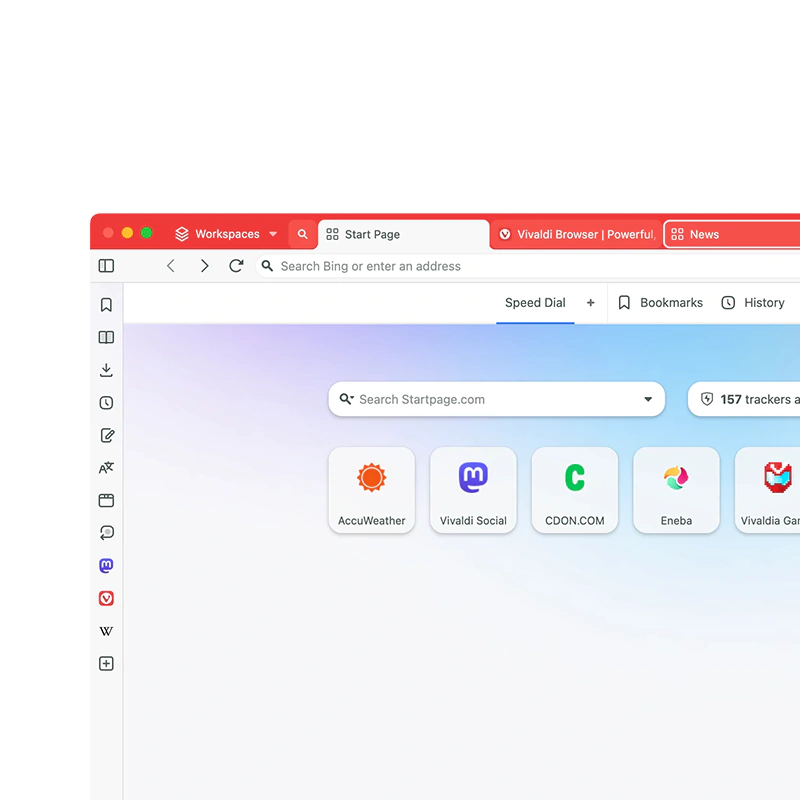
As web browsers are increasingly incorporating AI services, either through cloud-based or on-device models, Vivaldi Technologies, maker of the Chromium-based Vivaldi browser, said that it's standing back in a statement it made back in February, saying that "Vivaldi won’t follow the current AI trend."
Vivaldi said that it wouldn't implement large language models (LLMs) in its browser until their issues are resolved.
From AI hallucination to immense energy consumption and others, Vivaldi prefers to not use LLM, nor see it the way others see it.
"LLMs are essentially confident-sounding machines that sometimes lie, leak private data, or plagiarize existing content," wrote Vivaldi software developer Julien Picalausa in a user memo.
And according to Vivaldi's CEO, Jon von Tetzchner:
Google’s Chrome has rolled out its Gemini Nano model, with ambitious plans to expand AI capabilities through APIs for summarization and writing assistance.
At this time, Google's Prompt API, for example, allows developers to interact with LLMs in Chrome.
Other browser makers, also push forward into LLM, like Brave with Leo, a privacy-focused chatbot, and Opera, which offers a similar service called Aria.
Microsoft even touts its Edge browser as an Apple Intelligence feature to its Safari browser.
Unlike other browsers and apps these days, it doesn't feel right to bundle an LLM solution to our browser. Why not? It has fundamental issues. Read all about what they are by our Developer @neartothesky#Privacy #AIhttps://t.co/WVnn46849I
— Vivaldi (@vivaldibrowser) February 5, 2024
Tetzchner acknowledges AI's usefulness, and if Vivaldi ever has it, the browser could utilize AI to improve translation, voice recognition, and research.
However, he argues that integrating it into browsers poses privacy risks by potentially tracking user activity and building profiles locally or via the cloud.
By not integrating AI, Tetzchner is playing it safe.
At this time, browsers that faced backlash over AI integration, include Mozilla, with at least one user on its forum argued that AI chatbots inherently compromise privacy, accusing Firefox of compromising its identity by following in Chrome's footsteps.
LibreWolf, an independent Firefox version, has also sparked discussion on disabling or removing AI features, with an open pull request aiming to achieve that.

















































































































































































































































































