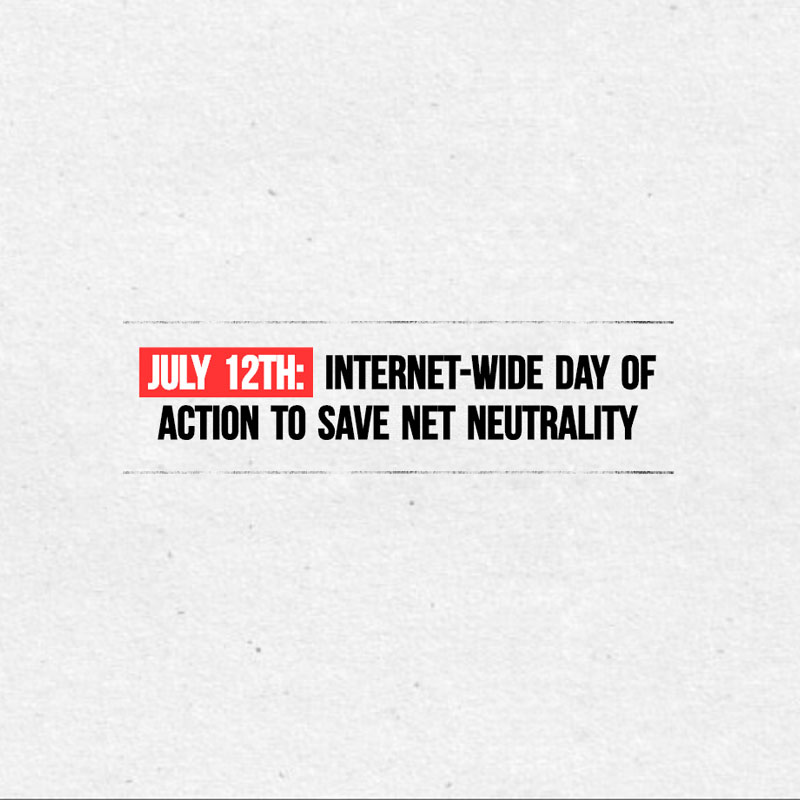
Activist groups and internet companies are uniting to defend net neutrality from a rollback proposed by the Federal Communications Commission (FCC).
Some of the biggest names in the field, including Google, Facebook, Amazon, Twitter, Airbnb, Reddit and 80,000 other top websites, have joined groups like Mozilla and the ACLU for a "Day of Action" to protest a retreat from the concept of "net neutrality."
The tally of groups and people involved in the protest were organized by activist group Fight for the Future.
The action was highlighting the importance of net neutrality, the concept in which the internet is free for all, and internet service proviers (including the government) can't prioritize some contents over others.
Tim Berners-Lee, the creator of the World Wide Web also shared his thoughts. Through the Web Foundation, he said that losing net neutrality means the internet won't be like how we know it, "That's not the web I want," he said.
It all started in 2014 when an Internet Slowdown day happened. At that time, many websites used loading symbols on to demonstrate how the internet would be without net neutrality.
In May, under the leadership of Chairman Ajit Pai, the FCC voted to rollback former U.S. President Barack Obama's administration governing net neutrality, and open the door to "competition." Pai is a Republican appointee of President Donald Trump, and he is actively seeking to repeal the current rules in place that protect net neutrality.
Later, the subject was opening itself for comments from the public. And this was what the protest highlighted.
If The Internet Isn't Neutral
The internet when first created, it was meant to be a decentralized by design communication where nothing can govern it. If net neutrality were to be eliminated, ISPs and the government would have the power to put some contents above others to specific people.
Those that govern the internet would be able to charge and change how people will see contents on the web. ISPs can charge both consumers and websites for access, for example.
In short, the web will be divided into two internets:
The first is the faster version of the internet for those who can afford the fast lanes. Comcast, Verizon and other big providers could put some websites into the fast lanes for a fee. The second is the slower version for everyone else that couldn't or wouldn't pay. This is where download and upload speeds are compromised..
Consumers on the slow lane, will see slower browsing, slower loading pages and longer buffering. In turn, because websites and services that have their speed compromised, ISPs can throttle some of their own services forward to favor their own business.
As a result, the end of net neutrality will reduce choice, increase cost and reduce innovations.
Further reading: Indonesia And Internet Neutrality: Getting Away With It






















































































































































































































































































