In today’s fast-paced world of AI assistants, speed has become everything.
Since the rise of OpenAI's ChatGPT, the pace of technological development has accelerated dramatically. These tools have not only improved productivity but have also shaped user behavior: people now expect faster, more seamless experiences. As a result, every extra step or click can feel like an unnecessary burden.
Managing uploaded files has long been one of those friction points. Now, ChatGPT is finally addressing it.
OpenAI has quietly rolled out a new update that could significantly change how users manage their digital content within the platform, introducing a more streamlined and efficient way to handle uploaded files.
In the update, every file users upload, whether a PDF contract, spreadsheet of data, screenshot from a project, or any other supported document, is now automatically saved to a new Library. No more digging through old chats or re-uploading the same materials for every new conversation. Instead, a clean sidebar tab on the web version lets they browse everything in one organized place, with tabs separating all files from images and quick filters to find what they need.
It's the kind of thoughtful persistence that turns fleeting interactions into a lasting workspace.
The real magic happens in the chat itself.
It’s now easier to find, reuse, and build on the files you upload and create in ChatGPT.
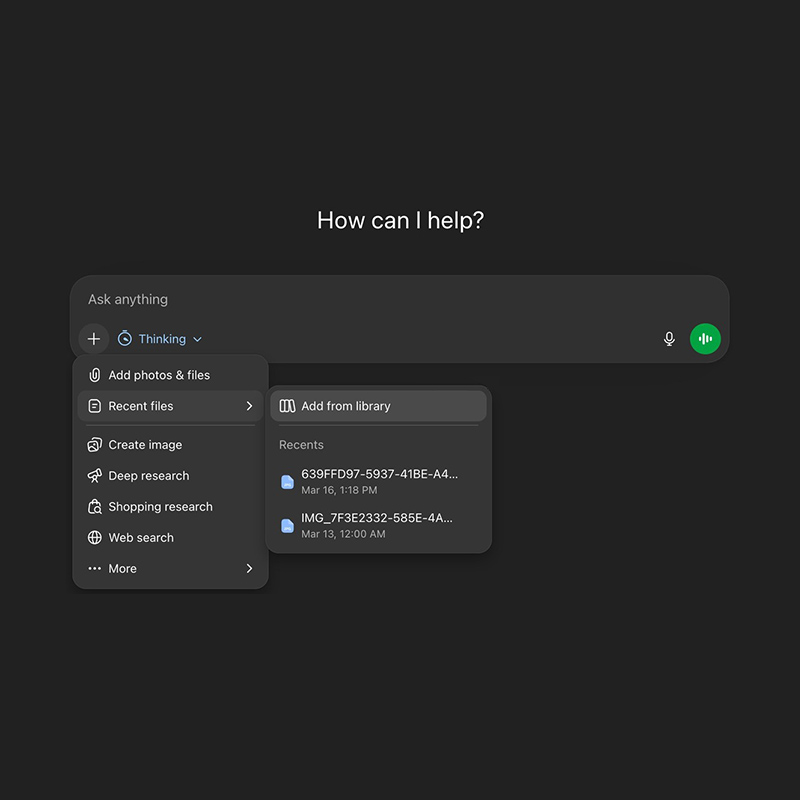
You can quickly reference files in a chat using recent files in the toolbar, ask ChatGPT about something you’ve uploaded, or browse your files in the new Library tab in the web sidebar.… pic.twitter.com/fIazWRF9h3— OpenAI (@OpenAI) March 23, 2026
The feature can be accessed through a new 'Library', where users can pull in uploaded files instantly without breaking their train of thought.
With this feature, users can reference them in follow-ups, ask ChatGPT to summarize a lease agreement they uploaded weeks ago, or have it cross-analyze a batch of screenshots alongside fresh notes, all without starting from scratch.
Long story short, the Library tab acts as a centralized hub for all documents, spreadsheets, and images users' have uploaded or generated over time.
For researchers juggling sources, writers iterating on drafts, analysts reviewing reports, or anyone building long-term projects, this eliminates the constant friction that once made ChatGPT feel more like a clever toy than a reliable partner. The update also brings mobile support for recent files and file search on iOS and Android, while the full Library view remains web-first for now.
Availability kicked off globally for Plus, Pro, and Business users, with the rollout expanding soon to people in the EEA, Switzerland, and the UK.
It builds on earlier steps like Projects and Canvas, but feels more universal and seamless. OpenAI even bumped up the attach limit to 20 files at once and expanded format support, signaling a clear push toward making ChatGPT a true knowledge base rather than a reset-every-time chatbot. The accompanying screenshot from the announcement shows exactly how intuitive it looks: a sidebar list of real-world files like property leases and images, a dropdown for quick access, and a live chat pulling insights straight from uploaded documents.
Yet this practical leap arrives at a curious moment. The replies flooding OpenAI’s announcement are dominated not by celebration of better file management, but by a passionate outcry over the retirement of GPT-4o earlier in 2026.
Users who fell in love with that model's warm, nuanced, almost companion-like personality, especially its flair for creative writing, emotional depth, and humanities, have been vocal about feeling adrift with newer reasoning-focused versions that strike many as more robotic and less engaging. Hashtags like #keep4o, #bringback4o, and #opensource4o have become a chorus, with some arguing that shiny new tools like the Library ring hollow without the model that made daily conversations feel alive.
It’s a reminder that while OpenAI steers toward enterprise-grade productivity and advanced agents, a significant slice of the community still mourns the conversational soul that first hooked them.
In the end, the Library update quietly nudges ChatGPT closer to becoming the indispensable digital extension many have long imagined: one that remembers, organizes, and builds upon your personal archive without users ever lifting a finger.






















































































































































































































































































