
Man and machine are different in many ways. And one of which, is the way they see the world.
We humans can walk the face of the Earth, and use our eyes to perceive the world in three dimensions (3D). This is called 'depth perception'. We can sense the distance of an object because we can move and respond consistently according to that distance.
Computers on the hand, can't do that.
While we are naturally good at interpreting 2D visuals as 3D scenes due to us experiencing depth perception on a daily basis, machines need to be taught how to do it. If computers can be taught how to understand this visual ability, researchers can develop the ability to create better robots capable of maneuvering unfamiliar surroundings.
This is a challenge that has long captivated computer vision researchers, and a team of researchers at Google AI was aiming to do just that.
According to a published research paper, the team used a data set of thousands of YouTube videos of people performing the Mannequin Challenge.
The trend that caught the internet world back in 2016, involved groups of people posing frozen-still, just like mannequins. With the cameras moving about to show the subjects in different angles, the videos clearly represent the world in its 3D glory.
These videos also happen to be a novel source of data for understanding the depth of a 2D image.
To train the AI, the researchers converted 2,000 of the videos into 2D still images with high-resolution depth data (labeled with the distances among people and objects), to then use them to train the neural network.
As a result, the AI was then able to predict the depth of moving objects in a video at a much higher accuracy than previous state-of-the-art methods.
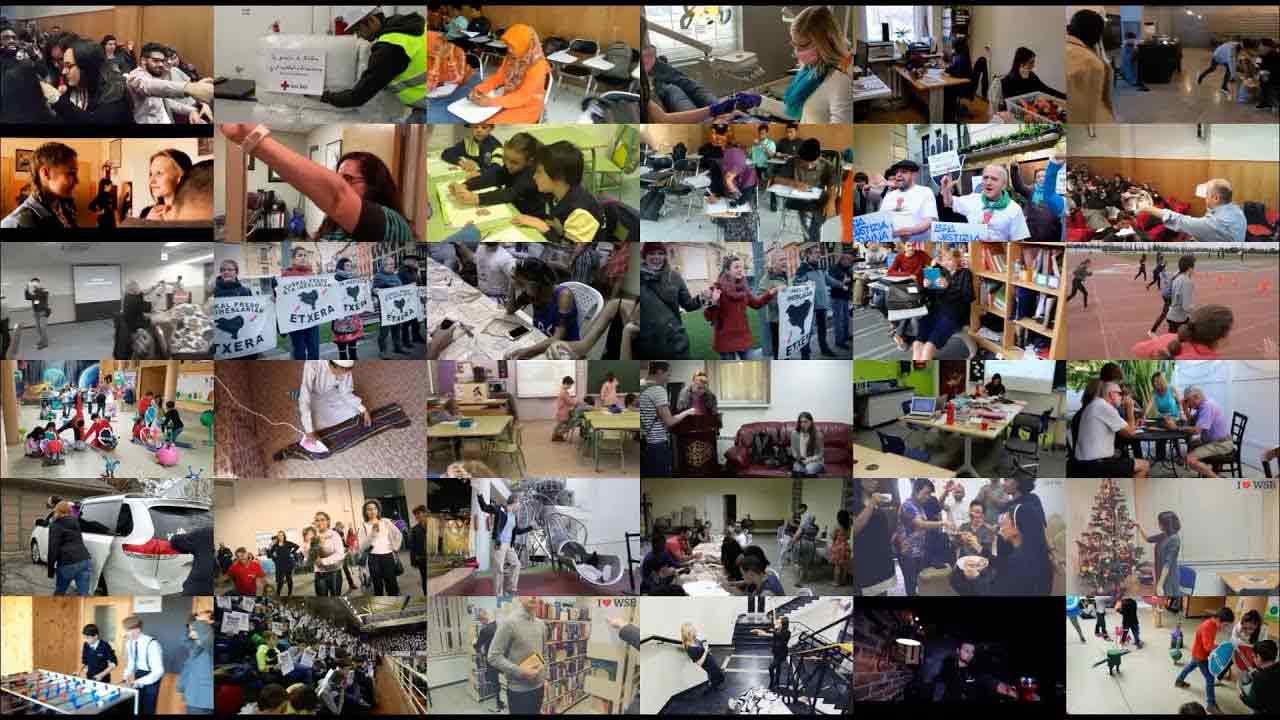
While the Mannequin Challenge was fun when it took the internet by storm, the researchers are releasing the data set to support future researches.
What this means, thousands of people who participated in the Mannequin Challenge will unknowingly continue to contribute to the advancement of computer vision and robotics research. In terms of privacy, this can be uncomfortable to some.
But they should know that the project by Google, is just like many other projects that involve AI: they all use data sets made from compilations of publicly-available data scraped from the web.
Be it from YouTube, Twitter, Wikipedia, Flickr, and other places, the sources can be anything.
The practice of gathering the publicly-available data is necessary due to the fact that AI needs an immense amount of data to learn.
For this reason, this data-scraping practice is neither obviously good nor bad. But still it questions the norms around the consent in the industry. As data are a commodity and increasingly being used to be monetized, technologists should think about whether the way they’re using someone’s data aligns with the goal of why it was originally generated and shared.
As for this Google AI project, it's unsuspected to see the tech giant using a viral challenge to advance scientific research and robotics.
Read: Ways To Protect Your Privacy On The Internet: Your Personal Information Is A Commodity




















































































































































































































































































