In the ever-evolving world of AI, where large language models (LLMs) have put generated images, text and chatbots into everyday conversation, Snapchat is staking its claim.
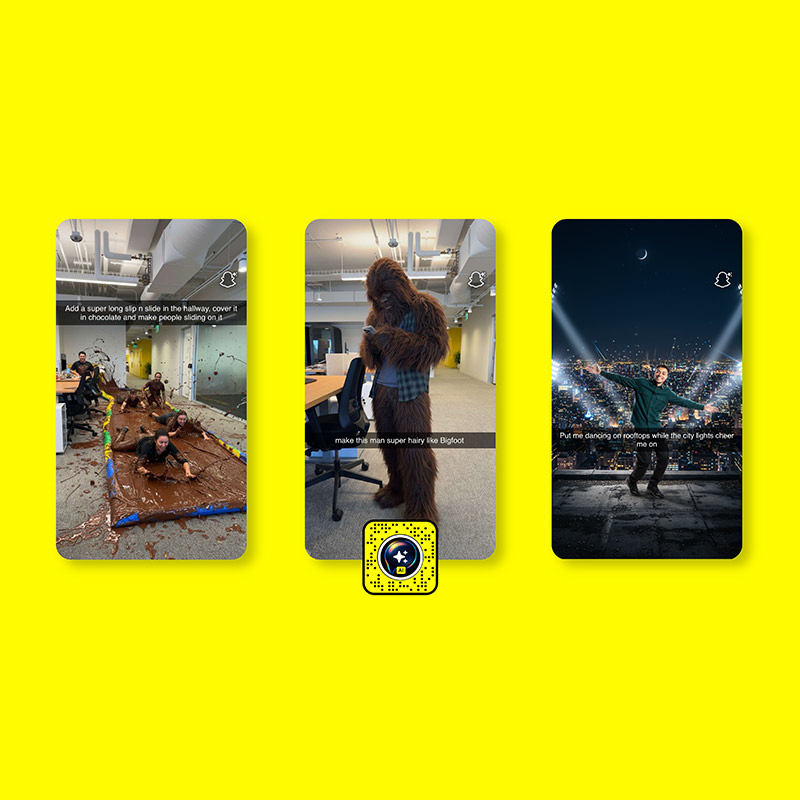
But instead of centralizing the fun, like how Google does with Nano Banana, Snap, the company behind Snapchat, is introducing the 'Imagine Lens' to all users, in order to bring generative AI directly into the camera experience. This should allow users to write whatever they want, and what it appear in a Snap.
Rather than filters that impose fixed styles, Imagine Lens invites users to type a custom prompt: "turn me into an alien", or "make me a comic-book hero, or "create a caricature of me in sunset light."
This is significant because it shifts the usage from passive "select a look" to active "describe what you imagine," and have the system render it.
In the announcement:

From a usage standpoint the flow is fairly simple:
- Find the Imagine Lens near the front of the Lens Carousel, or search for it by name.
- Tap the caption to edit the prompt, or keep one of the pre-loaded ideas to spark inspiration.
- Create a Snap and share it anywhere: with a friend, Story, or outside of Snapchat.
The tool supports both editing of existing Snaps and creating new images entirely via prompt.
The technical smartness lies in how Snap frames the feature.
Imagine uses Snap's in-house AI models with “industry-leading” image-generation models, to target two goals: one, to retain edge in AR/filters (a domain it has long been associated with) and two, to lean into the generative AI momentum shaping the broader tech landscape.
By embedding open-prompt image generation directly into its camera flow, Snapchat is blending its AR heritage with generative AI’s momentum.
For users who like to tinker, play and share visual stories, this may represent a fresh creative opening. For the app ecosystem, it underscores that “camera apps” now compete not just on resolution or filters, but on generative imagination.
Snapchat, which remains popular amongst teens, is trying to make itself remain relevant in the war occupied by titans, and smaller developers who look for high-hanging fruits.
By putting the feature up front to where users use the most, Snap wishes to bring the generative AI experience to more people, enticing larger usage, and making its own platform a lot more fun to hang around with.
However, there are broader implications. In the face of competition from apps and platforms pushing generative AI tools (including image-generation, video, and creative prompt engines), this move by Snapchat signals that even camera-based social/apps are literally "forced" to shift toward giving users what they think they want, based on the current trend of technology.
Some analysts argue this keeps Snapchat relevant among younger audiences who expect novelty, remix-culture and shareable moments.
At the same time there are clear caveats: the feature emerging first in premium tiers means Snap is testing both user interest and usage load before wider rollout. The outputs remain imperfect (“interpretation of prompts may vary”) and the company emphasizes responsible use: generative imagery still carries risks around likeness, sensitive content, and expectation management.

















































































































































































































































































