 The microblogging Twitter has a new algorithm and its now set as default. What this algorithm does is turn Twitter's tweets into a non-chronological timeline.
As Twitter explained: "Tweets you are likely to care about most will show up first in your timeline. We choose them based on accounts you interact with most, Tweets you engage with, and much more."
When the company announced and launched the new algorithm on early February 2015, many people weren't liking it. Multiple high-profile users were even threatening to leave the social media platform prior to the March official release. While the moment has not happen, the new timeline that is turned on by default, can now be opt-out.
This means the feature is now optional at the moment of its official release.
Twitter's new algorithm has no official release data, but users reported that the company started turning it on as early as March 15th.
When It Is On, Twitter Changes
The new algorithm is aimed to alter how Twitter's timeline works. Before, the microblogging service was showing its timeline tweets in a traditional linear view, or in reverse-chronological order. The newer a tweet, it'll show higher up. And the older it gets, it will be pushed down by newer tweets that will appear above it.
The new feed is basically an extension of Twitter's existing "while you were away" feature, designed to make Twitter more appealing to new or infrequent users.
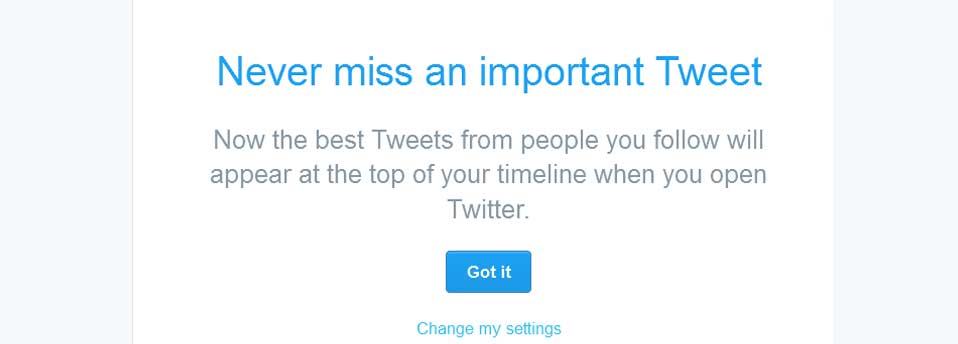
When Twitter first launched the feature to alter the order of tweets on February 10th, the feature was on beta. Users at that time won't have a choice but to opt into it, and it was set to on by default.
Senior engineering manager Mike Jahr explained the feature on the official blog, saying that: "When you open Twitter after being away for a while, the Tweets you're most likely to care about will appear at the top of your timeline - still recent and in reverse chronological order. The rest of the Tweets will be displayed right underneath, also in reverse chronological order, as always."
The algorithm changes the timeline by showing what users are likely to care most. The more frequent the user uses Twitter, the algorithm will understand what kind of tweet and what person is likely to interest them. Twitter will then re-arrange the order of the tweet based on accounts they interact the most, tweets they engage with, and much more.
The opt-in period was used to garner feedback from power users and those who care enough to activate the feature.
With the opt-out feature now available, Twitter said that it would require users opting-in to see it. However, the company also noted that it would become default in "the coming weeks."

Receptions
Twitter is real-time, and for all these years, this has been its major advantage point if compared to the social giant Facebook. While the new algorithm is still an optional feature that people could opt-out, some users aren't happy.
Many Twitter users are expressing their frustration toward the social media.
Twitter seems to roll out the feature gradually since only some users said they've received notification advising them of the change while others claimed to not see or or experience any changes. Most that received the notice, are interestingly, those that complained.
Before having the algorithmic timeline as an opt-in feature by default, Twitter has been closely studying how its users were responding. What Twitter found was the early returns have been overwhelmingly positive.
"Since we launched the update to the timeline, we're seeing very few people choosing to opt-out of the experience," said a Twitter spokesperson. "It's in the low single digits."
Twitter also sees more gains in metrics at Per User Favorites, Per User Retweets, Per User Replies, Per User Tweets and Daily usage.
Twitter wouldn't say how much exactly is the gain. But if it's significant, the change could be a breakthrough for the company that has been experiencing a stagnant growth.




















































































































































































































































































