The web consists of everything that is visible, including the interface of websites and other services, as well as the experience that can be given, as well as the invisible, that includes statistics, codes, as well as the traffic that come and go.
And that traffic can either be good or bad.
When "good" traffic is considered as human visitors who visit websites with specific intentions, "bad" traffic is often related to bots-generated visits meant to cripple systems.
And this time, Cloudflare, the American web infrastructure and website security company, said that it has successfully blocked a massive Distributed Denial-of-Service (DDoS).
In what is considered one of the largest DDoS ever recorded, the internet company said in a blog post that the attack was conducted by approximately 15,000 bots.
These bots were running a variant of the original Mirai code on exploited Internet of Things (IoT) devices and unpatched GitLab instances.
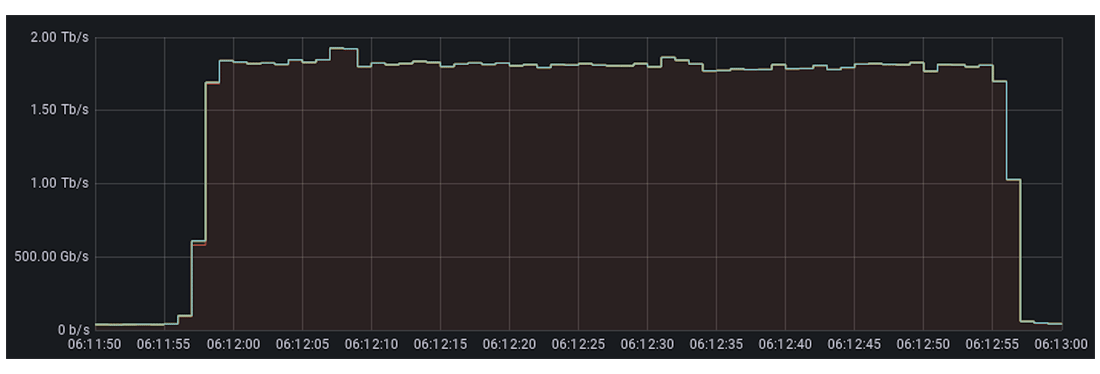
According to its analysis, the DDoS attack was a multi-vector attack combining DNS amplification attacks and UDP floods.
The attack that lasted just one minute, peaked at just below 2 Tbps.
Cloudflare managed to thwart the attack by constantly analyzing traffic samples “out-of-path.”
This allows it to asynchronously detect DDoS attacks without causing too much latency or drastically impact performance.
It's worth noting that the 2 Tbps DDoS attack came just a month after Microsoft mitigated a 2.4 Tbps DDoS attack targeting one of its Azure customers in Europe.
The attack Microsoft mitigated, lasted more than 10 minutes, and came through short bursts of traffic, with the first reaching the maximum throughput at 2.4 Tbps and the subsequent going up to 0.55 Tbps and 1.7 Tbps.
“The attack traffic originated from approximately 70,000 sources and from multiple countries in the Asia-Pacific region, such as Malaysia, Vietnam, Taiwan, Japan, and China, as well as from the United States,” explained Amir Dahan, a senior program manager for Microsoft’s Azure networking team, in a blog post.
Such huge DDoS traffic is considered among the biggest DDoS attack in recorded history, to date.
According to Microsoft, the company detected a 25% increase in the number of attacks since the last quarter of 2020.






















































































































































































































































































