
In a quiet neighborhood in Erie, Colorado, Sterling Backus, a physicist, laser engineer, and lifelong lover of mechanics, was spending an ordinary afternoon with his young son, Xander. The two were playing Forza Horizon 3 on their Xbox, racing virtual supercars across digital landscapes.
Then the screen flashed with the unmistakable shape of a Lamborghini Aventador: razor-sharp angles, scissor doors, and an aggressive stance that seemed to leap off the screen. Xander, just 11 or 12 at the time, stared in awe. After a moment, he turned to his father and asked a simple, disarming question:
"Dad… could we build one?"
For most parents, this would be brushed off as a child's daydream. Most would laugh it away, or perhaps indulged for a moment, then forgotten. A harmless fantasy.
But not Sterling.
What could have been dismissed as an innocent question instead ignited years of dedication, creativity, and hands-on problem-solving. Father and son embarked on an extraordinary journey of design, fabrication, and learning, one that blurred the line between hobby and engineering feat. The result was so ambitious and compelling that it eventually caught the attention of Lamborghini itself.
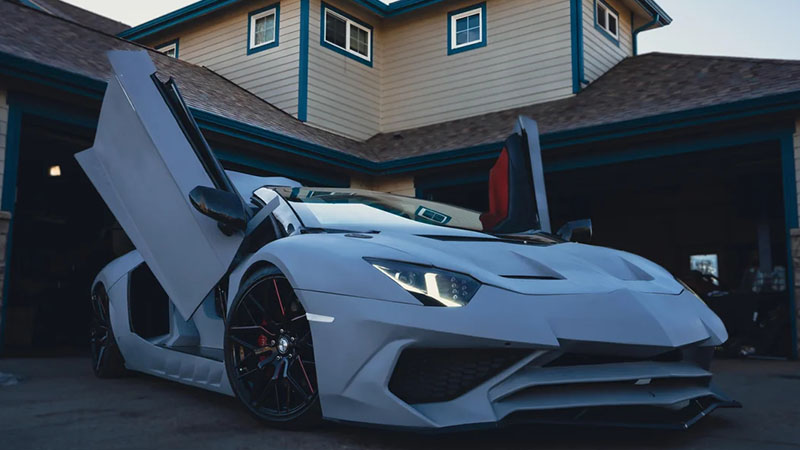
They began modestly in their garage and garden, armed with a standard Creality CR-10S desktop 3D printer and later upgrades like the K1 Max and Sermoon D3 for larger pieces.
Sterling downloaded a 1:10 scale digital model of the Aventador, meticulously scaled it up to full size using software like SolidWorks, and sliced the design into nearly 1,000 individual printable components.
The printers ran almost nonstop, logging around 6,000 grueling hours across roughly four years.
Some massive panels, like the front bumper, demanded over two weeks of continuous printing. They experimented with different materials, like PLA for its stability, moving to ASA and ABS for heat-resistant lights and vents, and incorporating carbon-fiber-filled nylon for stronger interior elements. Failures were frequent; about 50 spools of filament were sacrificed to tests and mistakes.
Yet each setback became a lesson, each reprint an opportunity for Xander to learn troubleshooting, precision, and resilience.
Beyond printing, the build required ingenuity at every turn.
They fabricated a custom tubular steel chassis from scratch, sourced a powerful twin-turbocharged LS1 V8 engine from a junkyard Corvette (delivering an estimated 550-600 horsepower), paired it with an inverted Porsche 911 six-speed manual transmission, and engineered a race-inspired cantilever suspension.
To make the 3D-printed body durable against weather and stress, Sterling encapsulated the panels in layers of carbon fiber and epoxy resin.
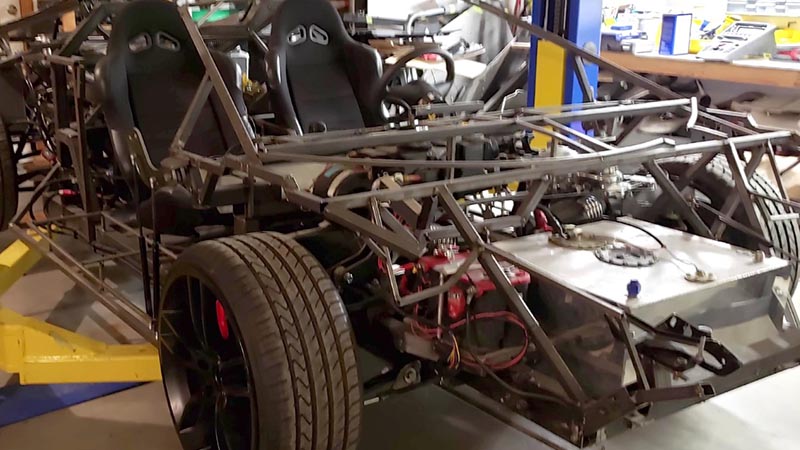
This kind of work is a labor-intensive process that can turn fragile prototypes into surprisingly robust supercar skin.
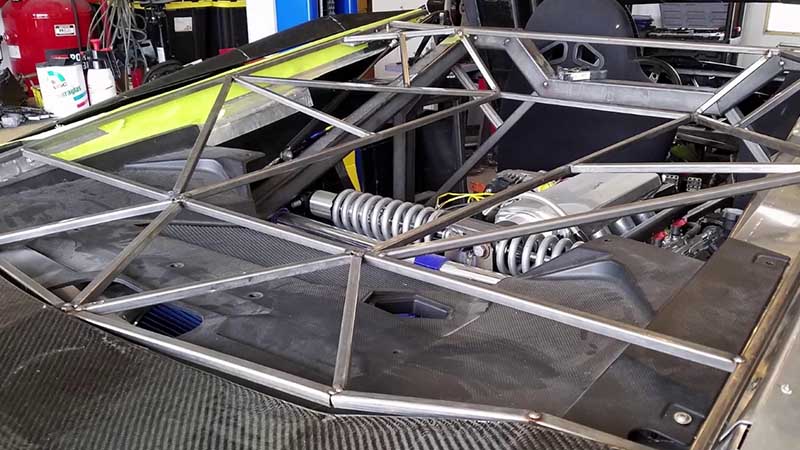
The total cost? Around $20,000, scraped together from salvaged parts, bargain hunting, and sheer determination.
This, is far less than the hundreds of thousands a real Aventador demands.
They named their creation the AXAS Interceptor, subtly altering lines and angles, and skipping official badges to keep it original and legal.
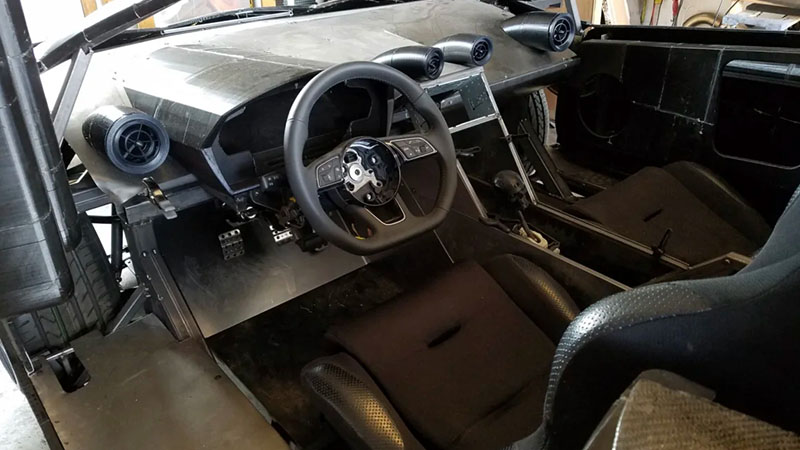
As the car took shape, it became more than metal and plastic. Xander helped disassemble the engine, learned basic welding, cleaned components, and watched his father problem-solve late into the night.
The garage filled with the hum of printers, the smell of resin, and the quiet conversations that only happen when two people are fully immersed in a shared dream.
Sterling often said his goal was to show his son, and any kids who followed along, the magic of STEAM: science, technology, engineering, art, and math coming alive in real, tangible ways.
Videos Sterling posted online captured the progress: early taillight housings glowing with working lights, body panels fitting together like puzzle pieces, and eventually the heart-pounding moment the engine roared to life for the first time, backing out of the driveway under its own power.
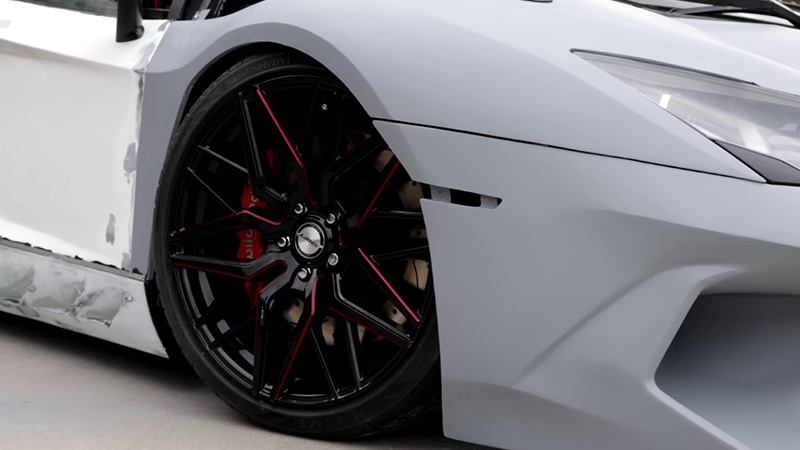
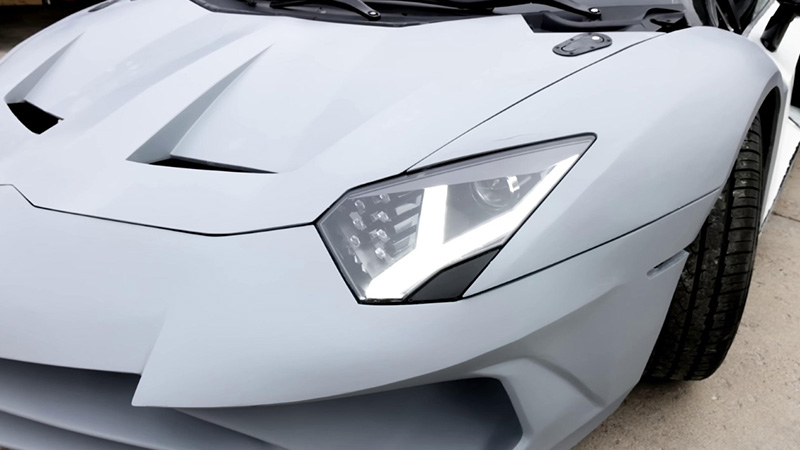
The story spread far beyond their quiet neighborhood.
Car enthusiasts, makers, and families followed the updates, inspired by the raw determination and love on display.
One admirer was so moved they offered $100,000 for the finished replica. Sterling declined without hesitation.
"Building it gives you a much stronger feeling than buying," he explained.
The true reward was never money.
As a father, all that matters was watching Xander grow into a confident, skilled young person, proud of what they had created together.
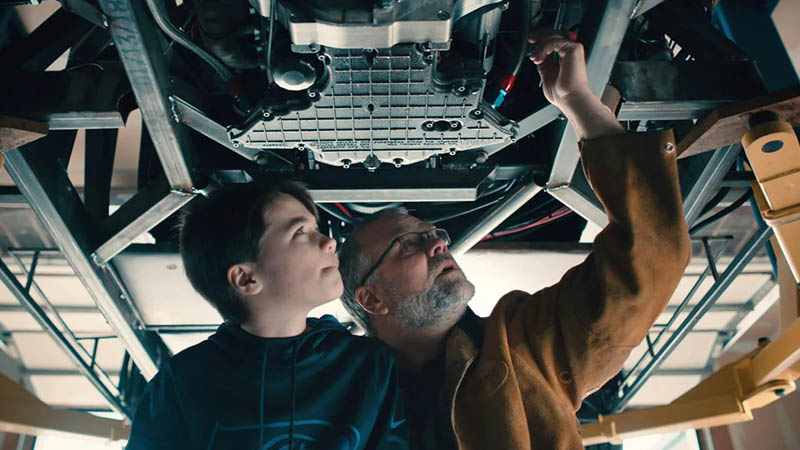
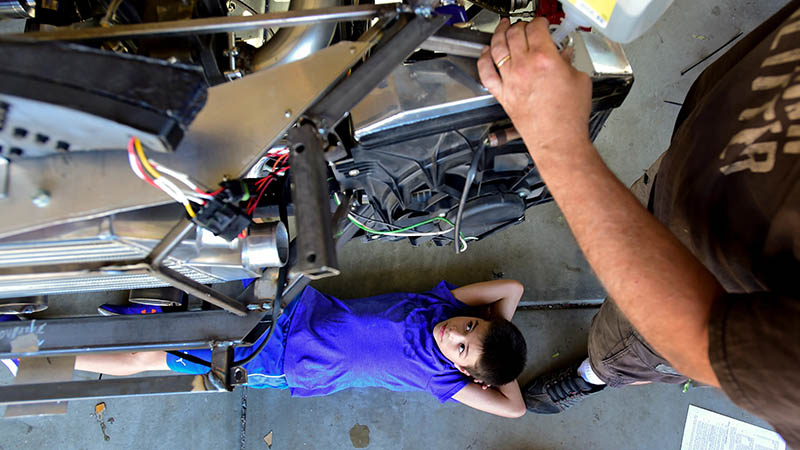
Then came the moment that transformed an already remarkable tale into something magical: word of the project, which was documented in more than a hundred videos uploaded to Sterling’s YouTube channel, made its way to the halls of Automobili Lamborghini in Sant'Agata Bolognese.
One day, Sterling's phone rang with an unexpected caller from the brand's marketing team. They had seen the videos, felt the passion, and wanted to honor it in a way only Lamborghini could. As part of their "Real Lover" holiday campaign, they planned a surprise that felt scripted from the warmest Christmas movie.
While the family slept one December night in 2019, a team quietly arrived.
They carefully moved the 3D-printed Interceptor aside and placed a gleaming black Lamborghini Aventador S in its spot in the garage.
The next morning, Sterling and Xander opened the door expecting their familiar creation. Instead, they found the real thing: sleek, powerful, and utterly breathtaking.
Xander's face lit up with disbelief and joy; tears welled as the reality sank in. The moment was captured on film: a father embracing his stunned son, the boy whispering how much he loved him, how this journey had meant everything. Lamborghini let them keep and drive the authentic supercar for a few unforgettable weeks, a generous gesture that celebrated not just the build, but the human story behind it.
Years later, the memory still resonates deeply.
Sterling continued refining supercar projects, even tackling a McLaren restoration, but that first Aventador adventure remains the heart of it all. What began as a child's innocent question evolved into a testament to what happens when love, curiosity, and relentless effort collide.
In a world of instant gratification, this father and son proved that the most extraordinary things are built slowly, together, one layer, one late-night fix, one shared laugh at a time.
Their garage became more than a workshop; it became a place where dreams were printed, reinforced, and ultimately driven into reality, leaving an indelible mark on everyone who heard their story.