At this time round, a strange and quietly terrifying film has taken over conversations, social feeds, and box office charts in a way few horror movies manage.
It is called simply Backrooms, and what makes its sudden dominance feel so remarkable is not just the numbers or the jump scares (ecause there are almost none). But it's the improbable journey that brought it to the big screen.
What began as one anonymous photograph and a few lines of text posted on 4chan in 2019 has evolved, through layers of internet creativity and one young filmmaker's obsessive vision, into a feature-length cinematic experience that feels both deeply familiar and profoundly wrong.
The image that started everything showed a vast, empty expanse of identical yellow rooms: damp, low-pile carpet that looked recently cleaned yet somehow moist underfoot, walls covered in dated wallpaper, and the relentless glare of fluorescent lights humming overhead.
The accompanying text described a place you could reach only by "noclipping" out of reality, like falling through the floor of the world you knew and landing somewhere you were never meant to be.
There were no monsters in the original post, only the implication that something was watching, that the space itself was hostile, and that once you were inside, the ordinary rules of direction, time, and escape no longer applied.
That single post, born in the same online spaces that birthed Slender Man and other modern creepypastas, struck a nerve because it captured something many people had already felt in abandoned malls, empty office buildings after hours, or the liminal corridors of their own memories: the quiet dread of being somewhere that looks almost right but is fundamentally off.
From that seed grew an entire subculture of liminal horror.
Artists, writers, and YouTubers expanded the idea into levels upon levels of increasingly bizarre and dangerous spaces, complete with their own rules, entities, and survival strategies.
Then, in January 2022, a 19-year-old visual effects artist and YouTuber named Kane Parsons, posting under the name Kane Pixels, released the first of what would become a long-running found-footage web series. His short film showed a cameraman who had somehow clipped into the Backrooms and was now wandering, narrating his growing panic as the endless yellow maze revealed itself.
The video looked and sounded terrifyingly authentic: grainy footage, muffled audio, the constant low buzz of lights, the distant sound of something moving just out of frame.
Within weeks it had tens of millions of views; over the next four years the full series would accumulate nearly two hundred million.
Parsons did not simply retell the creepypasta.
Instead, he built a coherent, expanding mythology around an organization called Async that was studying the space, and he presented everything as recovered footage and documents.
The style was analog horror at its most effective: no polished CGI monsters, just the slow realization that the architecture itself was wrong, like the floors that didn't quite meet walls, furniture that seemed melted or duplicated, spaces that felt like a faulty memory of the real world rendered in cheap 1990s office materials.
Viewers were hooked because the horror felt documentary-real, and because the Backrooms tapped into a collective post-pandemic unease about empty, repetitive spaces and the feeling that the world you thought you understood could suddenly become hostile and infinite.
What happened next was almost unprecedented in modern filmmaking.
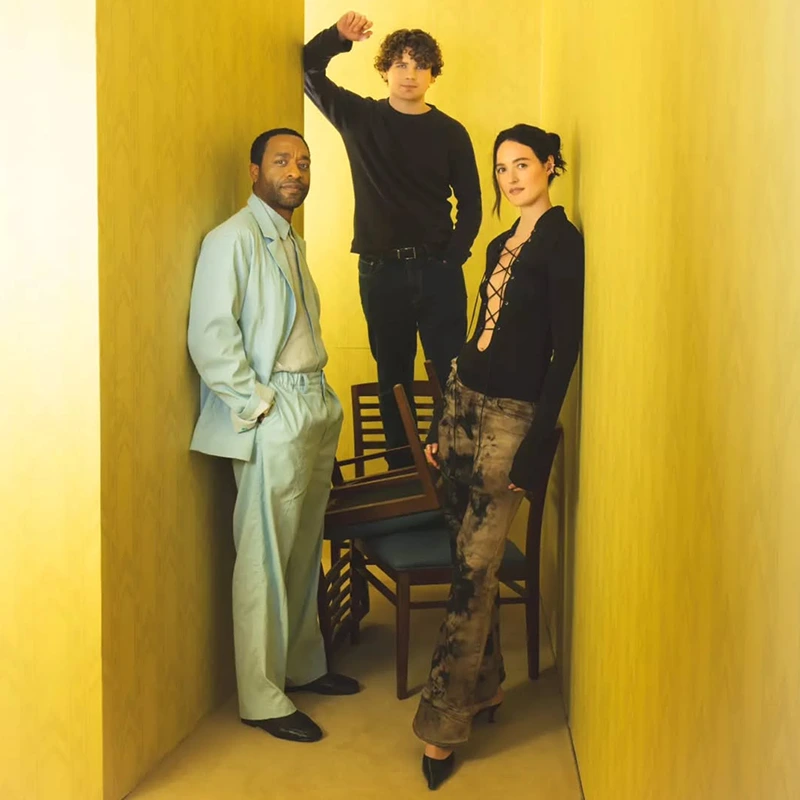
Major studios, including A24, took notice of the teenager whose homemade videos had outperformed many professional productions in cultural impact. In February 2023 it was announced that Parsons would direct a feature-length adaptation, maintaining strict continuity with his web series. The film, written by Will Soodik, stars Chiwetel Ejiofor as Clark, a struggling furniture store owner and failed architect whose life is already fracturing, and Renate Reinsve as his therapist, Dr. Mary Kline.
Supporting roles include Mark Duplass as a researcher from the fictional Async institute and younger actors playing employees and explorers who venture into the dimension.
The story begins in the basement of Clark's furniture showroom, where a doorway appears that should not exist.
What lies beyond is the Backrooms.
Not as a simple haunted house, but as a sprawling, recursive dimension whose yellow rooms, long corridors, and occasional malformed furniture seem to refract the memories and traumas of those who enter it. The film blends the found-footage aesthetic of the original series with more traditional cinematic techniques, incorporating recovered 1990s research footage and exploring how the space itself might be shaped by human psychology.
It is less about jump scares and more about the slow, suffocating realization that you are lost in a place that remembers you incorrectly.
Production on the film was as ambitious as the concept demanded.
Principal photography took place in Vancouver in the summer of 2025. Rather than relying heavily on green screens or digital extensions, the team constructed more than thirty thousand square feet of physical Backrooms sets across multiple sound stages. Production designer Danny Vermette and his crew used Parsons' own Blender models as blueprints, then translated them into real architecture: 37,000 square feet of custom wallpaper, 29,000 square feet of specially sourced carpeting, and lighting rigs designed to create that relentless, buzzing fluorescent glow.
The sets were built with deliberate "errors" with misaligned floors, walls that didn't quite meet, furniture that appeared duplicated or melted.
All that to evoke the feeling of a reality that had glitched.
Actors reportedly became genuinely disoriented while filming, losing their sense of direction inside the maze-like construction.
Parsons himself co-scored the film, working with composer Edo Van Breemen to create a soundscape heavy on low-frequency hums, distant mechanical noises, and moments of oppressive silence punctuated by the soft squelch of damp carpet. The result is a horror film that feels tactile and architectural rather than supernatural in the traditional sense.
The Backrooms are presented as a "faulty, misremembered copy of reality," a prism that refracts visitors’ inner lives back at them in distorted form.
When Backrooms opened in theaters on May 29, 2026, after a Los Angeles premiere earlier that month, expectations were already high among online fans, but few predicted the scale of its commercial success.
Made for under ten million dollars through a partnership between A24 and Chernin Entertainment, the film debuted with roughly eighty-one and a half million dollars domestically and one hundred eighteen million worldwide. This is by far, the biggest opening in A24's history and one of the strongest horror openings of the year.
As of late June it has grossed approximately 175 million domestically and 270 million worldwide, making it A24's highest-grossing release ever and turning 20-year-old Kane Parsons into the youngest director to achieve a number-one box office debut of that magnitude.
The numbers are even more striking when considering the film's modest budget and its refusal to rely on conventional marketing hooks or A-list spectacle.
Instead, it succeeded on the strength of its atmosphere, its performances, particularly Ejiofor and Reinsve grounding the surreal premise in recognizable human pain, and the cultural momentum built over years by Parsons' YouTube work.
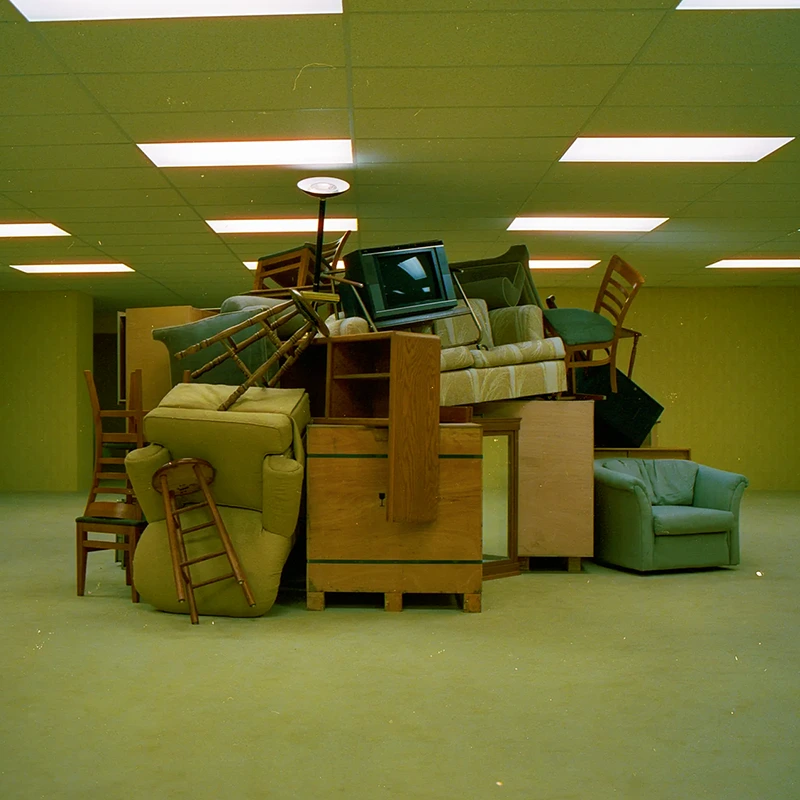
Audiences who had spent hours scrolling through liminal space edits on TikTok or theorizing about Async lore online finally got to experience that same uncanny world projected on a massive screen with theatrical sound.
The film has earned strong critical notices as well, sitting at eighty-eight percent on Rotten Tomatoes with reviewers praising its assured direction, visual creativity, and emotional undercurrent. It has been compared to the dream logic of David Lynch, the spatial dread of The Shining, and the analog unease of Skinamarick, yet it feels distinctly of this moment.
Backrooms was from internet subcultures and shaped by a generation that grew up navigating both physical emptiness and digital overload.
But what really makes Backrooms feel especially viral is not merely its box office trajectory but the way it crystallizes a larger cultural conversation.
The original creepypasta and Parsons' series emerged during a period when many people were spending more time in empty or transitional spaces, whether because of remote work, COVID-19 pandemic lockdowns, or the simple architecture of modern life.
The film expands that feeling into something psychological and almost philosophical: the idea that the places people fear most might be reflections of their own unresolved memories and traumas.
By grounding the horror in characters who are already emotionally adrift, the movie makes the infinite yellow maze feel less like a video game level and more like a manifestation of grief, addiction, and fractured relationships.
At the same time, it delivers the pure, tactile weirdness that made the original concept spread so widely: the wrongness of the carpet underfoot, the way the lights never quite flicker right, the sense that something is always just behind you or around the next identical corner.
In an era when studios often chase established franchises or safe intellectual property, Backrooms stands out as proof that a story born in the most anonymous corners of the internet can, with enough care and vision, become something audiences will line up to experience together in the dark.
Parsons has already hinted that he is not finished with this world, and given how many people are still talking about the film weeks after release, sharing their own liminal photographs, debating the lore, or simply marveling that a 4chan post became a 270-million-dollar movie, the conversation shows no signs of ending soon.
For anyone who has ever felt that quiet, creeping discomfort in an empty hallway or a half-renovated building, Backrooms does not just depict that feeling. It builds a home for it, then invites people to get lost inside.
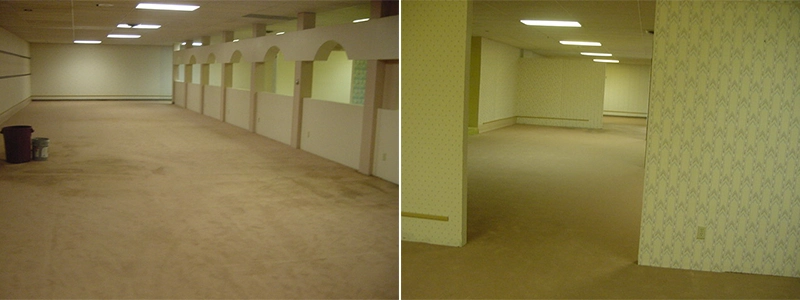
It's worth noting that the Backrooms phenomenon was born in 2019, but the unsettling image of the original photo wasn't created for the creepypasta.
The photograph was actually taken in June 2002 during the renovation of a former furniture store in Oshkosh, Wisconsin.
In early 2003, the new tenant, a HobbyTown USA store, posted updates on their website about converting part of the building into an indoor RC car racing track. One of the photos documenting the renovation progress was the now-famous image of the yellow rooms. At that moment, the space was still mostly empty, with yellow walls and carpet, which is why it looks so liminal and "Backrooms-like."
It would later be reposted across 4chan for years before finally sparking the Backrooms myth in 2019.
"This was a former furniture store with plenty of partitions and fake inner walls. It also needs serious upgrades of insulation, lighting and facilities. We have a very tight budget, volunteers are needed for another couple of weekends (or nights) to whip this into shape," the post said.
The renovation was successful, and that the store opened and operated normally for over 20 years with an active RC racing track upstairs.
In 2024-2025, the original owner (Robert Mazza) retired, and the store was sold, and rebranded to John's Hobbies. The RC track continued operating under the new ownership.
And now, following the film's release, it attracted Google. The tech giant announced a "first-of-its-kind research partnership" with A24, focused on research to help artists develop new workflows and techniques.
Behind those Backrooms blimps. Director Kane Parsons on bringing the suburban set to life through both practical build outs and Blender. pic.twitter.com/6k40Zr4Z6p
— A24 (@A24) June 16, 2026






















































































































































































































































































