
From the days of HD-DVD versus Blu-ray, to Xbox and PlayStation, Microsoft and Sony are two companies competing furiously for market recognition. But that doesn't mean they can't be friends.
Here, the two have partnered to embed artificial intelligence capabilities into the Japanese company’s imaging chip.
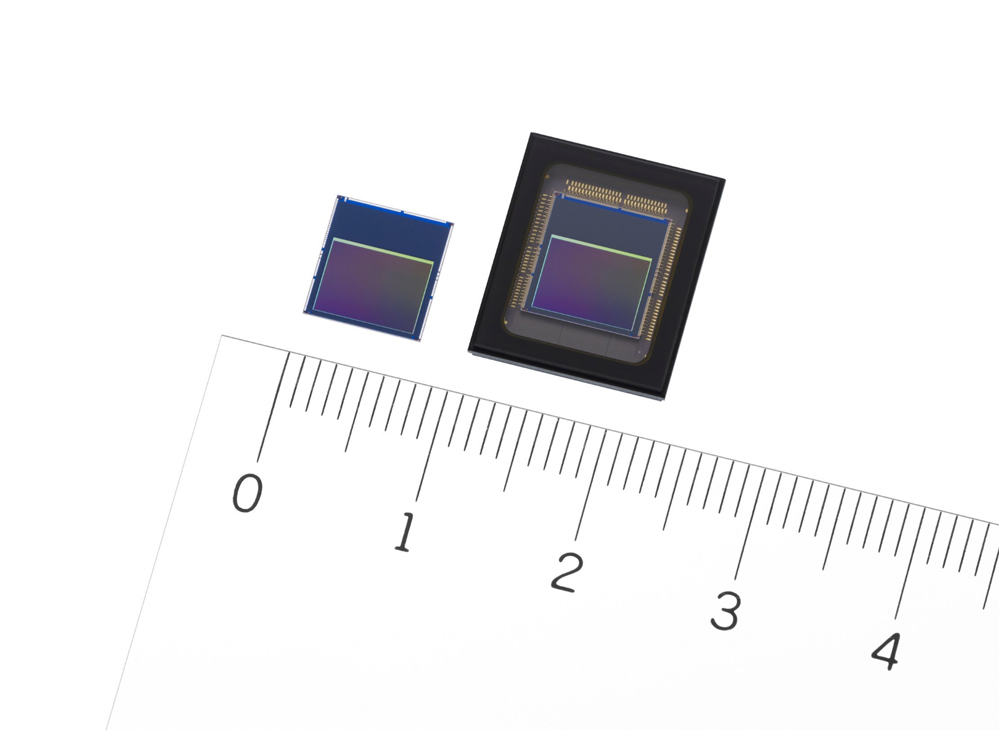
The sensor that is named the IMX500, is touted as first image sensor in the world with the ability to run AI models, directly inside the module itself.
"The companies will embed Microsoft Azure AI capabilities on Sony’s intelligent vision sensor IMX500, which extracts useful information out of images in smart cameras and other devices," said Microsoft on its announcement.
The module packs big advantage as it has its own processor and memory built-in. This allows the camera to analyze whatever it is shooting/recording through AI-related technology, like Microsoft’s Azure.
The main difference in this technology that any previous ones is that, the approach is in a self-contained system that is faster, simpler and more secure to operate.
The IMX500 is designed to localize cloud-based AI and processing. So rather than a camera capturing something to then sending the data to a processor, to then send it to a cloud server somewhere in this world to be processed, the sensor can do all that locally and offline.
To make this happen, the technology isn't actually generating actual images.
Sony’s AI chip can analyze the video it sees and provide just metadata about what’s in front of it. So instead of showing what's inside the frames of vision, it can say what's in them.
The AI-powered Sony sensor is capable of recording high-resolution 4K video and simultaneously conducting its AI analysis at up to 30 frames each second.
Because the module doesn't need to send the data to a server somewhere to be processed, there should be no chance for hackers to intercept sensitive images or video.
The Japanese giant however, has plans to introduce a platform on Azure cloud infrastructure to enable enterprises build custom AI models for the image sensor. The cloud platform aims to reduce development times by simplifying “key workflows” and providing pre-packaged features “designed to protect data privacy and security” so customers won’t have to build everything from scratch.
The IMX500 is primarily designed to power enterprise systems, such as industrial cameras for monitoring product lines.
In general, the AI-capable sensor can also help advance augmented reality applications.
Takeshi Numoto, corporate vice president and commercial chief marketing officer at Microsoft, said that:
"Through this partnership, we're combining Microsoft's expertise in providing trusted, enterprise-grade AI and analytics solutions with Sony's established leadership in the imaging sensors market to help uncover new opportunities for our mutual customers and partners."
With the two companies working together, they aren't actually trying to disrupt the market.
“We are aware many companies are developing AI chips and it’s not like we try to make our AI chip better than others,” said Hideki Somemiya, senior general manager of Sony’s System Solutions group. “Our focus is on how we can distribute AI computing across the system, taking cost and efficiency into consideration. Edge computing is a trend, and in that respect, ours is the edge of the edge.”
And besides that the IMX500, which is being made available as a bare chip, there is another version called the IMX501, which comes with ceramic packaging.
Sony already enjoys a substantial lead as one of the world’s foremost provider of image sensors, by having Apple, Samsung Electronics. and many major Chinese smartphone maker as its customers.
The partnership follows Microsoft and Sony announcing in 2019 that they would explore the joint development of Azure-based gaming and content-streaming services.