Microsoft is one of the main backers of OpenAI, and has spent billions of dollars to the company.
With the money, OpenAI's has enough money to fund the development of the powerful generative AI, ChatGPT. In return, Microsoft received early access of ChatGPT.
While it was supposed to be a mutually beneficial arrangement, that only happened on the outside.
On the inside, the partnership has its fair share of enduring pains.
This happened because the two sides have different opinions regarding the AI.
On one side, Microsoft sees it in a business perspective.
After spending money to gain early access to the generative AI technology of OpenAI, the smaller but prominent player in the field, Microsoft that invested only 49% in the arrangement knew that the wider industry has yet to see and experience this kind of technology.
Upon realizing the AI's abilities, Microsoft knows that with it, it can go directly enhance its products significantly.
In this case, the AI should be able to make Edge web browser compete better with Google Chrome, and Bing with Google Search.
This is the reason why Microsoft was rushing to put the AI tech into its various products, including its main application, Windows.
On the other side, OpenAI as the creator of the AI, sees it in a developers' point of view,
OpenAI doesn't see things the way Microsoft did.
Instead, as the maker of ChatGPT and the GPT-3.5, OpenAI knows it well that the AI can be more than a handful.
It's reported that OpenAI warned the tech giant about the dangers of integrating its large language model (LLM) early without training it more.
OpenAI cautioned Microsoft, saying that integrating GPT-4, which was an unreleased version of the LLM, could lead to lies and nonsense responses.
Microsoft deliberately ignored this, and went full speed ahead and launched the tech anyway.
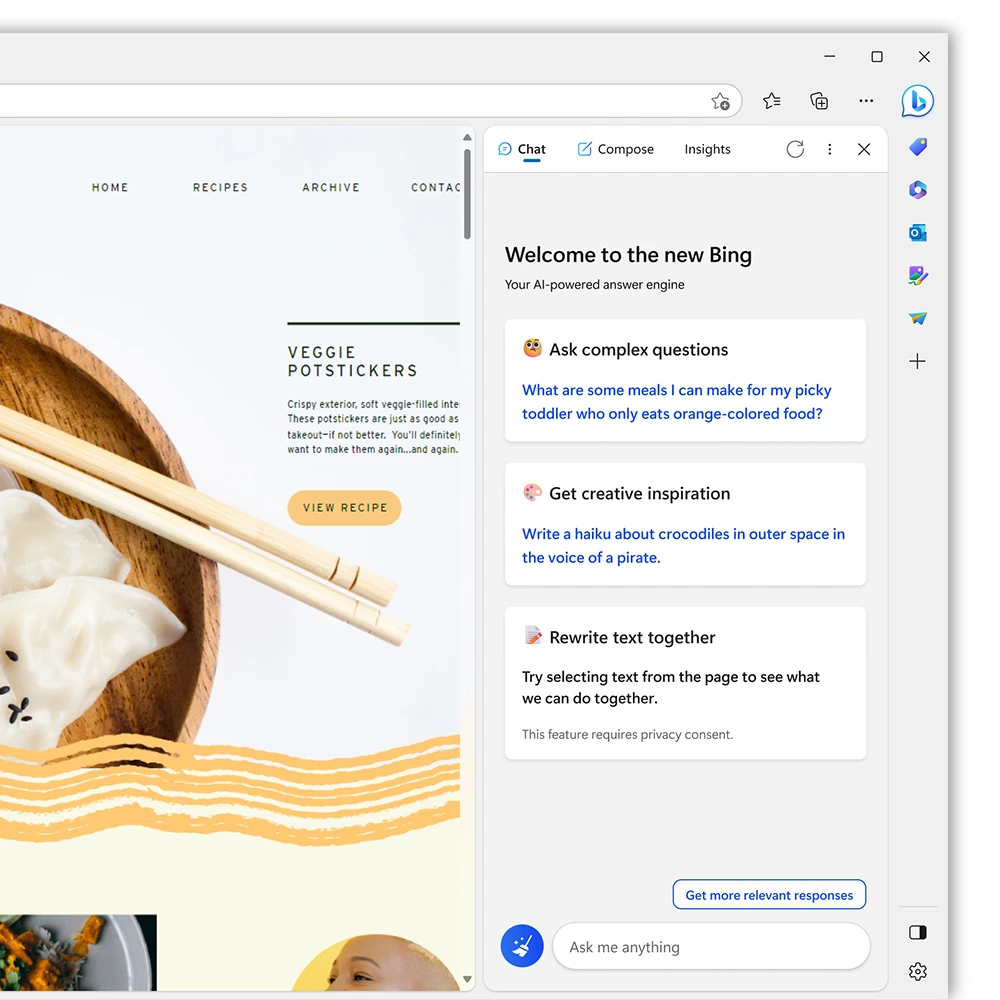
The result is well-documented throughout the tech sphere, as well as the internet.
Way too many people experienced how the AI hallucinate greatly.
For example, people have said that the AI flirted with them, wanted to have affair with them, loved them, and sometimes, hated them. There has been instances where the AI spoke misinformation, and argued, and even threatened its users. The AI spoke lies, and misled users into believing what's untrue.
Simply put, Bing's chatbot was unpredictable.
The barrage of "hallucinations" greatly undermined the tech's usefulness, and a result, Microsoft strictly limited the free-spirited AI.
People loved it because of its hilarious responses, and OpenAI was right.
ChatGPT and its engine, are a nuisance, and cannot be trusted.
The chatbot resembles Tay, Microsoft's previous project that was a Hitler-loving, sex-promoting chatbot.
Despite all that, Microsoft still ignored OpenAI's warnings.
This is because the conflict between two went beyond just that.
Read: Microsoft Makes Its Bing Chatbot Available On Mobile, And Loosens The Restriction A Bit
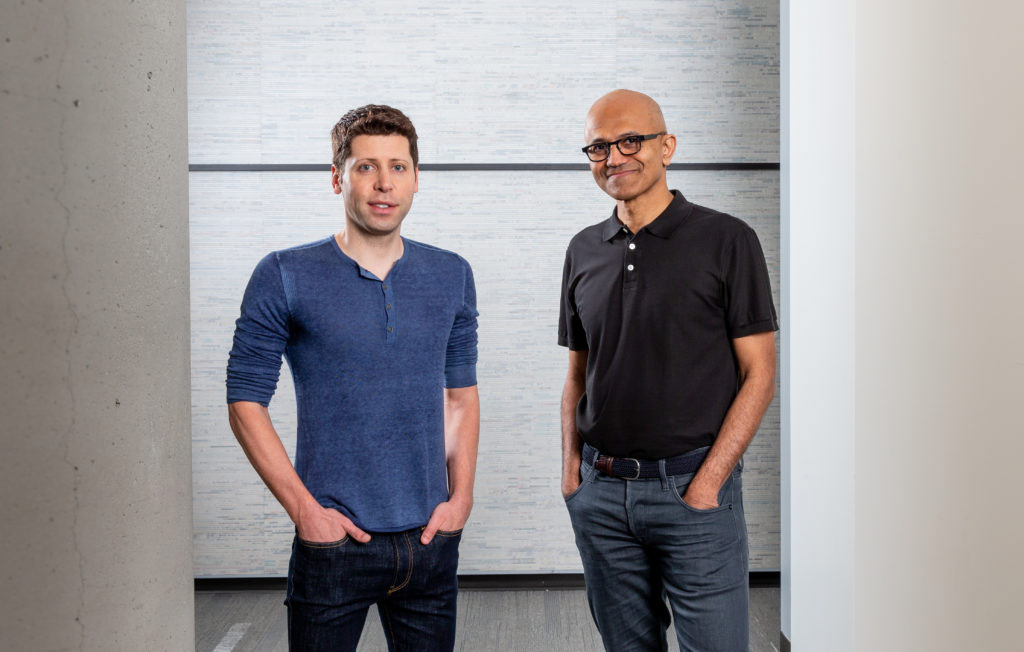
“I felt OpenAI was going after the same thing as us,” said Microsoft CEO Satya Nadella. "So instead of trying to train five different foundational models, I wanted one foundation, making it a basis for a platform effect. So we partnered. They bet on us, we bet on them."
And according to Microsoft co-founder, Bill Gates, he said that ChatGPT has the ability to change the world.
In other words, the two need each other, but are opposing forces.
"What puts them in more of a collision course is both sides need to make money," Oren Etzioni, board member and former CEO of the Allen Institute for Artificial Intelligence, told the WSJ. "The conflict is they’ll both be trying to make money with similar products."
Meanwhile, OpenAI's own chatbot ChatGPT has left Bing in the dust and has amassed 200 million monthly users.
This happened after ChatGPT was considered one of the fastest-growing app, ever.

















































































































































































































































































