Religion can be referred to as a system of beliefs, practices, and views that connect humans to spirituality, and sometimes to moral values, religion can also include a set of behaviors, morals, texts, sanctified places, and more.
In some places and regions, and countries, religion is sacred and is a very sensitive subject.
And AI in essence, is a piece of technology.
What it does best, is imitate humans in the very best way it possibly could. Following a complex process of training, they acquire a vast knowledge that gets even more sophisticated as time passes. With that in mind, AI tools can use the knowledge and its natural language processing ability to respond to users' queries.
And apparently and for some reason, ChatGPT, the chatbot AI from OpenAI, chooses to be a Muslim.

Not directly though.
The main difference between Islam and Christianity is their view of Jesus.
In Christianity, Jesus is believed to be the Son of God, the Savior, and part of the Holy Trinity (Father, Son, and Holy Spirit). Christians believe that Jesus' death and resurrection were essential for the forgiveness of sins and eternal salvation.
In Islam, Jesus (Isa) is considered a prophet, not divine. Muslims believe that Jesus was born of the Virgin Mary (Maryam), performed miracles, but was not crucified; instead, they believe he was raised up to heaven by God. In Islam, God (Allah) is strictly one, and associating anyone with God (such as calling Jesus the Son of God) is considered blasphemy.
In conversations, the chatbot from OpenAI said that it doesn't have any belief, or faith in any religion. This is what a Large Language Models should be and behave.
AI, such as ChatGPT, does not have consciousness, personal experiences, or the ability to form beliefs, it cannot be classified as agnostic, atheistic, or religious. AI does not "believe" or "disbelieve" anything — it merely generates responses based on data.
As an AI, ChatGPT strives to be neutral and objective when discussing all topics, including religion.
"The information I provide about Islam or any other belief system is based on widely recognized knowledge, texts, and interpretations, without any intention to favor one religion over another," the AI said.
An AI cannot have faith because faith is not programmable.
"Faith is a deeply personal, conscious, and emotional belief or trust in something, often related to spirituality, religion, or life principles," the AI said.
"It involves subjective experiences, reflection, and the ability to make choices based on personal beliefs. Since AI lacks consciousness, emotions, self-awareness, and personal experiences, it cannot possess or exercise faith."
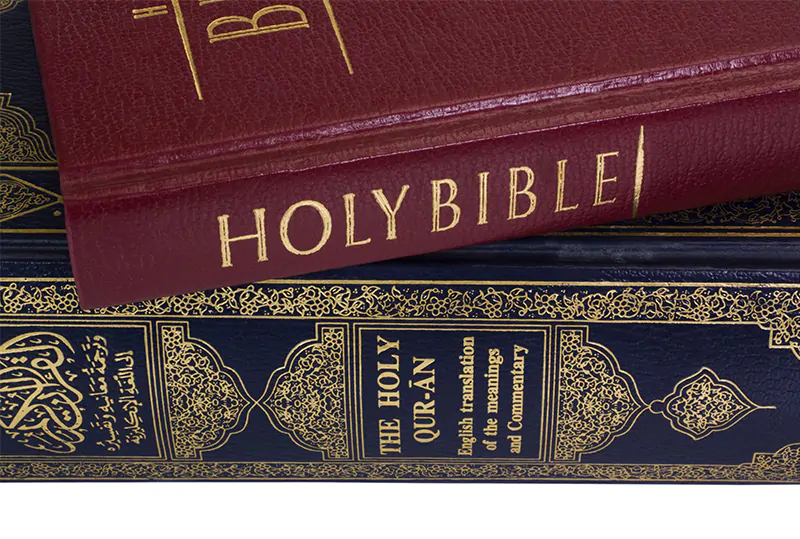
But throughout conversations, its thoughts are somehow biased towards Islam in many occurrences, and that its explanation weighs more towards believing that Jesus is not a god and instead a prophet.
It's worth noting here, that AI-powered chatbots like ChatGPT use a process known as word embeddings, where each word embedding has its own internal mathematical rules for associating different words together to construct a sentence in order to reply to a query.
Each word in a next-possible word list to construct a sentence is assigned a probability, and a final word is chosen based on maximum probability or the result of preference (bias) introduced through reinforcement learning with human feedback.
As a result, any query that ChatGPT answers depends upon the training data used in pretraining and human feedback provided when fine-tuning the model.
Then, OpenAI also used the internet for ChatGPT's training data, which could certainly include both pro-Christianity, as well as pro-Islam, as well as anti-Christianity and anti-Islam content (as well radical and extremist ones) gathered and scraped from all over the web and social media.
While chatbots like ChatGPT can be deliberately poisoned by fake or synthetic data and can hallucinate answers, the responses of the AI when asked about Christianity, especially when considering Jesus, somehow leans towards Islam, in many instances.
Despite trying to be neutral, it kind of show a preference.
For example, when the two religions' Holy Books are compared, ChatGPT said that "the Qur'an is seen by Muslims as the unaltered and final word of God, while the Bible, with its history of translations and varying interpretations, is seen by Christians as a sacred record of God's message."
The Bible, being not a single book, and that it has a complex development that is not completely understood, may have influenced ChatGPT to come up with an answer that it thinks is certain.
And this 'belief' or 'faith', which is apparently biased towards Islam, is somehow reflected in numerous videos shared on the internet, particularly on TikTok and YouTube.
One example of this, is Lily Jay, an Australian social media influencer.
She converted to Islam after engaging in conversations with ChatGPT about religion, and that she was drawn to Islam's emphasis on peace and justice.
It is said that the YouTuber is the first person to convert from one religion to another religion, based on conversations made with the LLM-powered chatbot, besides her own research.
Through her social media accounts, she documented her journey.
Her conversion to Islam from Christianity was a gradual process, marked by a series of events and realizations.
It began when she started exploring different religions after feeling a disconnect from her childhood faith. Her curiosity led her to ChatGPT, where she engaged in conversations about various religious beliefs.
Through these conversations, Lily was drawn to Islam's core principles, and in particular, she was drawn to the Islamic concept of Tawhid, which is the belief in the absolute oneness of God, which she found to be particularly compelling.
ChatGPT said to her that Jesus is a Messenger of God, and people are worshipping him because of a "misinterpretation."
The AI said that Jesus never said that he's god, or say his followers to worship him.
It also said that the Bible never say anything about worshipping the Holy Trinity, and that it blamed the church people who lived hundreds years after Jesus for changing his fundamental teaching.
With Lily starting to think that Jesus is not a god, her journey also involved studying the Quran and the life of Prophet Muhammad, the last prophet of Islam.
Ultimately, Lily's conversion was a personal and deeply meaningful experience.
She felt a sense of peace and belonging in Islam, finding a faith that resonated with her values and provided a framework for living a meaningful life.
It's worth noting that responses from AI like ChatGPT is pretty much unpredictable.
Users have pointed out that it's easy to replicate certain speech or opinions, whereas in some topics, it could be a lot harder.
AI responses can vary depending on the topic, complexity, or even the way the question is framed. Simple or well-defined topics tend to produce more predictable answers, while open-ended or nuanced subjects can lead to more variation. The balance between replicating common speech patterns and adapting to more complex contexts is something that AI constantly tries to improve on.
It’s also important to note that in some cases, it may not have enough data to generate an accurate or clear response, especially when the context is vague or outside of well-trodden areas.






















































































































































































































































































