
Jeffrey Epstein was an American financier whose wealth, charm, and high-profile connections masked a far darker reality.
Born in Brooklyn in 1953, he rose from teacher to money manager, surrounding himself with billionaires, politicians, and royalty. Behind that façade, however, Epstein built a network of sexual abuse and trafficking involving underage girls, exploiting his influence under the guise of mentorship and opportunity.
Epstein died in his prison cell, officially ruled a suicide but steeped in controversy.
His death didn’t end the questions.
The fallout continues to expose links between Epstein and some of the world’s most powerful figures, as investigations and document releases, including the Epstein records from the U.S. House Oversight Committee, keep revealing just how far his reach extended.
And here, a Reddit "data hoarder" shared that they have quietly turned a chaotic, virtually unusable trove of Jeffrey Epstein-related documents into something approachable: a searchable AI-powered archive.
The project, called 'Epstein Archive' has thousands of files, drawn from the House Oversight Committee’s public release, searchable by name, place, date, or organization.
Not long ago, the public only had access to more than 33,000 pages of documents. They include images (like JPGs and TIFFs) of scanned pages, all of which were dumped into a Google Drive folder with little structure or guidance.
These files were subpoenaed by the Oversight Committee from the Department of Justice and superficially redacted, but the way they were released made them nearly impossible to parse or search.
That’s where the Redditor behind the alias nicko170 stepped in.
According to their posts, they spent over 200 hours using AI tools to transcribe, reconcile, and index the documents.
"I have now processed 20% of the files, in 4 hours, and uploaded to GitHub, including transcriptions, a statically built and searchable site, the code that processes them (using a self hosted installation of llama 4 maverick VLM on a very big server," the post says.
The system uses OCR (optical character recognition) to pull text, both printed and handwritten, and then runs entity extraction to tag mentions of people, places, dates, organizations.
And not just that, because they also tried reconstructing multi-page documents from slices spread across different scans.
Because the original files were so disordered (and errors in OCR are inevitable, especially with smudged, handwritten, or redacted pages), the archive isn’t perfect.
Some transcripts devolve into gibberish when the scans are too blurry or damaged.
But still, the archive is far better than digging through the mess, and has indeed dramatically lower the barrier to exploring what’s in those thousands of pages.
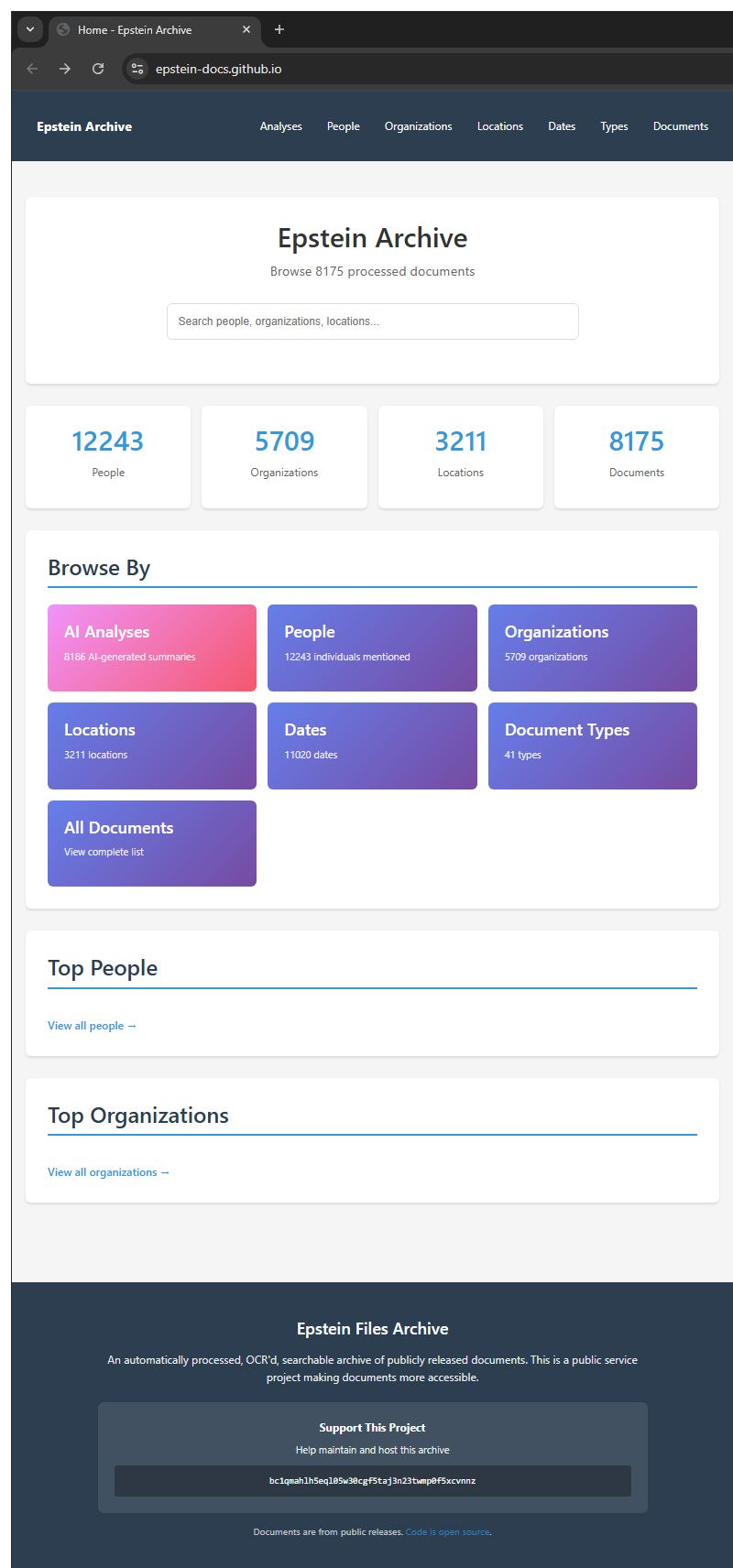
For example, users can quickly locate files mentioning Donald Trump. Without this archive, this would be a an extremely tedious process.
Without the archive, they have to scan 8,175 files that have inside them the names of 12,243 people across 5,709 organizations in 3,211 different locations
But most importantly, Epstein Archive doesn't add or remove, or alter the original content. The archive only reprocesses what has already been released by the Oversight Committee.
In other words, the archive is just a catalog, with entries tied to the original filenames and locations, meaning that using the archive, users must still fetch the raw document images themselves.
To preserve its availability and resist censorship, the entire archive has been mirrored as a torrent. That means, even if a host or server removes the files, the community can continue to share them.
In short: what started as a disorderly, opaque public data dump has been transformed into something that feels like a research tool.
The Epstein Archive is now among the easiest, most navigable ways to explore this trove of documents.
This project is also available on GitHub.
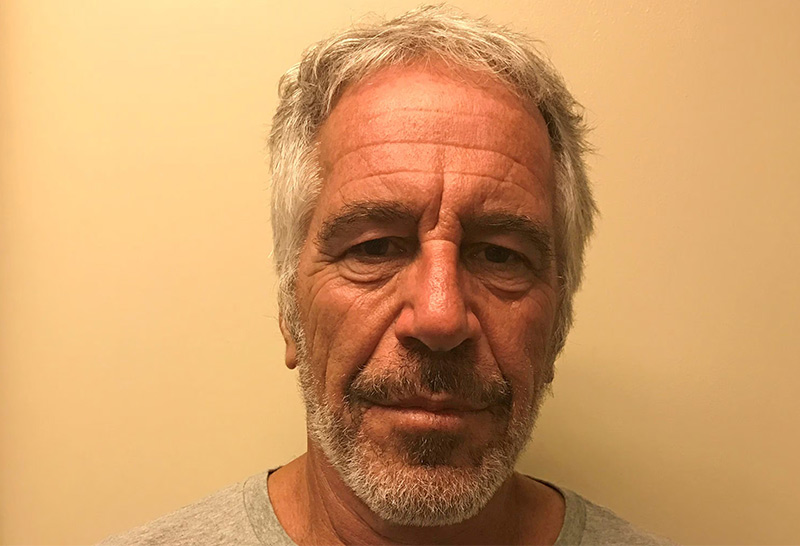
Jeffrey Epstein was an American financier whose wealth, social connections, and crimes have made him one of the most infamous figures of the 21st century.
When he left teaching, he quickly developed a reputation for both charm and mystery. By the 1980s and 1990s, he had cultivated an elite circle of friends that included billionaires, politicians, academics, and royalty. His lavish homes, private jet, and private island became symbols of a lifestyle that thrived on secrecy and power.
But behind the façade of sophistication and influence, Epstein was building something far darker.
Over decades, he was accused of sexually abusing and trafficking underage girls, often under the guise of offering financial help or career opportunities.
While his death ruled a suicide, but his infamous status and notorious deeds created deep suspicion and countless conspiracy theories. His death left behind an enormous unanswered question: who else knew, enabled, or participated in what he did?
The fallout from Epstein’s crimes continues to ripple through politics, business, and media.
From his one-time associates, including public figures to global leaders, have all faced scrutiny, lawsuits, and public outrage. Investigations into his network, finances, and connections have continued even after his death, leading to a steady stream of leaked and declassified documents. These include the thousands of pages now being combed through by the public in the so-called Epstein Files, released by the U.S. House Oversight Committee.
And Redditor nicko170 just makes it easy for everyone.
Further reading: Jeffrey Epstein Files Unsealed: The Pandora's Box Opens On Social Media