Just after a week celebrating its 80th Independence Day, Indonesia witnessed a significant surge in public dissent as thousands gathered in front of the DPR/MPR (Indonesian House of Representatives) building in Jakarta.
This demonstration, dubbed the "Revolusi Rakyat Indonesia," was ignited by revelations of substantial allowances and salaries received by members of parliament, totaling approximately 120 million rupiah per month (~$7300). This is exponentially larger than the regional minimum wage set by the government, which employers are required to pay their workers. In Jakarta, Indonesia's capital, the minimum wage is Rp 5 million (~$300).
Not only that, because it's also said that members were receiving substantial monthly housing allowances of 50 million rupiah (~$3,000), in addition to their base salaries.
The disparity between these figures and the average citizen's earnings became a focal point of public outrage.
The role of social media in amplifying this movement cannot be overstated.
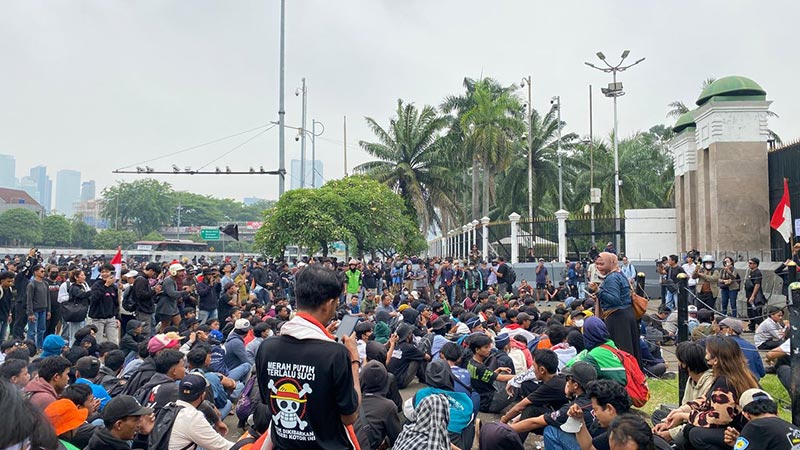
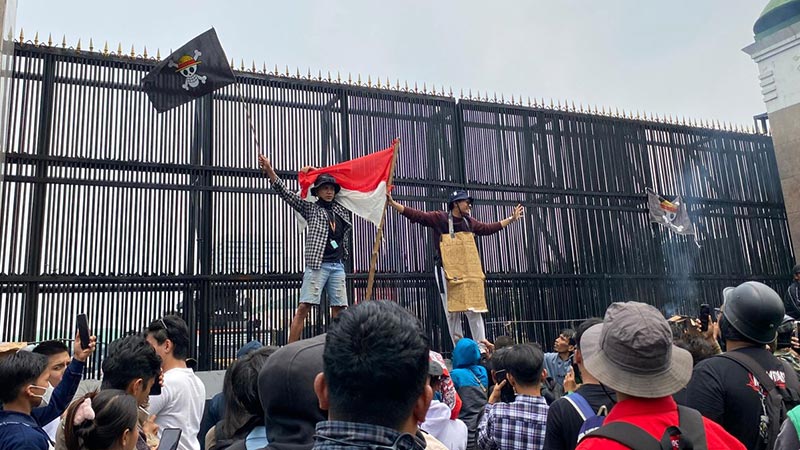
The protest commenced around 10:00 a.m. in front of the MPR/DPR building in Senayan, Jakarta.
Initially, approximately 80 individuals gathered, including university students, online motorcycle taxi drivers, and other civilians. However, the crowd rapidly swelled to thousands as more participants joined throughout the day.
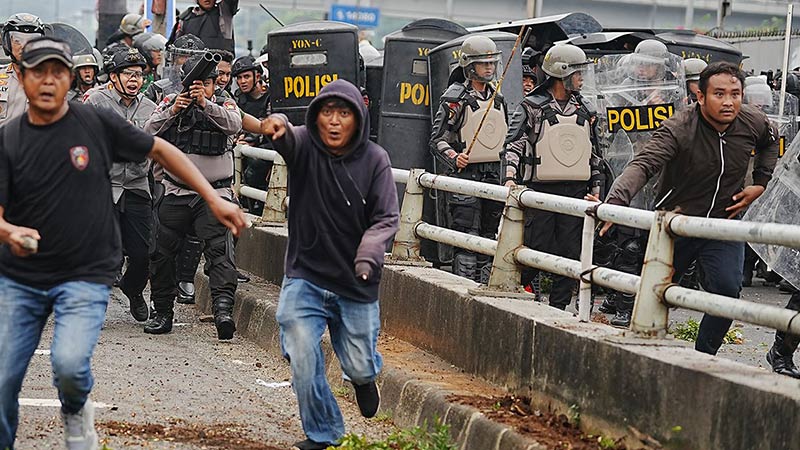
As the demonstration intensified, and and as soon that they overnumbered those guarding the gates, protesters attempted to breach the parliamentary complex. In response, riot police deployed tear gas and water cannons to disperse the crowd. The situation escalated when demonstrators threw rocks and bottles, and set a motorcycle ablaze.
Security forces, numbering over 1,200 personnel, were stationed to manage the unrest, leading to significant traffic disruptions in the vicinity.
Among the protesters, a distinctive symbol emerged: the One Piece Jolly Roger flag. This anime-inspired emblem became a unifying symbol for the movement, representing resistance against perceived governmental corruption and elitism.
Following the clashes, authorities arrested a number of individuals, including students and alleged anarchists. Two protesters sustained injuries, one of whom suffered a head wound from a thrown stone. Despite the government's call for calm, the protests continued into the evening, with demonstrators expressing their dissatisfaction with the administration's policies.
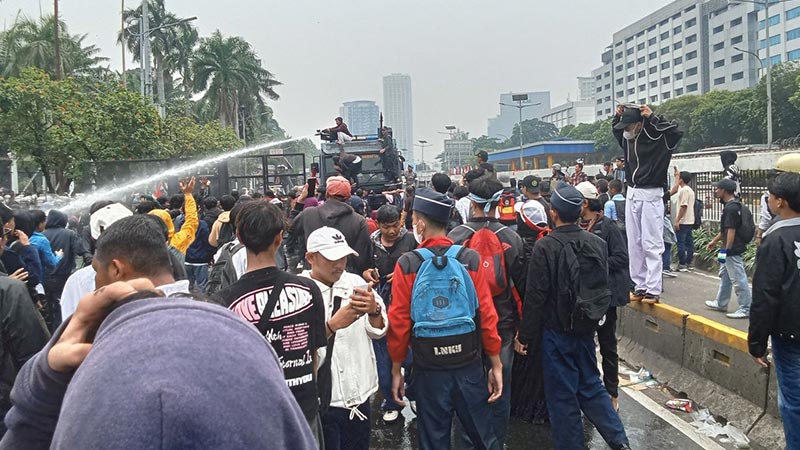
The events in Jakarta were part of a larger wave of protests across Indonesia, including regions like Central Java and South Sulawesi.
These demonstrations were fueled by widespread discontent over austerity measures, rising taxes, and perceptions of governmental corruption. The protests underscored a growing demand for accountability and transparency from elected officials.
During the moment, social media platforms went havoc, as influencers, users, protesters and more, shared their opinions on their chosen channels.
Viral videos, memes, and infographics highlighting the income disparities were shared widely, fueling public indignation. The hashtag #RevolusiRakyatIndonesia trended nationally, with users from various demographics expressing their discontent and mobilizing for the cause.
Some even said that it would be wiser to just "bubarkan DPR," which literally means “dissolve the House of Representatives”.
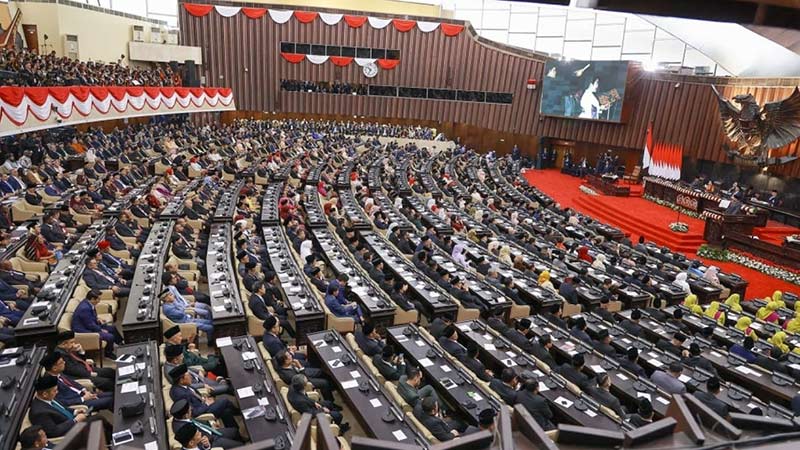
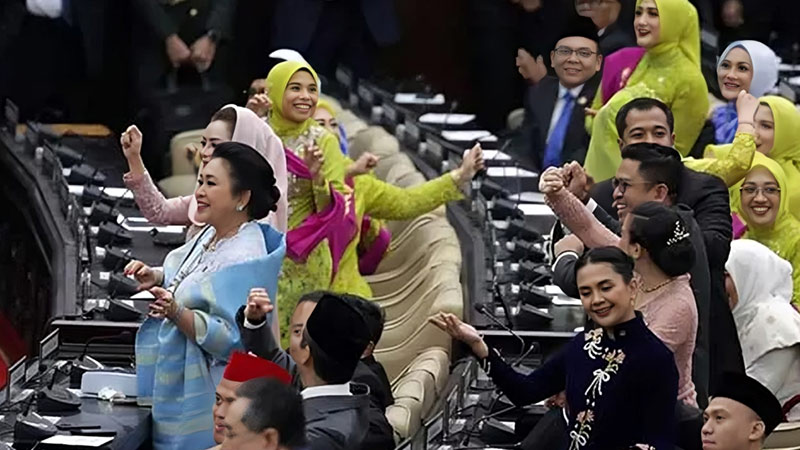
People were already fed up with parliament members receiving huge allowances and salaries, far beyond what an average Indonesian earns. while ordinary citizens struggle with daily expenses. Many protesters viewed this as a symbol of systemic corruption and elitism in government.
The frustration didn’t start that day. Indonesians have long expressed dissatisfaction over several issues.
From government inefficiency and corruption, where there’s a widespread perception that public officials misuse state funds, make decisions benefiting themselves or their networks, and fail to implement policies effectively. Then, the fact that influencer have been involved in politics, seen as ways to sway public opinion.
Not to mention the recent new taxes and economic pressures, where rising taxes, inflation, and economic policies perceived as unfair have worsened citizens’ daily lives.
When people see lawmakers with enormous allowances, it fuels the sense that the government is out of touch with reality.
While the movement gained organic traction, the involvement of influencers in Indonesia's political landscape adds a layer of complexity.
Over 20 influencers were elected to the Indonesian parliament in the recent national elections, reflecting the growing intersection between social media fame and political influence. However, there is no concrete evidence to suggest that influencers were directly hired or paid to promote or disperse information related to the "Revolusi Rakyat Indonesia."
The movement appears to have been primarily grassroots-driven, with individuals utilizing their platforms to voice their concerns and rally support.
But what's worth noting, bots were actively being used by both sides to amplify their messages.
In summary, the "Revolusi Rakyat Indonesia" on August 25, 2025, serves as a symbolic call for accountability and systemic reform, reflecting deep-seated anger at entrenched corruption, inequity, and ineffective governance.
It was also a testament to the power of digital platforms in mobilizing public opinion and inciting collective action. While influencers may not have been directly involved in orchestrating the movement, their presence in the digital sphere reflects the evolving nature of political engagement in Indonesia.
In other words, while protests happen on the streets, the power of digital platforms has once again shows that they can mobilize public opinion and inciting collective action.
As social media continues to shape public discourse, the lines between activism, influence, and politics are becoming increasingly blurred.
The moment marked yet another moment in Indonesia's political landscape, where the power of civic engagement and the populace's demand for equitable governance.














































































































































































































































































