
The internet is an open space. It's crowded, noisy, and packed with more information than what any person can handle in their lifetime. However, privacy is scarce.
Trackers are everywhere, and almost all websites and platforms out there thrive by knowing their users in one way or another, by knowing too much.
And here, in a bold new effort to safeguard digital privacy and support essential tools for online freedom, the Tor Project has teamed up with Funding the Commons to launch a groundbreaking web3-native crowdfunding campaign that benefits ten vital internet freedom projects.
According to the announcement, the initiative aims to create a more sustainable transparent and community-driven way to fund critical digital infrastructure at a time when traditional funding sources face increasing instability and global internet freedom has been declining for fifteen consecutive years.
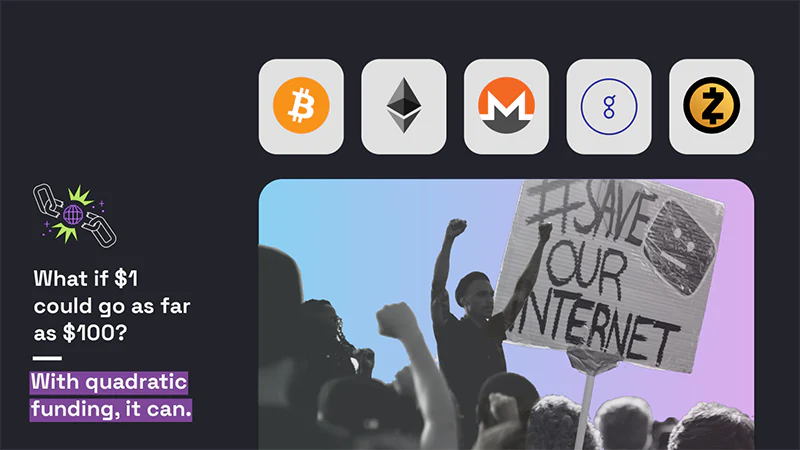
The campaign which can be found at internetfreedom.torproject.org and its corresponding Onion Service at http://swvbwbtmajvfrnz4wztx6ovshilm23ntigi73fz5wczj3aqdquq5icad.onion invites donations in Bitcoin Ethereum Zcash Monero and Golem and runs through June 18 2026 with an initial matching pool of one hundred fifteen thousand dollars backed by generous match funders including Cake Wallet Zcash Community Grants Logos and Octant with additional ecosystem participation expected as the drive progresses.
Tor is strongest when the broader internet freedom ecosystem is healthy. In partnership with @FundingCommons we are excited to launch a web3-native crowdfunding initiative benefitting 10 internet freedom projects at https://t.co/hbFUyPMYV5.
Thank you to or generous matchfunders… pic.twitter.com/9yDIs3vBlT— The Tor Project (@torproject) May 19, 2026
Internet freedom has been under growing pressure as governments and powerful actors deploy increasingly sophisticated tools for monitoring restricting access and censoring information.
Millions of people around the world rely every day on nonprofit projects that provide secure communication channels whistleblower protection uncensored news access and circumvention of censorship yet these organizations often struggle with unstable grant funding leading to staffing cuts delayed software updates and reduced support for the most at-risk communities.
Recognizing that the Tor network itself is strongest when the broader ecosystem of privacy and anti-censorship tools remains healthy and vibrant the Tor Project decided to take a leading role in exploring new participatory funding models that can reduce dependence on potentially unreliable institutional sources and instead empower everyday users and supporters to have a direct say in sustaining the tools they use.
At the heart of this campaign is quadratic funding a sophisticated participatory matching system designed to amplify the impact of many small donations rather than letting the process be dominated solely by a few large contributors. In quadratic funding the amount a project receives from the matching pool grows with the square root of the number of unique donors it attracts which mathematically rewards broad community support and gives even modest contributions real weight in determining final allocations.
This approach has gained traction in web3 circles as an innovative way to fund public goods because it aligns incentives toward collective participation and democratic decision-making rather than top-down grantmaking.
The one hundred fifteen thousand dollar matching pool will be distributed across the ten selected nonprofit projects based on how the community votes with its donations during the campaign period creating a transparent and merit-based distribution that reflects real user priorities.
The ten beneficiary projects represent a carefully chosen cross-section of the internet freedom ecosystem each addressing different but interconnected challenges in privacy secure communication and resistance to censorship.
This initiative arrives at a pivotal moment when many regular users of Tor Browser and related privacy tools are increasingly aware of the importance of contributing directly to the infrastructure they depend on.
By making donations crypto-native and accessible through both a clearnet site and a dedicated Onion Service the campaign lowers barriers for privacy-conscious supporters who prefer to contribute without compromising their own anonymity. Early momentum has already generated discussion across privacy cryptocurrency and open-source communities underscoring a shared recognition that protecting internet freedom requires ongoing collective action from users builders and funders rather than relying solely on sporadic large grants.
For those interested in participating the full details including real-time donation progress the complete list of beneficiary projects and step-by-step instructions are available directly on the campaign site at internetfreedom.torproject.org or via its Onion Service.
The Tor Project has stressed that this is not only about raising immediate funds but also about testing and refining models that could be scaled in the future to support even more projects that often struggle to reach traditional donors.
This effort stands as a powerful example of how the communities that benefit most from these tools can come together to secure their future in innovative and transparent ways.