
In the chaos of a Middle East war that has the world on edge, Iran just flipped the script on everyone watching the Strait of Hormuz.
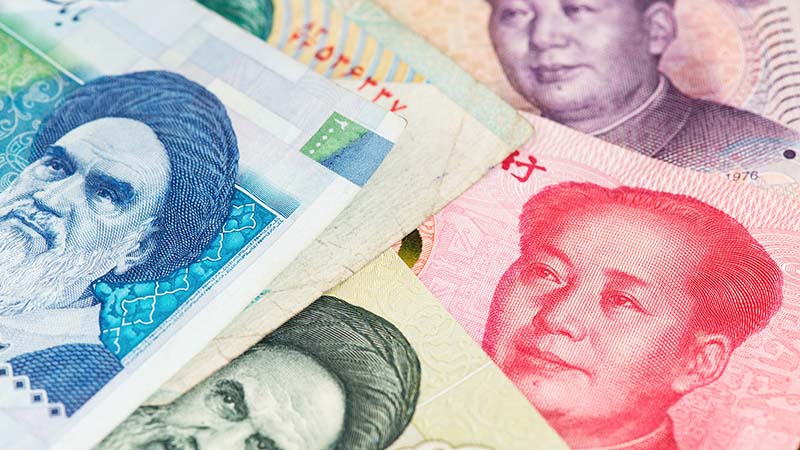
By shutting the 30 kilometers-width straight, tankers idling are shooting up oil prices, while missiles and drones still streaking across the sky. But Tehran isn't waiting for rescue. Instead, it quietly announced it will now accept payments in Chinese yuan, its own rial, and most notably, a growing menu of stablecoins for every barrel of crude and every trade deal that can still squeeze through the cracks.
By using cryptocurrency, Iran is overcoming sanctions shield when every traditional bank door has been kicked shut.
While the conflict rages, this isn't some desperate workaround.
It's Iran turning the battlefield into a strategic advantage.
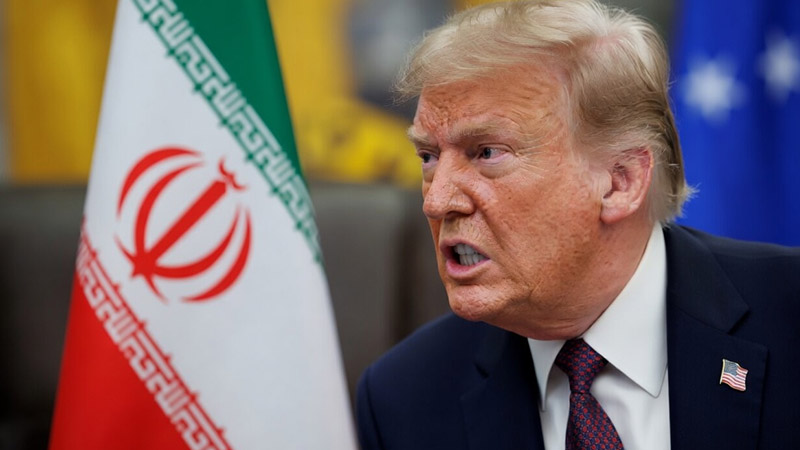
The Strait’s closure, triggered by the latest round of strikes and counterstrikes, has choked off roughly a fifth of global oil traffic and left energy markets in full meltdown mode. Yet amid the explosions and rerouted shipping lanes, Iran has found its secret escape hatch.
Yuan settlements lock in discounted oil sales straight to Beijing's hungry refineries, no SWIFT, no U.S. Treasury watching the wire. The rial keeps the domestic economy breathing, while stablecoins, those dollar-pegged digital tokens that move at the speed of a text message, let Iranian traders settle deals with partners from Moscow to Mumbai without ever touching a U.S. bank.
For tanker operators, that influence is showing up in hard numbers.
War-risk insurance premiums have surged from no charge to negligible levels to as high as $1 per barrel in aforementioned currencies, or about 1-3% of a vessel's value per voyage. In practical terms, a single transit for a large crude carrier can now add hundreds of thousands to over a million dollars in extra costs alone.
And that's before factoring in the broader disruption.
Many vessels are already dealing with delays, rerouting, and other operational frictions, each one compounding costs and turning what used to be a routine passage into an increasingly expensive gamble.
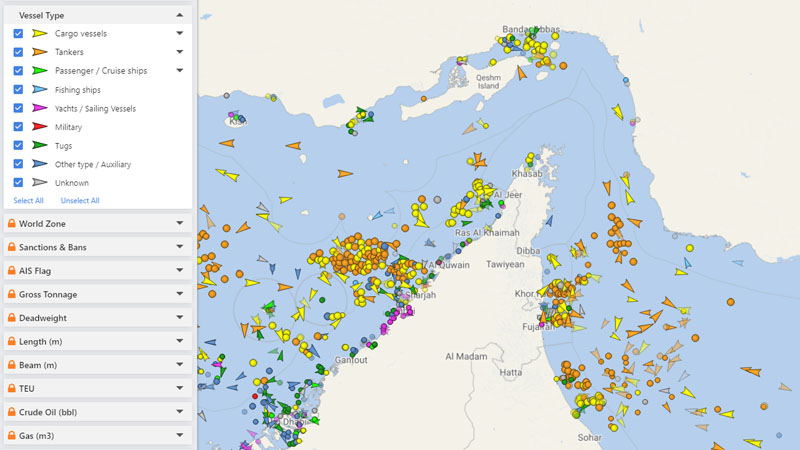
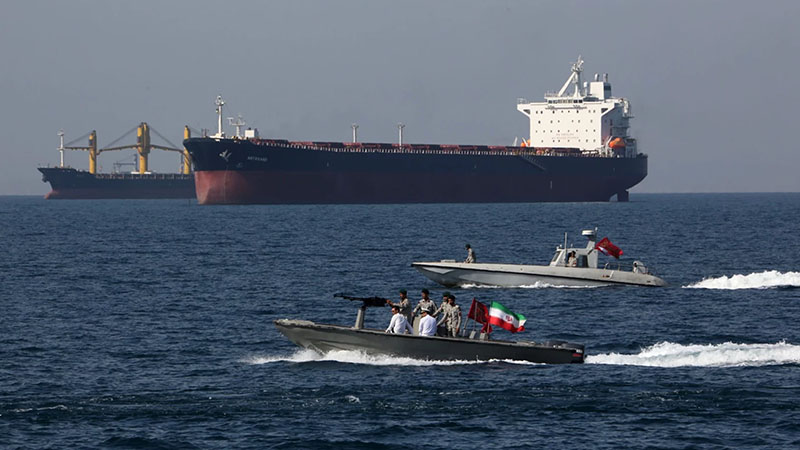
If a vessel opts into what's effectively Iran's "Hormuz Tollbooth," it may receive a one-time transit authorization along with tightly controlled routing instructions (often directing it to hug the Iranian side of the Strait under the premise of added security). As the ship approaches, crews may be required to signal identification details over VHF radio, after which an IRGC patrol boat can meet the vessel and provide an armed escort through the most sensitive stretch of the passage.
In some cases, ships may also be encouraged to signal alignment more clearly, whether through declared routing, cargo transparency, or other visible indicators of compliance.
In return, the expectation is reduced risk: fewer delays, lower likelihood of interference, and a smoother transit through a corridor where disruption has become the norm.
In practical terms, it amounts to a negotiated passage where compliance and alignment translate into relative safety.
However, not every ship is negotiating from the same position.
Countries with closer ties to Tehran, most notably China, appear to have more flexibility, whether through pricing arrangements, currency choices, or political alignment.
Others face longer delays, higher costs, or outright uncertainty. Essential goods, regional energy shipments, and politically aligned cargo are more likely to pass. High-profile Western-linked shipments or anything tied directly to adversarial supply chains face tighter scrutiny, disruption, or deterrence. The result is a tiered system of access, shaped as much by geopolitics as by maritime law.
Moving oil through the Strait is no longer just a logistical challenge. It's now a negotiation.
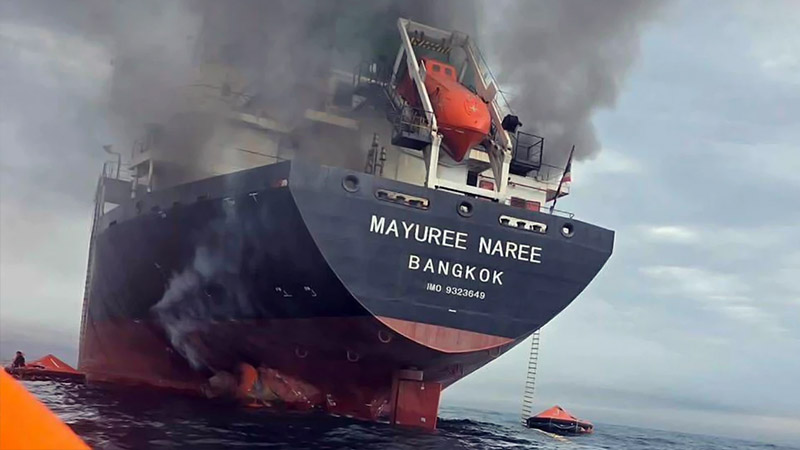
Vessels that "ignore warnings" or are seen as "illegally insisting" on passage face consequences, which can include being fired upon or, in some cases, being damaged badly enough to be abandoned or even sunk.
The IRGC added that vessels tied to the U.S. and its allies "have no right" to pass through the strategic waterway, even if they are willing to pay.
For Iran the payoff is immediate.
The country had experienced daces of sanctions that once starved the economy. But now, that has suddenly become yesterday's problem. Yuan inflows from China keep the regime flush with the foreign reserves it needs to buy drones, parts, and whatever else keeps the war machine humming. Stablecoins add rocket fuel: fast, borderless, and practically untraceable, letting everything from oil middlemen to freelance techies move money while the bombs fall.
The rial stays king at home, cushioning ordinary Iranians from the worst of the chaos.
In short, Tehran just turned a naval choke point into a financial one-up, proving that its war against the U.S. and Israel, it doesn't need to even launch a single attack to make enemies at their edge.
Across the ocean, Washington is quietly seething.
Every yuan-denominated barrel is another dent in the petrodollar armor that has kept the dollar throne secure for decades.
The U.S. spent years perfecting financial isolation tactics, only to watch Iran dance around them with digital tokens and a friendly yuan handshake.
Stablecoin flows are especially galling, as those same assets regulators love to lecture about suddenly become the lifeline keeping Iranian oil on the market.
The war that was supposed to weaken Tehran is instead spotlighting how fragile dollar dominance really is when the shooting starts and the code keeps running.
We've lost the keys.
— Iran Embassy in Zimbabwe (@IRANinZIMBABWE) April 5, 2026
America’s leverage shrinks with every transaction that skips the greenback, and the message is loud and clear: the old rulebook just got torched.
None of this is happening in a vacuum, of course.
The same conflict that closed the Strait is accelerating a global shift toward anything-but-dollar finance, with crypto playing the unlikely hero (or villain). Iran isn't inventing the playbook. After all, it has been accumulating stablecoins for quite some times. But it's only now, that it's just executing the adoption louder and faster than anyone expected while the missiles fly.
Traders are already buzzing on Telegram channels about the new payment rails, and the numbers suggest the experiment is working.
So while the world holds its breath over tanker insurance rates and geopolitical headlines, spare a thought for the real plot twist: a sanctioned nation under fire just proved that the future of money isn't waiting for peace treaties. It’s moving at blockchain speed, backed by Beijing, and completely unbothered by whoever controls the world's most important waterway.
Iran didn’t just survive the closure of the Strait. It literally turned the whole mess into its most effective financial counterpunch in years.
Read: 'You Are Fired': Iran's Sharpest Message In The Age Of Social Media And Digital Warfare