
There was a time when mobile phones were simple, equipped with nothing more than a numeric keypad. Then came physical keyboards, offering a more efficient way to type. Eventually, phones evolved into smartphones—sleek devices with large touchscreens that stretched from edge to edge, redefining how we interacted with technology.
But as user expectations grew, so did their demands of having even bigger screens.
To be able to fulfill this demand, manufacturers pushed beyond the limitations of traditional candy bar phones, and sparked a new wave of innovation: foldable screens.
Foldables promised the best of both worlds—a big screen when opened, a compact form when closed. But this new category introduced its own challenge: hinges. Essential to the folding mechanism, hinges are mechanical components—and like all moving parts, they're prone to wear and tear over time.
The Samsung Galaxy Z Fold 7, the company’s latest flagship foldable, comes with an impressive durability claim. According to Samsung, the device’s internal OLED panel is officially rated for up to 500,000 folds under ideal conditions—a significant leap from previous generations, signaling just how confident the brand is in its hinge and display engineering.
A YouTuber tries to prove that claim.
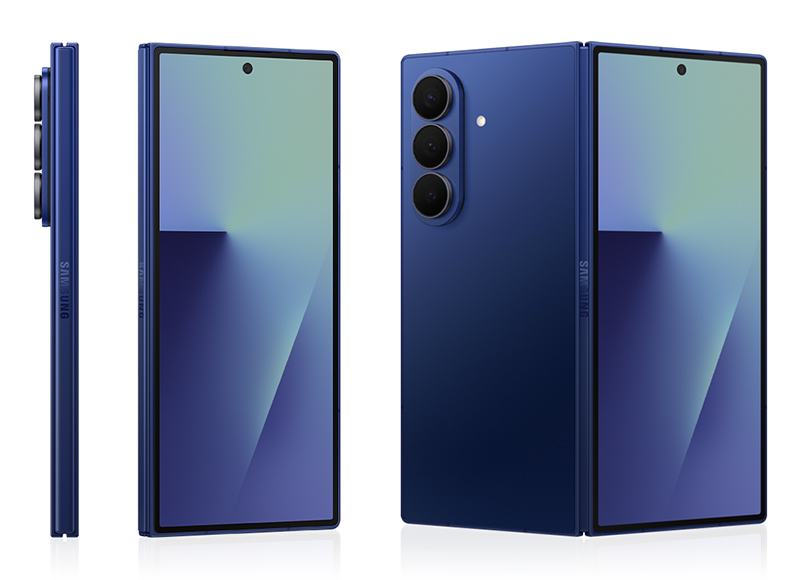
A South Korean tech YouTuber from the channel ,em>Tech-it has embarked on a experiment: folding and unfolding the Samsung Galaxy Z Fold 7 up to 200,000 times in a live-streamed durability test.
Whereas manufacturers, like Samsung, would be testing the durability of their phones using automated machines, the YouTuber tested it using his own hands.
For a few days, in a marathon-like challenge, he simulated years of real-world usage of using the phone, by manually folding an unfolding the phone repeatedly, as a more human-centered benchmark of the device’s hinge and display endurance. By doing so, his attempt translates into about a decade of use for average users, folding and unfolding the device around 100 times a day, everyday.
Despite these assurances, the YouTube test has revealed some nuances.
By roughly 6,000 folds, the phone experienced a reboot error. At around 46,000 folds, the hinge began to creak, and by 75,000 folds, observers noted an unidentified liquid seeping from the hinge—though the screen itself continued functioning normally.
However, even after going beyond 150,000 folds, the display showed no dead pixels, the touchscreen remained responsive, and internal components like speakers and cameras appeared unaffected.
Physically, the Z Fold 7 is built with numerous upgrades designed to enhance its resilience.
Despite being the lightest and thinnest model in the Samsung Galaxy Z Fold line-up to date, Samsung equipped it with refinements to the hinge and frame design, while maintaining the book-style folding format that defines the series.
In this case, the Z Fold 7 features a 50% thicker Ultra Thin Glass (UTG) for improved shock absorption, a new high-elastic adhesive layer designed for faster recovery between folds, and a titanium backing plate reinforcing the screen's stability—elements Samsung credits for the device’s improved fold resilience and structural integrity.
Compared to earlier foldables, the Z Fold 7 stands out as one of the most refined in its class.
Reviewers highlight its ultra-thin profile (4.2 mm unfolded, 8.9 mm folded), lightweight frame (215 g), improved camera system (200 MP main lens), and higher display brightness—all while delivering smoother folding mechanics.
The major downside of this to some people is that, it no longer supports the S Pen.
It's worth noting that the Z Fold 7’s advertised 500,000-fold rating, which is double of the Fold 6, is still trailing behind models like the OnePlus Open, which claims 1,000,000 certified folds.
Nevertheless, with no sequel model expected from OnePlus in the near future, and nobody has ever done a folding and unfolding video to prove the claim, the Z Fold 7 remains a standout option in both reliability and consumer appeal.
It's also worth noting that Z Fold 7 has experienced some issues, with a lot of consumers saying that their devices cannotot open completely flat.
Samsung defended itself by saying that it is perfectly normal for a Galaxy Z series phone with a Flex Hinge display to stay open in a range from 178.5 degrees to 181.5 degrees. Previous discussions suggest that if a phone is not folding open inside that range should be eligible for a replacement under warranty.