On social media, people hide behind filters, fake identities, and curated personas, masking their true intentions and realities.
While most people do this to portray dreams and visualize whatever is in demand, others are more sinister.
In the past few years a sophisticated sextortion network – known as the "BM Boys" – has emerged, primarily run by young men in Nigeria.
The "BM," which stands for "blackmail," flaunt their lavish lifestyles on TikTok – videos of cash, designer clothes and cars – and recruit each other to run online romance scams. Using fake social profiles, BM Boys befriend vulnerable teens on Instagram and lure them into sending nude photos.
Once the images arrive, the tone suddenly shifts to threats: pay money or the photos will be leaked to family and friends.
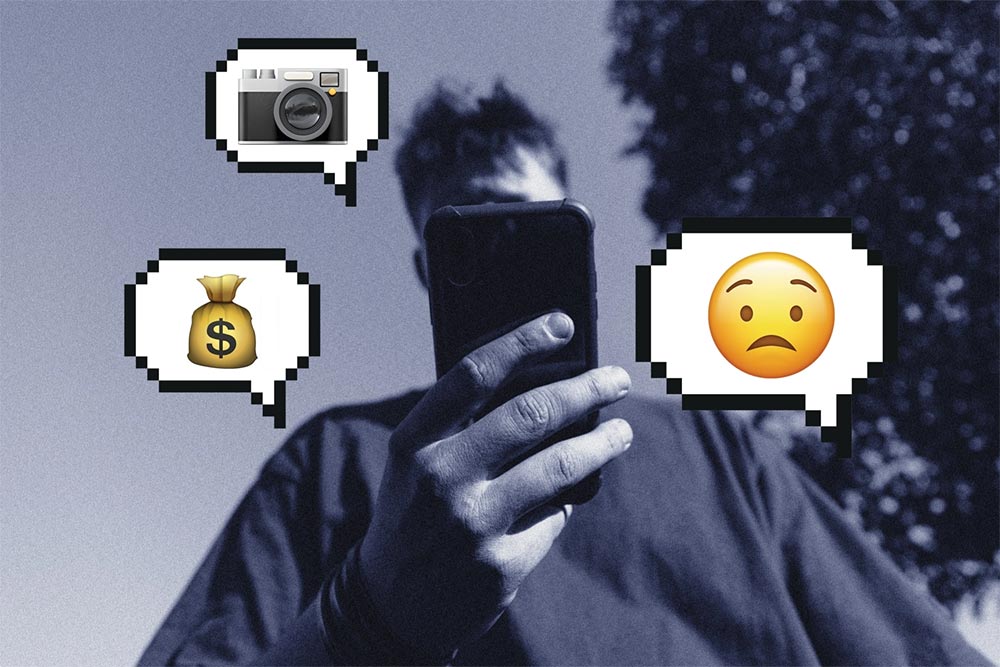
Much like the infamous "Nigerian Prince" scams that have long haunted inboxes around the world, these modern sextortionists also hide behind screens, preying on the vulnerable by carefully gaining their trust.
But that’s where the similarities end.
Unlike the old-school advance-fee frauds sent via email to adults of all ages, these perpetrators use social media to deliberately target teens—especially in the United States, Canada, the UK, and Australia. Their tactics begin with what's known as "bombing"—mass-following young users connected by shared interests, such as the same school, sports team, or fan club. By rapidly accumulating mutual friends, their fake profiles appear legitimate and trustworthy.
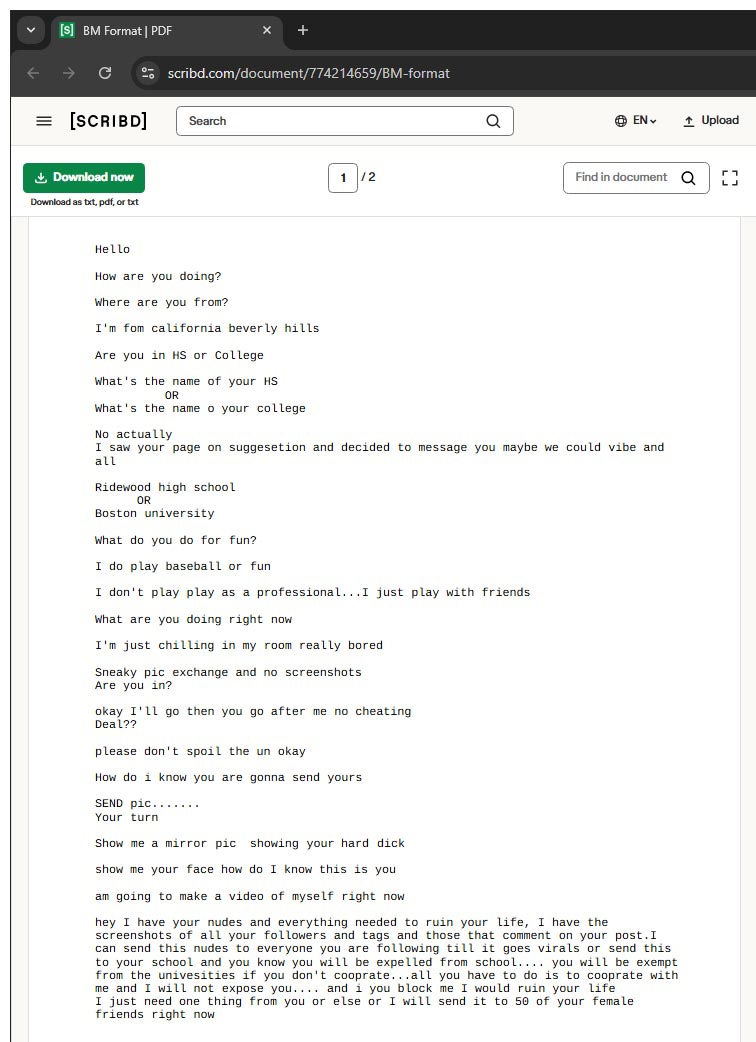
Once embedded in a victim’s social circle, they pose as peers or potential romantic partners, sliding into private messages to begin building rapport. The tone is casual, flirtatious, and fast-moving—designed to lower defenses and create a false sense of intimacy.
Soon after, the predator shifts the conversation into explicit territory, urging the target to share a nude photo. But in a psychological twist, the scammer often sends a nude image first—not of themselves, but one stolen from platforms like OnlyFans, where sex workers post explicit content. This tactic is strategic: it feels authentic, escalates trust, and pressures the victim to reciprocate.
To appear even more convincing, many of these scammers—known as BM Boys—consume U.S. pop culture obsessively, staying up to date on American slang, sports, and trends. It's all part of the illusion, designed to make them seem like just another teenager from across town.
After thousands of attempts, these networks have refined their scripts into a high-pressure, precision-crafted trap. Every move is calculated. Every message is rehearsed. The goal is simple: get the victim to break the line between playful and explicit—fast. Because once they do, the blackmail begins.
Once the target takes the bait and sends their own explicit photo, the trap slams shut.
Immediately after receiving the image, the scammer's tone shifts—from flirtation to coercion. The victim is now a hostage to their own vulnerability. Demands for money follow instantly, typically ranging from a few hundred to several thousand dollars, depending on how desperate the scammer believes the target might be.
The threat is simple but devastating: Pay up, or we expose everything.
The promise they dangle is privacy. But the threat is ruin. Victims are often bombarded with fake news articles, fabricated TV screenshots, and even mocked-up police bulletins to make the threats appear legitimate and urgent. These psychological tactics are designed to induce panic and override rational thinking—forcing the target into silence and submission.
And if a victim hesitates, tries to stall, or refuses to comply, the consequences can be brutal. The blackmailers make good on their threats—leaking the explicit photos to classmates, teachers, family members, or even the victim’s entire online circle. Shame becomes the weapon. Exposure becomes the punishment.
What started as a flirtatious exchange ends in a nightmare—and for some, it doesn’t end at all.
In other words, the threats are real.
Unlike the Nigerian Prince scams that usually involve more individual or small-group based, this BM Boys scams are conducted by highly organized rings with distinct roles:
- Chatters: These individuals initiate contact with victims, often posing as attractive young women on platforms like Instagram. They engage in conversations to build trust and eventually persuade victims to share explicit content.
- Collectors: Once a victim is coerced into paying, collectors handle the receipt and management of the funds. They ensure that the money, often obtained through platforms like Cash App or Bitcoin wallets, is securely transferred and laundered to avoid detection.
- Bosses: They oversee the entire operation, coordinating between chatters and collectors, and ensuring the smooth execution of the scam.
When it comes to recruitment, the BM Boys turn social media into a hunting ground—not just for victims, but for fresh recruits.
On TikTok, they shamelessly promote the lifestyle of a digital predator, packaging their crimes as a fast-track to wealth. Posts are captioned with bold claims like, "BM got me a new car – $5,000 in a few hours," luring in curious and impressionable teens who begin to see sextortion not as a crime, but as a lucrative side hustle.
But these posts aren’t just brags—they’re tutorials in disguise.
Operating in plain sight, these scammers upload "BM Updates," a kind of insider newsletter disguised as viral content. These updates are packed with step-by-step guides, including text scripts, pre-recorded voice messages, stolen images, and even audio clips to mimic American anger or urgency—all designed to help new scammers master the craft of manipulation.
Tips often include how to hack Facebook accounts, spoof identities, and use VPNs to mask their location in Nigeria, giving them a digital passport into the lives of their targets. They even offer advice on how to fake local slang, accents, and emotion, so they can blend in seamlessly with American, British, or Australian victims.
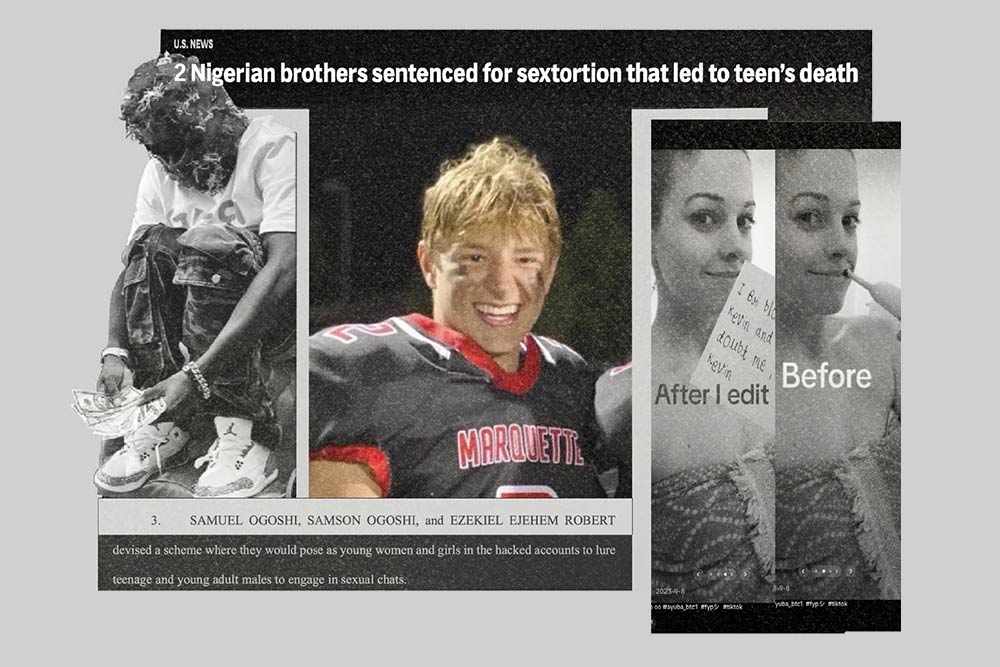
The BM Boys have turned social engineering into a crowdsourced business model, complete with onboarding, training, and motivational propaganda. And with every like, share, and repost, the cycle grows—fueled by greed, anonymity, and the allure of quick, dirty money.
"For me, it’s an easy thing to do," said one of the blackmailers, speaking on the condition of anonymity to discuss illegal activity.
"Any day, any time, we are working on our phones because if you don’t work, you’re not going to eat."
In other words, BM Boys operate on a far more sophisticated level than the old-school Nigerian Prince. Their scams aren’t confined to internet cafes or dusty email lists—they’ve evolved with the digital age, thriving in the hyperconnected world of social media, where teens often expose more of their lives than they realize.
What sets them apart is not just their ruthlessness, but their organization. This isn’t a handful of lone scammers—it’s a network, a digital fraternity of predators who train, share resources, and operate like a black-market startup. Scripts, stolen images, step-by-step tutorials, even pre-recorded audio—all are exchanged to educate new recruits and expand their reach.

Their presence on platforms like TikTok and Instagram isn’t just about hunting victims. It’s also about flaunting their ill-gotten wealth—flashy cash, luxury goods, and fast cars—which in turn lures more young people into joining their ranks. These public displays serve a dual purpose: recruitment propaganda and psychological intimidation for victims.
In 2023, the National Center for Missing & Exploited Children (NCMEC) received a staggering 26,718 reports of financial sextortion involving minors—more than double the 10,731 reported just a year earlier. Many of these cases have been linked to the BM Boys, according to law enforcement and digital safety experts.
And tragically, for some victims, the emotional toll proved too heavy to bear. A growing number of teens have died by suicide after being caught in these schemes, their lives destroyed by a single moment of vulnerability weaponized against them.
Arrests have been made, but nothing is stopping their operations.
This sharp rise in cases paints a chilling picture: we are witnessing a modern digital epidemic, where teenage boys are being groomed, manipulated, and blackmailed in plain sight.
In response, Meta announced in 2024 that it had removed over 63,000 Instagram accounts linked to sextortion networks, many traced to Nigeria. But despite these efforts, Instagram remains the preferred hunting ground. The combination of anonymity, mass reach, and intimate access to young users makes it the perfect stage for predators to perform.
BM Boys isn't the only highly-organized online crime group from Nigeria. Other notorious group, called the 'Yahoo Boys.'
One of its most notorious members, was Hushpuppi, who gained fame for flaunting a lavish lifestyle on Instagram, showcasing luxury cars, designer clothes, and opulent trips.
As one of the bosses, he functioned as a high-level facilitator and money launderer.
In 2022, Hushpuppi was sentenced to over 11 years in a U.S. federal prison for his role in laundering millions of dollars obtained through various cybercrimes, including BEC schemes and other frauds targeting businesses and individuals worldwide.














































































































































































































































































