Facebook has it all, and that it still hungers for more.
After blatantly copying Snapchat, the social giant Facebook is up for a new copying game. This time, it's Twitter's turn. And what gets copied is its most iconic feature: the character limit.
People on the web, especially those that are active on social media networks, are very familiar with Twitter's well-known 140-character limit. Facebook copies this feature, but instead of 140, it's giving 130 characters in a post. This way, Facebook may seem to not stole Twitter's concept, but nevertheless, it's definitely used it as an inspiration.
Many failed to notice the update because it isn't an 'exact clone' of Twitter's: there's no countdown ticker in the corner, and users you can still post things over 130 characters if they want to.
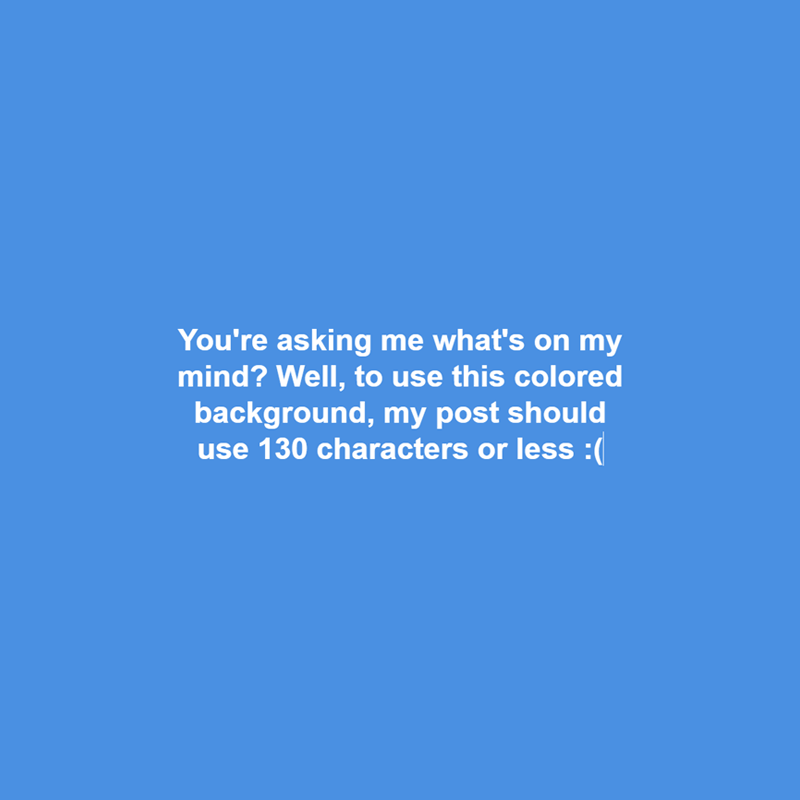
But here is the thing: the 130-character limit is actually meant to highlight the colored background feature. If users create a new post, there are those colored circles they can choose from. Tapping or clicking on any of them will change the color of the background, making status message appear in a huge text above it.
And if users type more than 130 characters into the box, Facebook will turn the chosen colored background off and returned it to the default black text over white.

While this isn't a game changer, they eye-candy is certainly a vivid way to create status updates. It can be a great way to announce certain types of situations, like something exciting in life. Other than that, the colors may irritate those that aren't yet familiar with the feature.
Here Facebook is like making itself clear: it is giving incentives to users by giving them the ability to have colored backgrounds, if they keep their posts short. Shorter posts should keep people's eyeballs glued and engagements higher, and encourage people to keep scrolling for more.
Since Facebook rarely make changes if not necessary. Here it's obvious that if people keep scrolling on their News Feed, there will be a greater chance for Facebook to show something that may interest them. This means more clicks and more ads to show. All that equals to more money for Facebook.






















































































































































































































































































