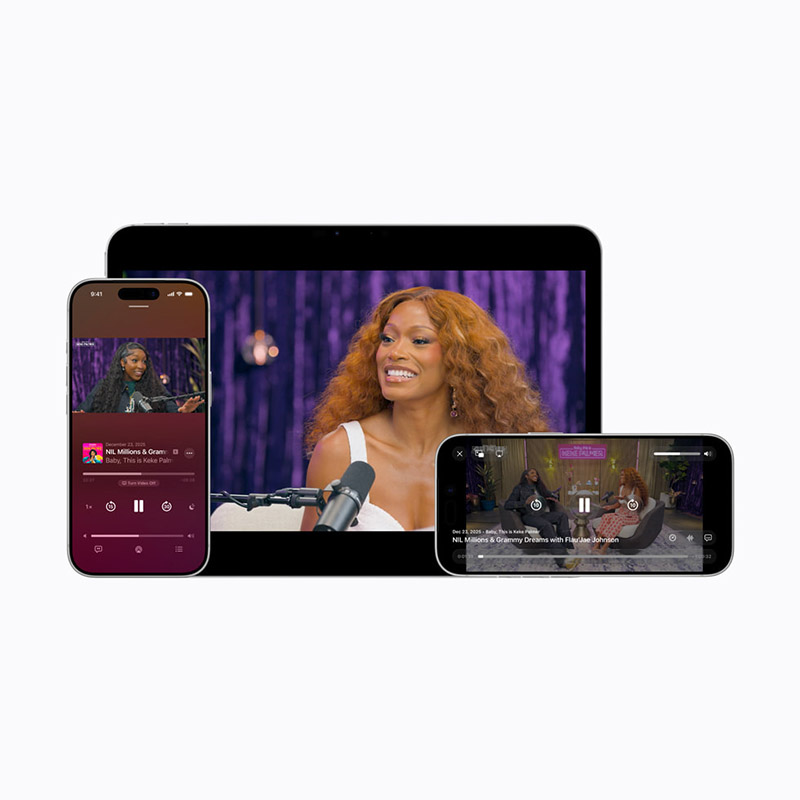
Apple has announced a significant update to its Podcasts app, set to roll out this spring, that brings a more integrated video experience to the platform.
The change relies on Apple's HTTP Live Streaming (HLS) technology, which allows for adaptive playback that adjusts quality based on network conditions, ensuring smoother viewing whether on Wi-Fi or cellular data.
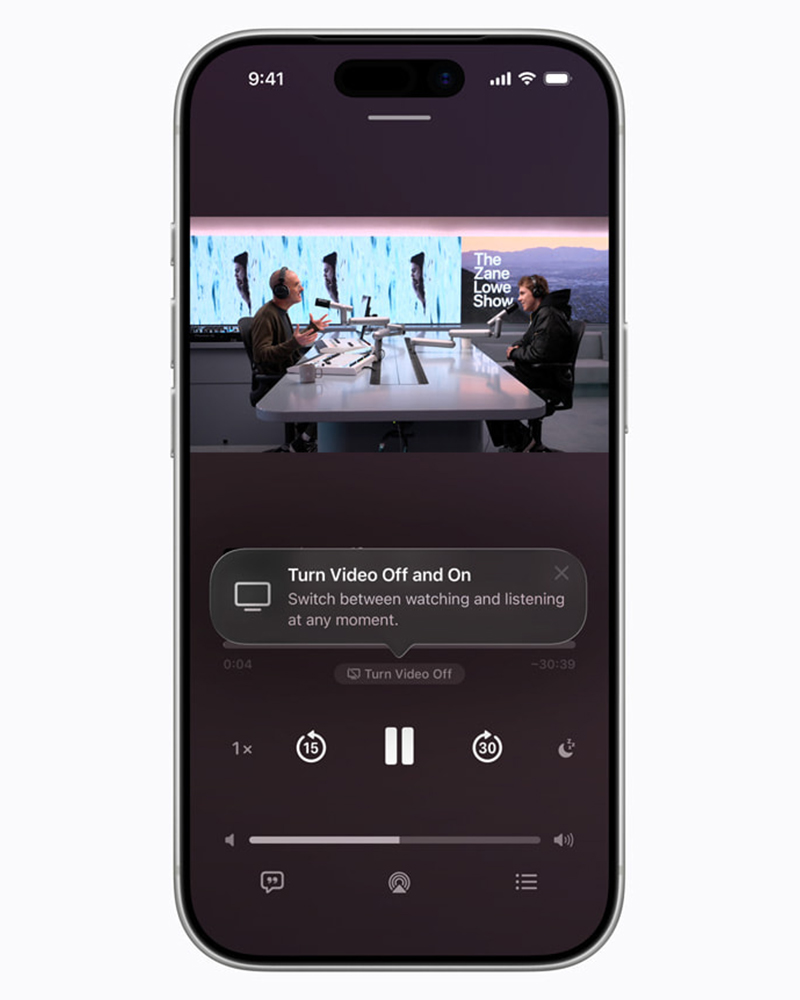
Previously, video podcasts often required separate RSS feeds, which limited their adoption compared to platforms like YouTube and Spotify, where video has become a major part of podcast consumption. With this update, users can now switch seamlessly between audio and video versions of the same episode within the app.
To do this, Apple is introducing a dedicated button that lets listeners toggle to video, and they can rotate to a horizontal full-screen view for a more traditional watching experience.
According to Apple in the announcement, video episodes also support offline downloads, similar to audio ones, making it easier to access content without an internet connection.
The feature integrates directly with existing Apple Podcasts tools, including personalized recommendations, editorial curation in categories like New and Shows, and cross-device availability on iPhone, iPad, Mac, Apple Watch, CarPlay, Apple Vision Pro, and the web at podcasts.apple.com.
It launched in developer beta form with iOS 26.4, iPadOS 26.4, and visionOS 26.4 in mid-February 2026, with the full public release expected in the coming months.
For creators, the shift simplifies distribution.
They can provide video through participating hosting providers such as Acast, ART19 (owned by Amazon), Triton's Omny Studio, SiriusXM's Media and AdsWizz, and Simplecast, with more expected to join.
Apple handles the HLS delivery without charging creators or hosts for distribution. Monetization remains in creators' hands, including through sponsorships, and the system supports dynamic ad insertion: including host-read spots, tailored for video.
Starting later in 2026, Apple will charge ad networks an impression-based fee for these dynamic ads.
This move comes as video podcasting grows in popularity, with surveys showing a substantial portion of listeners regularly watching rather than just listening.
Competitors like YouTube, which reports massive viewership for podcast content, and Spotify have invested heavily in visual formats, while services like Netflix have experimented with video podcast programming.
Apple's approach aims to catch up by making video a native, frictionless part of the podcast ecosystem rather than an add-on, while preserving the core audio focus that has defined the medium since the company helped popularize it two decades ago through iTunes.
Apple's senior vice president of Services, Eddy Cue, described the update as a milestone in the company's long involvement with podcasting, emphasizing greater control for creators over their content and business models alongside improved accessibility for audiences. Executives from supporting hosting platforms echoed this, noting that video represents the next evolution for the medium as audio and visual elements continue to converge.






















































































































































































































































































