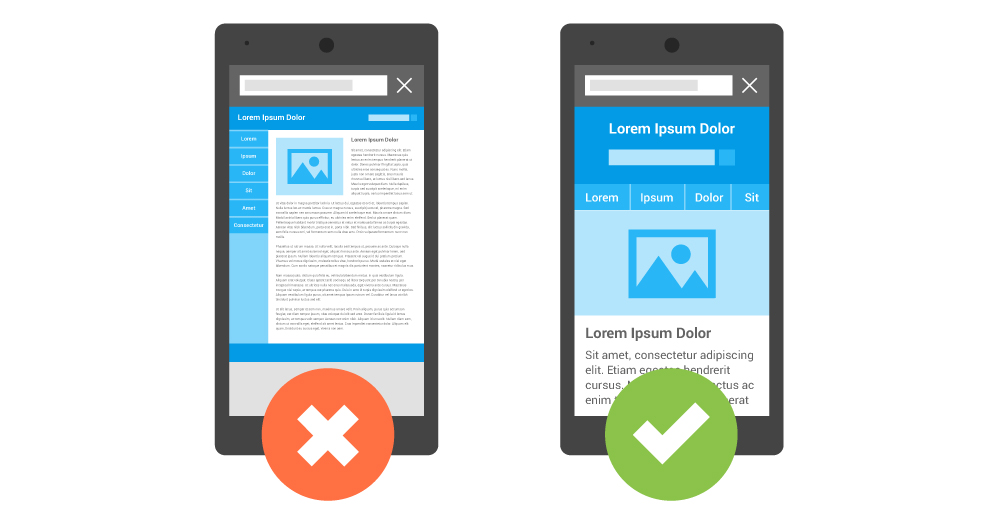
 Google is the most popular search engine, and it's still not going to give its throne to anyone, anytime soon. Bing is one of the most notable search engine besides Google that gives more or less similar experience, and for that it's staying close to Google in terms of updates.
Since there is no "mobilegeddon" for Bing, but the Microsoft-owned search engine did announced on May 14th, 2015, that it's giving an improvement for websites that are mobile-friendly.
The changes are pretty similar to Google's when it's mobilegeddon in April 2015. The algorithm change is aimed to lower the visibility of those that aren't giving friendly web browsing experience for mobile users. The term "mobilegeddon" was given because the update's impact was significant.
Mobile users are growing rapidly. As mobile devices are becoming a must-have item on people's list, search engine companies are trying to give websites that are mobile-friendly to score better on their results pages.
More mobile users searching on search engines means that there are less people using desktop computers. Google has taken a drastic measure with its mobilegeddon update, making it a game-changer for the company. On the other hand, Bing's approach is less significant. Given that it has fewer traffic than Google, Bing's algorithm measurement on whether or not a website is mobile-friendly, is not on Google's level of adjustment complexity.
In addition to improve the rankings of mobile-friendly web pages, Bing is also labeling selected search results as "mobile-friendly," shown in a tag beside links.
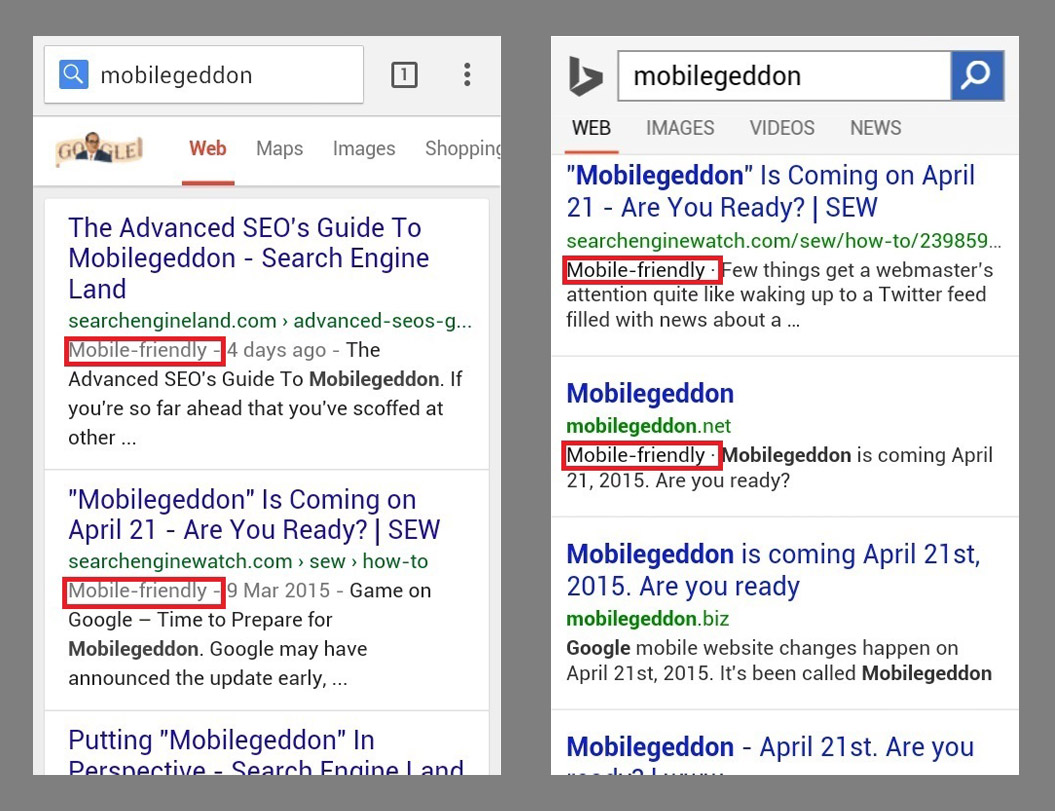
Bing's "Mobilegeddon", Compared to Google's
Both Bing and Google are approaching the same target, but doing it in a different way. Google is penalizing web pages that aren't mobile-friendly by lowering their visibility. Web pages with contents that aren't easily readable without zooming or tapping, aren't seen as mobile-friendly. Pages that feature unplayable contents or horizontal scrolling also aren't appealing Google anymore.
Bing is putting a more gentle approach. Instead of reducing visibility on those web pages, it still showing relevant results, even if they aren't mobile-optimized.
"This means that for mobile searches on Bing, you can always expect to see the most relevant results for a search query ranked higher, even if some of them are not mobile-friendly. While the changes will improve ranking for mobile-friendly pages, web pages that are highly relevant to the given query that are not yet mobile-friendly will not get penalized. This is a fine balance and getting it right took a few iterations, but we believe we are now close," said Bing in its blog post.
Both Google and Bing are offering webmasters and web owners the tools to help them analyze their web pages for mobile-friendliness, prior to the update. This helps them know which areas of their websites are in need for changes.
The tool will help "Webmasters to analyze webpages using our mobile friendliness classifier and help them understand the results."
If your website is using responsive web design, it should have the following criteria to be considered mobile-optimized:
- Navigation must be touchscreen friendly (e.g.: buttons easy to press with a finger) with calls-to-action accessible with ease.
- Your web design should enable visitors to read text without the need for zooming or scrolling horizontally.
- The website should fit the screen of any mobile devices coming from any screen sizes, whether portrait or landscape.
- Contents can be accessed and usable by any mobile devices (e.g.: aren't built with Flash).
- CSS, JavaScript and other external resources, aren't blocking Bingbot or Bingbot mobile.
The requirements for being considered a mobile-optimized site by Bing aren’t that much different from Google's. As an addition, Bing also considers factors like whether or not the website has popups and some other things.