
Google Chrome is already the most popular web browser in the world—but now, it’s adding another trophy to its digital shelf.
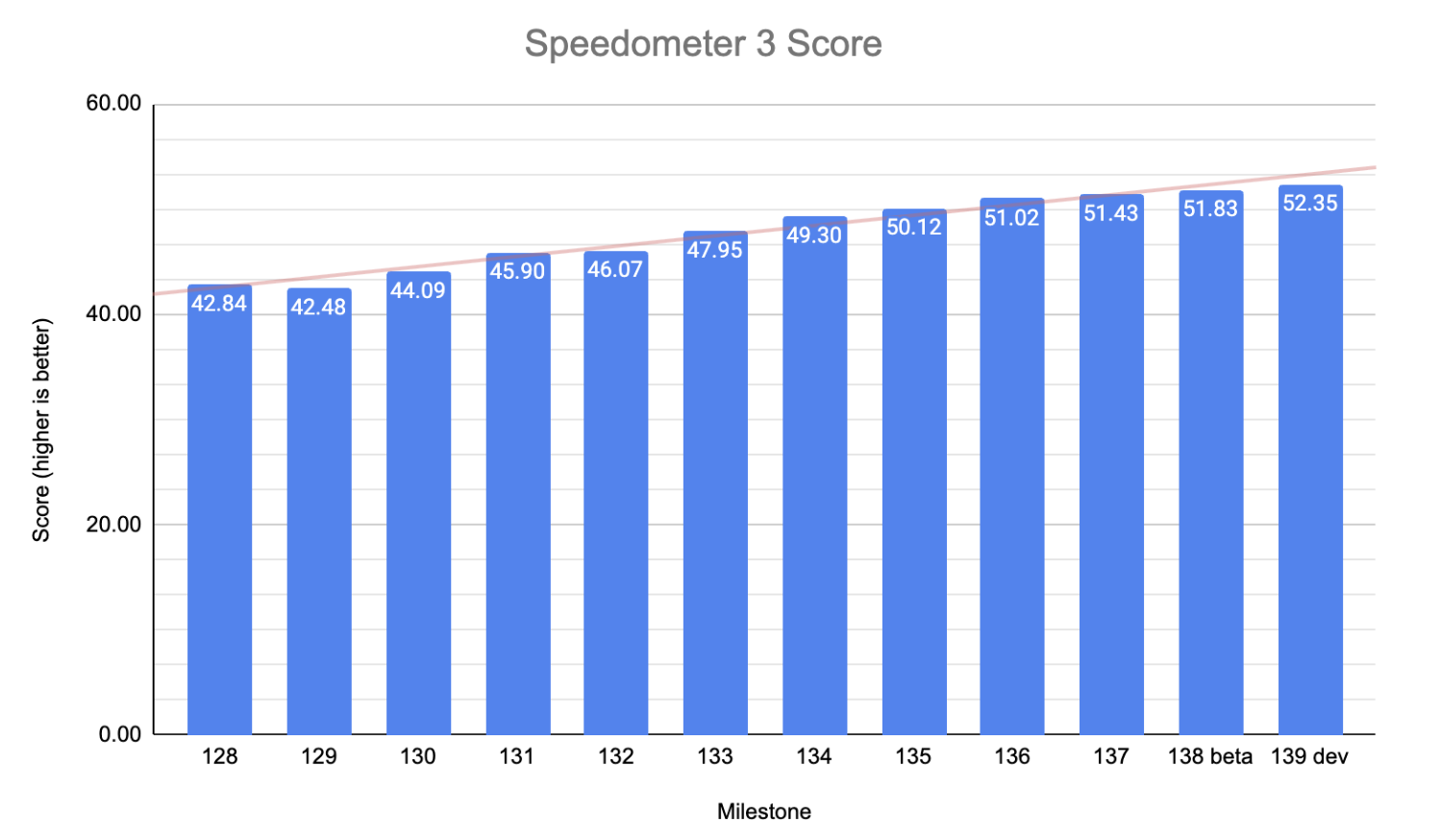
In the fast lane of modern browser competition, Google just hit the gas—and Chrome surged ahead. In a blog post, the company revealed that Chrome has reached its highest performance score ever on the Speedometer 3 benchmark. It’s a major milestone in speed, responsiveness, and overall efficiency.
Since August 2024, Chrome's performance has improved by 10%—a number that might seem modest at first glance, but its real-world impact is anything but.
That boost translates into smoother browsing experiences, faster load times, better performance for complex web apps, and even increased conversions for businesses. More speed means less waiting—and more enjoying.
Google offered an impressive example: if every Chrome user browsed the web for just 10 minutes a day, the cumulative benefit of this speed boost would save humanity a jaw-dropping 58 million hours each year. That’s the equivalent of 83 lifetimes not wasted on buffering, loading, or stuttering sites.
In short, Chrome isn’t just faster. It’s smarter, smoother, and officially, the fastest it's ever been.
To achieve this, Google improved and tweaked Chrome, and overhauled several under-the-hood systems:
For example, the browser's internal memory layouts across DOM, CSS and rendering components are restructured to improve CPU cache efficiency and reducing memory churn. Then, the browser expanded the browser's automatic memory management system, so more components now clean themselves up intelligently. Then, the strings are now represented and hashed more efficiently—meaning faster processing when it comes to data-heavy apps. And lastly, the browser also optimized caching strategies for styling and font shaping help render complex layouts more quickly and consistently.
The tool behind Chrome’s performance claim is Speedometer 3—a benchmark developed through open collaboration between major browser vendors, including Google, Apple, Mozilla, Microsoft, and Intel. It’s designed to measure web application responsiveness by simulating real-world usage through a wide range of tasks.
These tasks span across the full spectrum of browser functionality, including:
- HTML parsing
- JavaScript and JSON processing
- JavaScript and Document Object Model (DOM) interactions
- DOM manipulations, such as inserting and removing elements
- Font shaping and text size computation
- Applying CSS styles and calculating layout
- Rendering pixels to the screen
In other words, Speedometer 3 doesn’t just test surface-level speed—it digs into the core of how a browser handles the modern web. And with Chrome coming out on top, it’s clear Google’s optimizations are paying off.
Website design has undergone a remarkable transformation since the early days of the internet.
Web design has evolved dramatically over the decades. In the 1990s, websites were plain and functional—mostly text with simple layouts using tables and inline HTML. Visual design was nearly nonexistent, and usability was basic at best.
By the early 2000s, style entered the scene. CSS allowed for cleaner designs, and Flash introduced animations and interactive elements. Navigation bars, glossy buttons, and skeuomorphic aesthetics gave websites more personality.
The 2010s brought responsive, mobile-first design as smartphones took over. Clean, flat layouts became the standard, supported by frameworks like Bootstrap and tools like Flexbox and CSS Grid. JavaScript libraries made websites more dynamic and application-like.
In the 2020s, design trends like glassmorphism and neumorphism added depth and elegance. Dark mode became mainstream, and accessibility took priority. AI-assisted tools, reusable components, and micro-interactions now shape modern web experiences.
Long story short, websites are no longer just about delivering information—they’re about delivering experiences. From static pages of text to dynamic, immersive interfaces, the web has matured into a space that’s interactive, intuitive, and beautifully personal. In other words, websites are becoming more and more complex, much more heavier to load, and consume more resources than ever.
"Where rendering becomes inherently expensive, e.g., for computing CSS styles across various elements, caches are now used much more effectively with better hit rates," said Google.
"At the same time we cache fewer things that are not relevant. Another area where rendering becomes expensive is font shaping; the team significantly improved Apple Advanced Typography font shaping performance which is relevant everywhere text is rendered."

















































































































































































































































































