
The internet is vast, and what's for sure, it's anything but private.
Google is the search engine giant, and it has been on a continuous quest to seek as much information as possible, by scouting every single corner of the web. As a result of this, anyone using Google can easily find almost any information uploaded by anyone to the internet, as long as it's not protected behind a password.
But just because people's information is out there, it doesn’t mean that those people have to give up their privacy.
At least not entirely.
This is because according to Google in a blog post, it's rolling out three new privacy tools starting to help users protect their personal information.
The first, is releasing an update to its 'Results about you'.
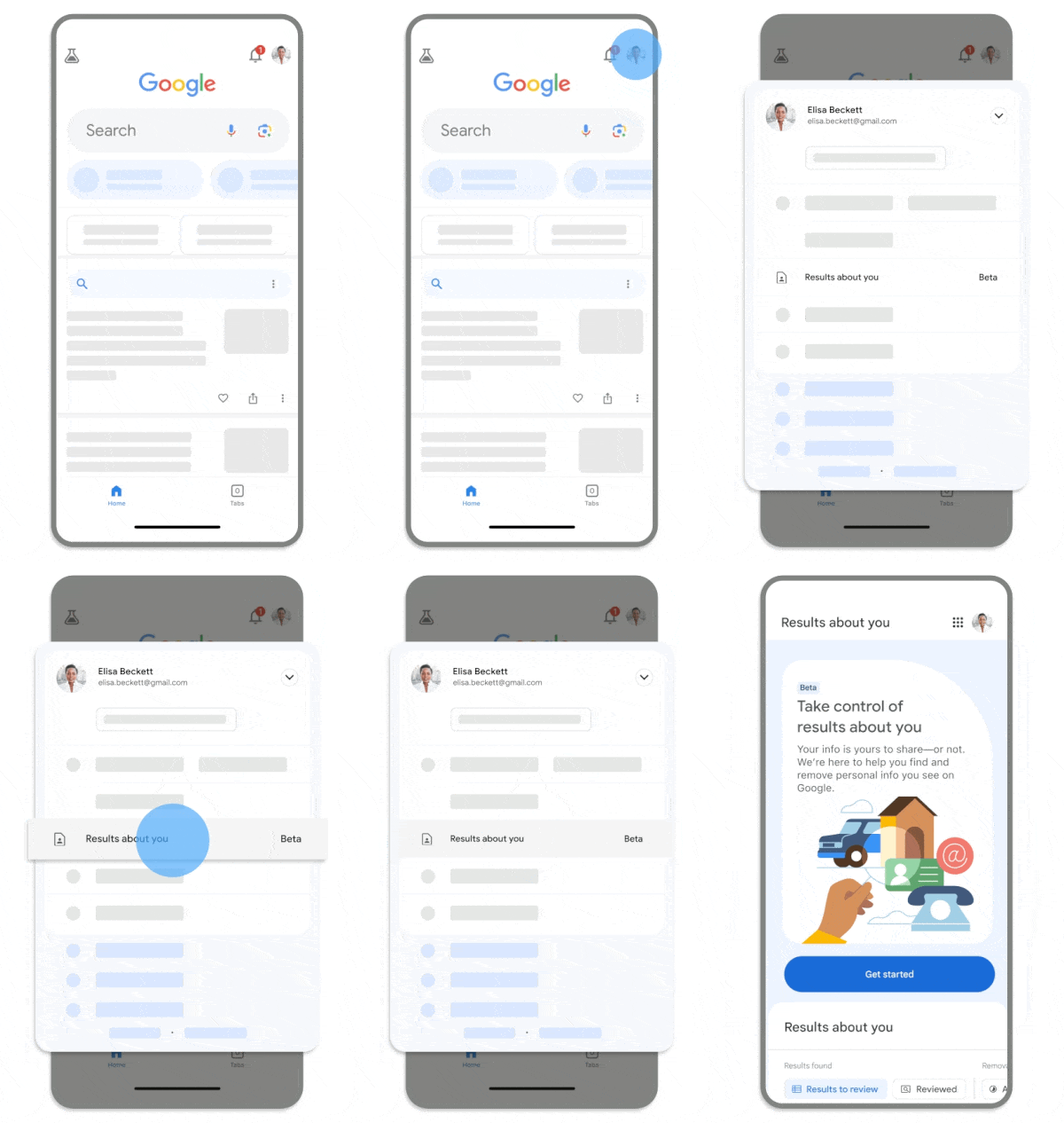
The dashboard lets users know if web results with their contact information are showing up on Search.
Using the dashboard, users can quickly request the removal of those results from Google. The feature can also notify users whenever new results from the web containing their contact information is found.
Users can access this tool in the Google app by clicking on their Google account photo and selecting 'Results about you', or by visiting goo.gle/resultsaboutyou.
Initially, this tool is only available for users in the U.S., set using accounts in English.
The second update, is a Family SafeSearch control being released worldwide.
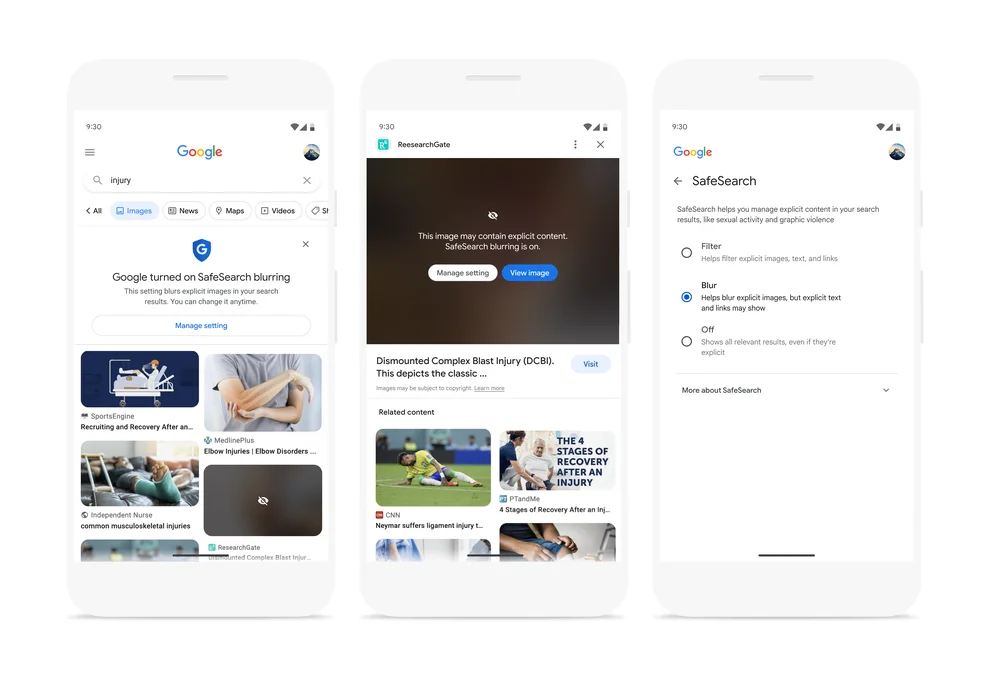
Google doesn’t want users to see explicit imagery, by default. If they don’t adjust the settings, or if their system administrators keep the default options, all content that Google considers adult (nudity, graphic sex acts, or sexually explicit material), as well as any content featuring violence or gore, will be blurred automatically.
This is its way to create a safer SafeSearch.
Users can control this through their Google account, by heading to the SafeSearch settings page. On the Google app, they can do this by tapping on the Google account photo, and head to Settings, and then SafeSearch. From here, they can choose either 'Filter,' 'Blur,' or 'Off.'
These filters block images differently.
What's worth noting, the setting defaults to 'Filter', if Google thinks users are younger than 18.
The third update, is Google's new policy on personal explicit images.
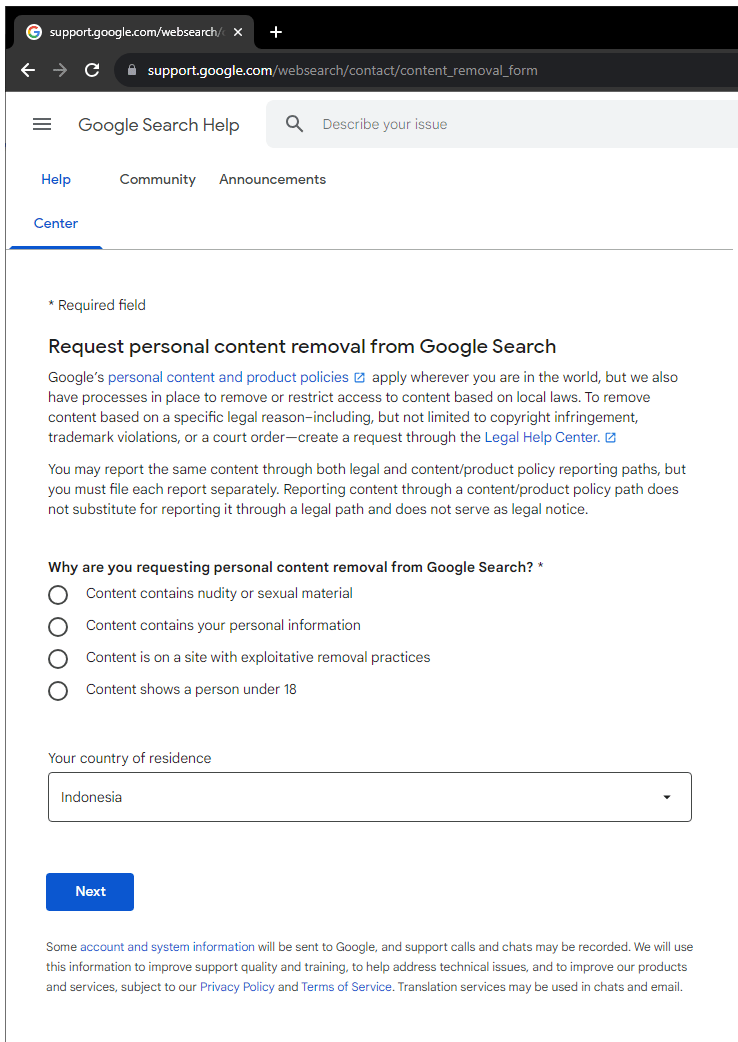
Google always has policies to inform users what it considers consensual and non-consensual explicit imagery. This time, Google is expanding that policy, by saying that users can now remove any personal explicit images they uploaded in the past that they no longer want to appear in Search.
This applies even when the users themselves aren’t hosting the image anymore.
What this means, if they uploaded an explicit imagery, which is then picked up by Google, but they then deleted it, users have the right to have the image removed, even if someone else is hosting it on their site.
Users can simply ask Google to have that imagery removed from Google Search.
There is only one caveat: the policy doesn't apply to content users are "currently commercializing."
"We know it's important to stay in control of your online experience. These new tools and updates are some of the many ways we’re continuing to make Google the safest way to Search," said Google.
These should be a welcome move from Google.
Since Google cannot control what people upload, the only best way it can do, is prevent unwanted content from being shown to the wrong audience.

















































































































































































































































































