In the relentless push to fuel AI and the exploding demands of cloud computing, China made history by taking data centers where few had dared to venture before: beneath the waves.
It was in December 2022 when the first sealed underwater data center pods were lowered into the South China Sea off the coast of Hainan island near Lingshui, marking the debut of what would become the world's first commercial scale underwater data center operation.
Developed by the Chinese company Highlander, also referred to as Hailanyun or HiCloud Technology, these pioneering modules represented a radical solution to the soaring energy and water consumption of traditional server farms.
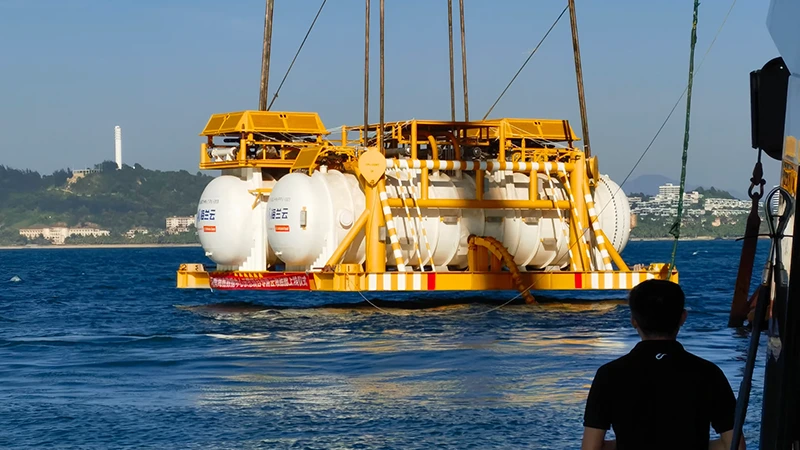
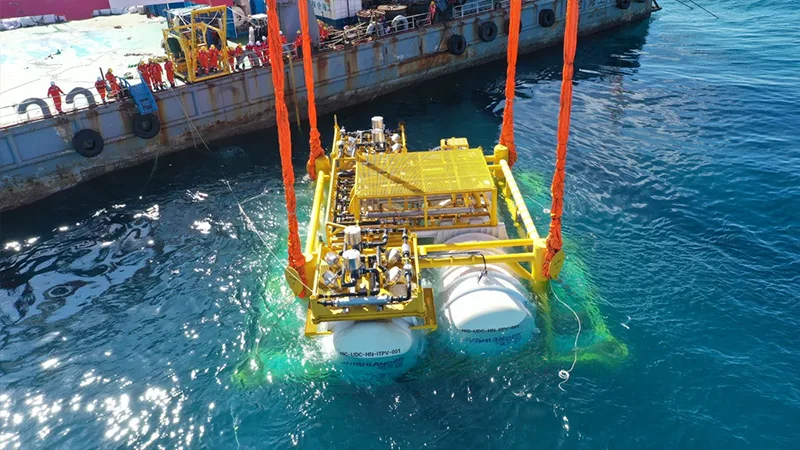
The pods, cylindrical white tanks encased in bright yellow protective frames, were carefully submerged to depths of about 30 to 35 meters on the seabed.
There, the constant flow of seawater provided natural passive cooling, eliminating the need for power hungry chillers and air conditioning units that typically account for nearly half the electricity used in conventional data centers.
According to reports and some calculations, the underwater facility can reduce energy consumption by more than 30% compared with conventional data centers.
According to China Daily, citing the builder, Beijing Highlander Digital Technology Co., Ltd., the design also eliminates the need for freshwater-based cooling infrastructure, saving roughly 30,000 cubic meters of water per megawatt of computing capacity each year while significantly lowering operating costs.
Early pilot units contained hundreds of servers, and engineers designed the system with high pressure resistant seals, corrosion proof materials, and modular components that could be retrieved for maintenance if needed, addressing the unique challenges of the marine environment.
What began as an ambitious experiment quickly proved its worth.
Construction of the Hainan project had ramped up earlier in 2022, but December brought the pivotal moment when the initial pods touched the ocean floor and began operations.
By November 2023, larger commercial modules weighing over a thousand tons each were added to the cluster, expanding capacity to thousands of servers and enabling full scale commercial use.
The facility demonstrated remarkable stability, with the cold seawater acting as an efficient heat sink and the surrounding ocean providing natural insulation against temperature fluctuations. Reports from the project highlighted how these underwater units could match the performance of millions of personal computers while using far less land and electricity than land based alternatives, a game changer as global data demands continue to skyrocket.tomshardware.com
Unlike previous trials such as Microsoft's Project Natick, which tested similar concepts but never transitioned to widespread commercial deployment, China's Hainan initiative moved swiftly from concept to reality.
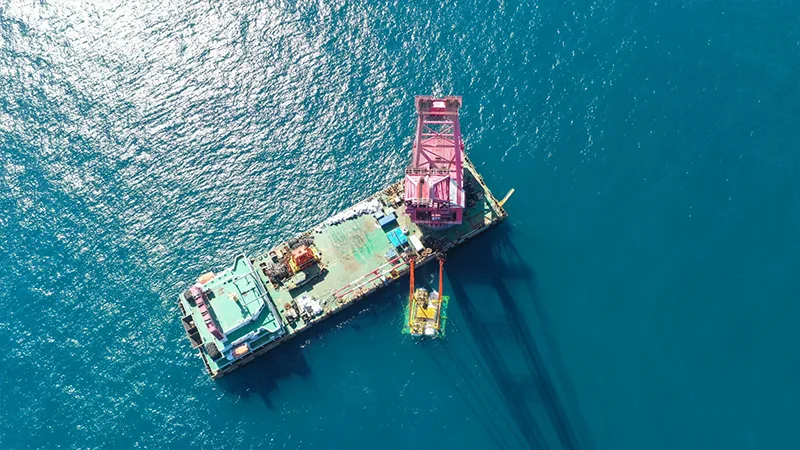
The pods were towed out to sea on barges, lowered by cranes amid teams of engineers in safety gear, and connected to power and data cables that linked them back to shore.
This setup not only minimized environmental impact on land but also tapped into the ocean's natural resources without disrupting marine life significantly, thanks to careful site selection and engineering.
As the project scaled, plans emerged to integrate offshore wind power, further enhancing its sustainability profile and reducing reliance on the mainland grid.brightlio.com
The Hainan success has since inspired expansions, including a newer offshore wind powered underwater data center near Shanghai that builds directly on the lessons learned.
Yet it all traces back to those first pods placed under seawater in late 2022, a quiet but profound milestone in the evolution of digital infrastructure.
In an era where commercialized AI is still young but starts reshaping industries and straining power grids worldwide, China's underwater data centers offer a glimpse into a more efficient, resource conscious future, proving that sometimes the best way to stay cool under pressure is to dive deep and let the ocean do the work.
The concept of underwater data centers is gaining traction far beyond China.
South Korea has unveiled plans to develop its own subsea facilities, while Japan and Singapore are exploring alternative approaches, including floating data centers positioned on the ocean's surface. As demand for AI computing continues to surge, these innovative designs are increasingly being viewed as potential solutions to the industry's growing energy and cooling challenges.






















































































































































































































































































