Google is rolling out a new Play Store change designed to highlight Android apps that could negatively affect battery life.
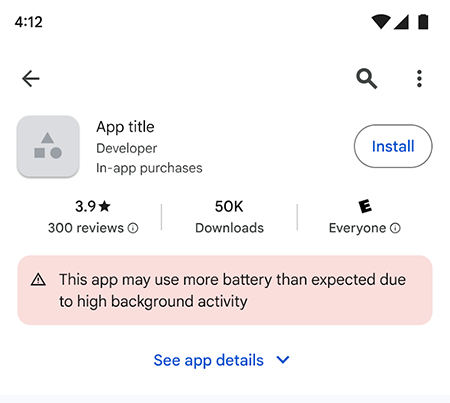
The company has begun adding warning messages to certain app listings, alerting users when an app is known to consume more power than expected. According to Google in the announcement, the label appears directly on the Play Store page, meaning users can see the warning before they decide to install the app.
The new message typically notes that an app "may use more battery than expected due to high background activity."
According to Google, the warning is triggered when the app consistently exceeds specific thresholds tied to background power usage.
These measurements are based on telemetry collected through Android Vitals, the platform Google uses to monitor performance issues across the Android ecosystem.
Behind the scenes, the system relies on Android’s performance telemetry platform known as Android Vitals. Google uses this data to track problematic behaviors such as excessive background processing.
One key metric involves "partial wake locks," a mechanism that allows apps to keep the device's CPU running even when the screen is off. While wake locks are sometimes necessary, like for tasks like music playback or location tracking, poorly optimized apps can abuse them and keep devices awake longer than needed, leading to significant battery drain.
Google says the new warning system is part of a broader technical initiative that began rolling out on March 1, 2026.
Apps that repeatedly exceed the "Excessive Partial Wake Lock" threshold may receive warnings on their Play Store listings.
In some cases, these apps may also lose visibility in Play Store discovery features such as recommendations, making them harder for users to find.
The thresholds themselves are based on real-world usage patterns. For example, if an app holds non-exempt wake locks for extended periods, like several hours while the screen is off, across a meaningful portion of user sessions, it may be flagged as inefficient. By surfacing this information publicly, Google hopes to encourage developers to optimize their apps and reduce unnecessary background activity.
The change is meant to encourage developers to optimize how their apps handle background tasks and system resources. Google has long used Android Vitals data to identify performance problems like crashes, freezes, or excessive battery usage, but surfacing this information directly to users adds a new layer of accountability.
For Android users, the update means more transparency before installing new apps.
Instead of discovering battery problems after installation, users can now spot potential power-hungry apps ahead of time.
At the same time, the warning system puts pressure on developers to fix inefficient behavior if they want to avoid having their apps publicly flagged in the Play Store.