 Yes, advertisements are everywhere.on the web. From search engines to social media networks, all of them are having ads on their sites. We have them and probably you too. But there is a thing about ads that are more annoying that what they seem, and that is when they're tricking you to do something you don't want. Google is now warning users when they see one.
The search giant Google first announced this news in a post on its corporate blog on February 3rd, 2016, saying that it's starting to warn users when they visit websites that host ads that are both misleading or deceptive. As of April 12th, Google continues to push this effort in more places throughout the web.
What Google does, is to expand its efforts to keep web users better protected from those deceptive contents which may pose harm than do any good. Through an update to its "Safe Browsing" initiative, the search giant is now flagging websites, and warn users when they encounter such websites.
Google said:
And because these types of rogue ads may have sneaked in from third-party ad networks, Google won't penalize the sites that host them.
Google calls those ads as "social engineering" advertisements. Ads like these are those that try to trick users into thinking they've received a message from a trusted entity - like a web browser notification, software update, PC error message, or the website itself, for example.
Previously, Google has used this kind of warning messages to cut off traffic to some websites that host malware or those that do phishing attacks to users among some other malicious things.
Google's attempt in strengthening its Safe Browsing program began on November 2015. At that time, Google announced that it was expanding its Safe Browsing program to protect against social engineering "attacks" as an addition to those that trick users with malicious attempts. And with the changes, Google's protections are expanded to also include advertisements.
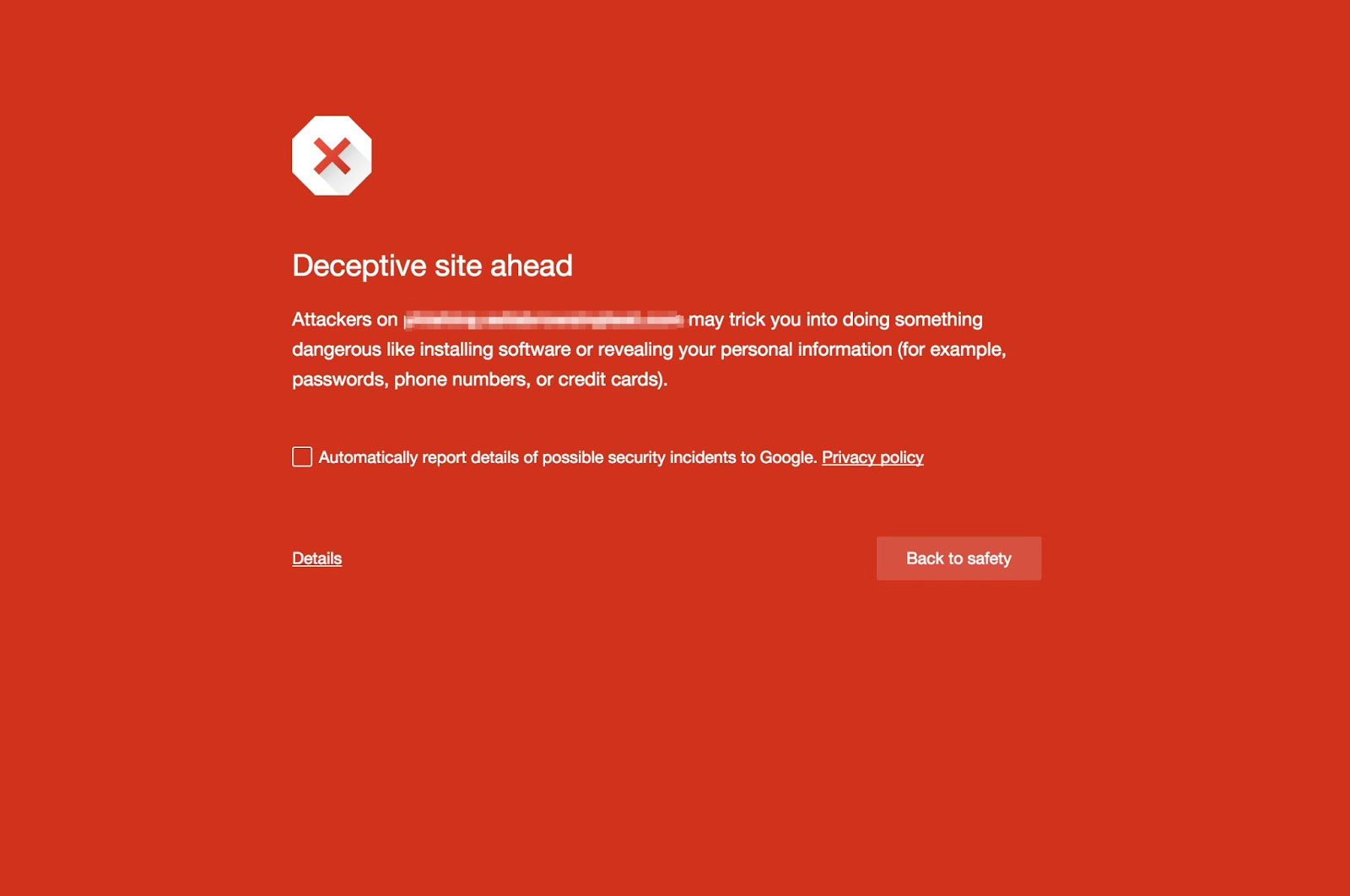
But Google approaches the solution rather differently. Instead of taking visitors directly to do something, as of April 2016, Google will show a red error page instead. This page is meant to inform web users, asking them why they may not proceed. The message prompt users to click the "Back to safety" button. Users can also simply use the browser's Back button to go back to where they were before.
While Google warns users, the decision to proceed is up to the users themselves. Google doesn't block users' access to the website if they determine to continue.
The image of Google's warning can be seen below:
Most frequent web users have at least encounter malicious/deceptive/misleading advertisements when they browse the internet at one time or another. For example, the "Download" or "Play Now" buttons are somehow common on websites that offer downloads to free or pirated contents. When users click on these types of buttons, hoping to view or download the file they want, they're often bombarded with information without their will. These type of ads are also usual on websites that host illegal videos or other services.
These ads can also trick users to install unwanted software or asking them to reveal personal information by pretending to be a trusted entity.
With the internet in more places, those websites are growing in popularity as more consumers are searching for free things instead of paying them.
As deceptive as they can be, most frequent internet users that have better knowledge and experience on the web can see the difference between "good" ads and "bad" ads. But even the most frequent internet users can also be tricked. This is because these rogue ads can be really hard to distinguish.
The reason for this is simple: those ads are often designed in a way that make them indistinguishable from the website's other contents; they blend somehow perfectly as if they're native; they're so alluring as if asking to be clicked; they're so well created that they look as if they're part of the website’s functionality.
With Google having a role here, the company will now show warning on sites that use these tricks. Google says content that pretends "to act, or look and feel, like a trusted entity" will be considered social engineering content, along with any content that tries to trick users into doing something they would normally only do for a trusted entity, like sharing a password for example.
The company has admitted that some websites might initially be flagged for offering this kind of content even though they don't. Webmasters should be able to straighten this issue using their Search Console.




















































































































































































































































































