
Artificial Intelligence can do a lot of things when trained right. And at Google, the company is known to trust the technology to power many of its products.
Among the many products Google develops and operates, the web browser Chrome should come up somewhere at the top. As the world's most popular browser, Google has the very rights to enhance it with more features. And this time, Google admits that it has been busy making the most out of the technology to enhance browsing experience using AI.
The tech giant said that one of the most useful uses of AI in Chrome, has been the way it allows a safer browsing experience.
And this time, Google said that it has enhanced Chrome to be able to limit phishing attacks through machine learning.
Google is so proud of the technology, saying that the difference it made was revolutionary as it not only provided enhanced protection for users but their data too.
For example, the company said that the AI in Chrome is able to counteract phishing attacks by nearly 2.5 times.
This included preventing malicious websites from taking a toll on Chrome browsers.
And there is more.
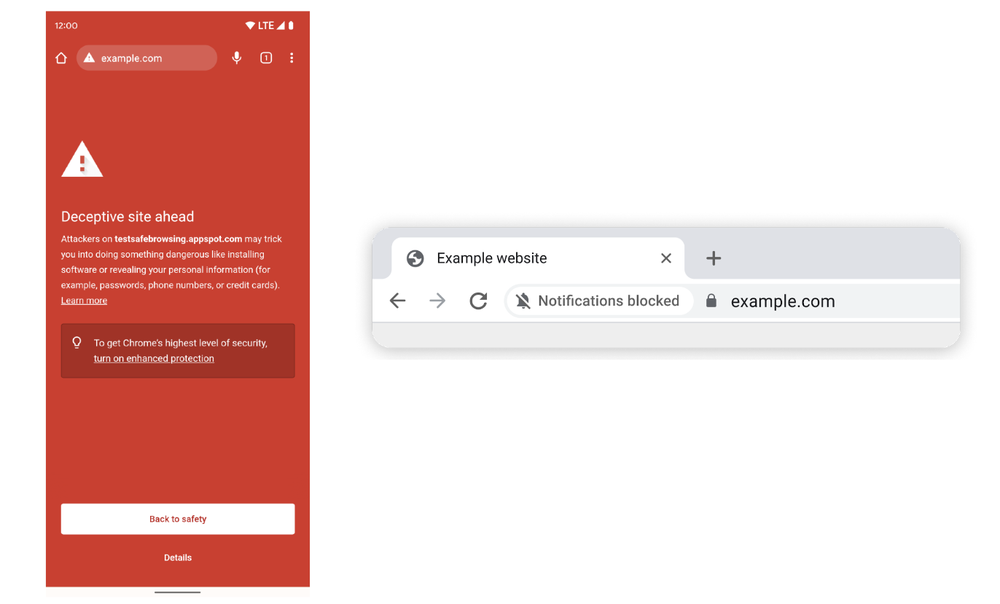
"To further improve the browsing experience, we’re also evolving how people interact with web notifications. On the one hand, page notifications help deliver updates from sites you care about; on the other hand, notification permission prompts can become a nuisance," Google said in a blog post.
"To help people browse the web with minimal interruption, Chrome predicts when permission prompts are unlikely to be granted based on how the user previously interacted with similar permission prompts and silences these undesired prompts. In the next release of Chrome, we’re launching an ML model that makes these predictions entirely on-device," it said.
Google is also wanting to use AI to improve how the web browser handles permission requests for notifications.
Google also wants to make use of machine learning technology to improve its Google Chrome Toolbars. The company wants to use the technology to adjust the toolbar in real-time, like to highlight "the action that’s most useful in that moment (e.g., share link, voice search, etc.)."
"Our goal is to build a browser that’s genuinely and continuously helpful, and we’re excited about the possibilities that ML (machine learning) provides," Bansal said.
Google has also launched an "updated language identification model," which is able to figure out the language of a visited website page and predict if it needs to be translated for the user.
Bansal said that Google is seeing "tens of millions more successful translations every day" thanks to this update.
And most importantly, according to Google, all of these updates are powered by on-device ML models, which means that users data stays private, and never leaves users' device.
Among many other things, Google Chrome has been using machine learning to make images more accessible for people with vision issues, or to generate real-time captions on videos.
Google is going to great length to implement the technology, because it knows how machine learning offers no only benefits web browsing experience, as it can also be used as a tool by hackers to launch cyberattacks that are difficult to prevent.






















































































































































































































































































