 The internet is a giant place. Let alone for adults, it's never safe for children. There are too many things the web has to give, and some may stumble to the wrong place at the wrong time. Parents that are worried about their children's online activity can have at least a bit of relief from a search engine that calls itself "Kiddle".
People are connecting to the internet and there is no saying what age is the earliest. Search engines have been the first stop for many people before browsing elsewhere online, and with their reputation, they have succeeded more than many times in bringing people to the information they seek.
When that is the usual case for adults, children are more prone to mistakes. They can be misled by the information they see on search engines and the web itself. Kiddle is somehow a pleasant answer for this worrying parents.
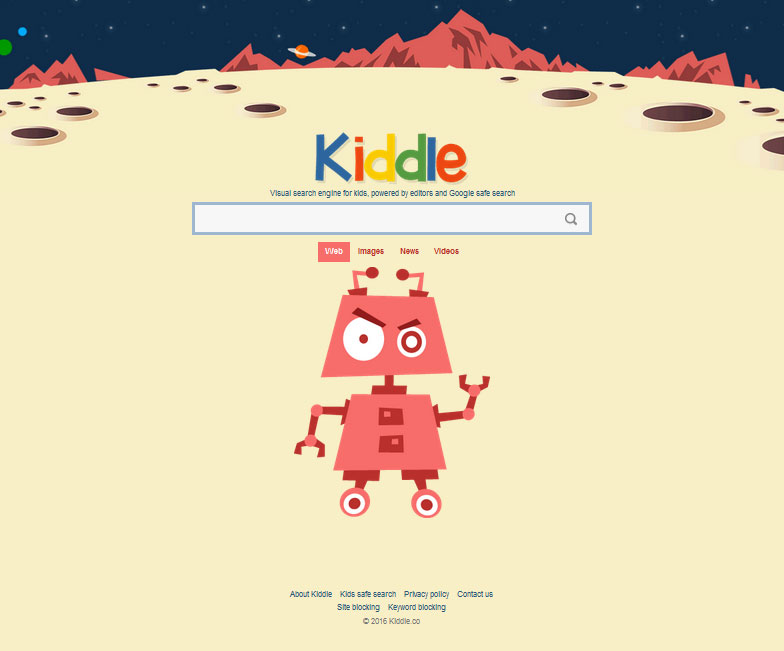
Kiddle is a child-friendly search engine. It uses many of Google's brand colors, but instead of its usual white background, Kiddle adopted an outer space theme with a robotic alien under the search bar that lives on the crater-filled planet. That should appeal children more than the plain "boring" white Google is having.
Kiddle works similar to Google, but it's SERPs (Search Engine Results Pages) are more filtered.
What makes Kiddle friendly for kids is not just about its looks. What it wants, and its aim in the first place, is to deliver contents that suit children. Kiddle uses Google's search, and adds another filter which is its own editors hand-picking web pages that are appropriate for those young generations.
One of its feature that is useful is its input filter that blocks some words that were deemed inappropriate. So for example a child enters the word "butt" in its search bar, the filter will return a page with a robot and the message: "Oops, looks like your query contained some bad words. Please try again!"
Parents can also add more words to the Kiddle keyword block form or even add sites to the site blocking form. This does make Kiddle more child friendly.
In more than many ways, Kiddle is indeed child-friendly. It does things great, and as expected.
As a result, Kiddle produces a far less raunchy result that Google's.
While its design fonts, layout and its choices of colors resemble Google's, Kiddle is not endorsed, or owned by Google. The search giant has no association with Kiddle.
A Google For Kids
While parents Kiddle can be excited with the new search engine, one thing that they should know is that Kiddle may not be completely safe.
Ever since internet has come to the wild, parents have been worried to let their children loose when they browse the internet without their supervision, fearing them to discover inappropriate materials as their young ones browse the web by jumping from one links to another, typing a query to the next.
Google has been one the most widely used search engine and many people have been depended on it. But Google, even with its safe search filter turned on, will still show some improper materials once in a while. This is not Google's intention, it's just because its algorithm, no matter how good it is at its current state, is yet to be perfected. So kids using Google can be exposed to nude pictures, violent videos, and more.
Kiddle is headed by Vladislav Golunov, the founder of FreakingNews. The search engine tries to eliminate such risks, but still it isn't suited for the job perfectly.
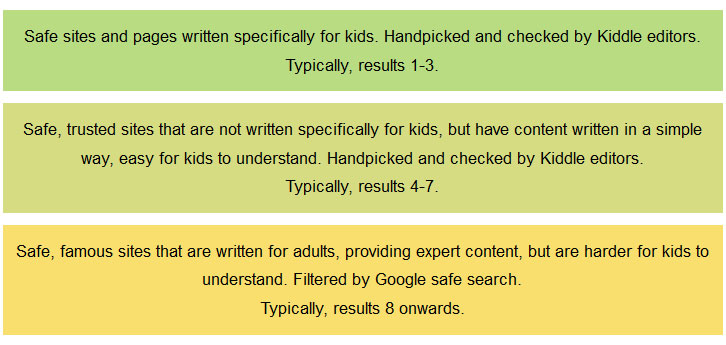
According to the Kiddle's About page, it illustrates how the search engine returns results for each query (in order):
So parents should understand that although it might be safer, it's not perfect. There are some questionable results on Kiddle that should make parents pay attention.
Kiddle is a search engine that gets its results from Google safe search. So yes, it should be safer that Google with the filter off. The top 1-7 results are chosen by editors, who block out websites that may be unsafe for children to view. Those website should be a safe haven for children. But the results for 8 and on are not edited, and are from websites that should usually appear on Google's SERPs with safe search turned on.
As for privacy, Kiddle is not storing any "personally identifiable information." But what should come as a concern, comes in its privacy policy which says:
Kiddle is powered by Google custom search and uses Google cookies to serve search results. If you wish to opt out of Google cookies you may do so by visiting the Google privacy policy page.
This means that although Kiddle is not storing information about its users, Google still might be. This is because Kiddle uses an embedded Google search bar (CSE, or Custom Search Engine) on its front page, and that is a Google tool that follows Google’s policies for privacy.
Conclusion
So is Kiddle worth your time? Is it good for children? In some specific ways, yes it does. But if you're a parent that worry about your child's online activity, Kiddle shouldn't be on its own.
Most of what Kiddle can do, can be accomplished with a good site blocking tool and a knowledge of how to control Google's settings. But no matter what technology you use to keep your kids safe on the internet, the best thing you can do is to make sure that you're always present when your children use the internet.
It's your parental supervision that matters most.
Search engines are getting better and better, but they're still having flaws that should be predicable. Kiddle can help, but having you as a parent present, it should be your best bet in ensuring your children's safety on the web.






















































































































































































































































































