Firefox once stood tall, as a flagship of browsing freedom, innovation, and open source pride. Now it drifts away from its own former shadows.
As rivals like Chrome, Safari, Edge, and others concertedly tighten their grip, the Mozilla's browser has its desktop market share to slip to around 5.8% globally in mid-2025, with total browser share even lower. Yet despite this decline, Firefox still manages to surprise. In September 2025, Mozilla introduced 'Shake to Summarize,' a feature for iPhone users that turns a quick shake or tap into a distilled summary of a web page.
On devices like iPhone 15 Pro running iOS 26 or later, it uses Apple’s native AI; older iPhones rely on Mozilla’s cloud-based AI.
While shaking a phone to activate a feature is nothing new, but Shake to Summarize gets a credit because it hails an elegant solution to tackle modern information overload.
TIME Magazine has had this tradition since the year 2000, where it spotlights impactful new creations. The list began with about 35 inventions but has expanded over the years to keep up with innovation.
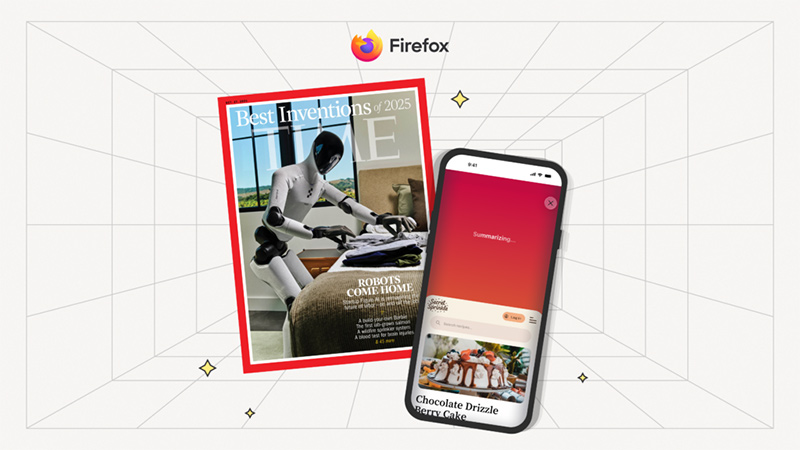
And this time, Firefox's Shake to Summarize earned a Special Mention in TIME’s Best Inventions of 2025.
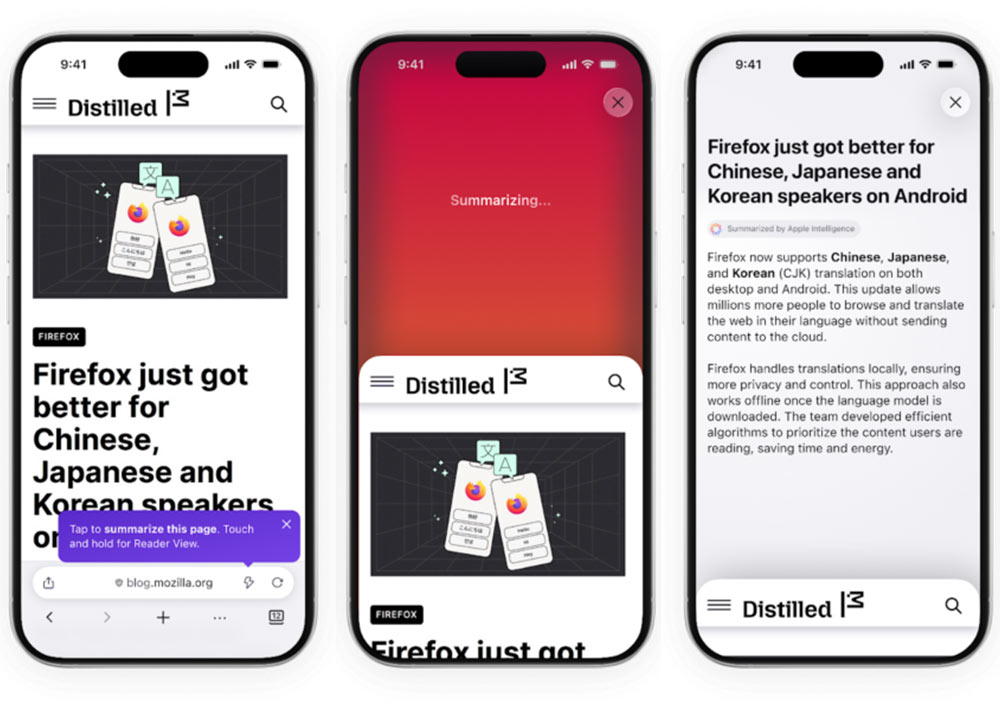
What Shake to Summarize does, is allowing users to trim down articles using AI.
Users can use it to turn long recipes into bullet-point steps, summarize sport pages into just scores and stats, or complex news and articles into just the key takeaways.
And all users have to do, is do little effort: shake the phone.
This can be quite handy if users are trying to get the gist of a long read without scrolling through the whole thing. Other ways to activate the feature include tapping the thunderbolt icon in the address bar and selecting "Summarize Page" from the three-dot menu.
According to Anthony Enzor-DeMeo, general manager of Firefox, as quotes by Mozilla in a blog post:
"We’re reimagining our browser to fit seamlessly into modern life, helping people browse with less clutter and more focus. The feature is also part of our efforts to give mobile users a cleaner UI and smarter tools that make browsing on the go fast, seamless, and even fun."
"This recognition is a testament to the incredible work of our UX, design, product, and engineering teams who brought this innovation to life, showcasing that Firefox continues to lead with purpose, creativity, and a deep commitment to user-centric design. Big thank you!"
Long story short, Mozilla aims to make Firefox feel lighter, smarter, and more attuned to the way people browse. From the clean UI, mobile-friendly tweaks, and now, the easy access to summaries, reflect the browser trying to stay relevant.
Still, there’s a bittersweet note.
When the public, and also TIME, praise Shake to Summarize as something awesome, it’s impossible not to miss what once was.
Firefox no longer dominates the browser wars; in many places, it’s barely in the conversation. Its erosion in usage isn’t fast enough to feel like an immediate extinction, but steady and unmistakable. In fact, Mozilla even openly admitted that it may not survive without Google's support.
For users who have stuck with Firefox for years, and are seeking privacy, openness, control, features like Shake to Summarize are welcome. But they’re also reminders of how far ahead the field has moved.
Firefox’s fight now isn’t just about features; it’s about identity and survival. That TIME recognition is deserved, and it shows Mozilla still has vision.
For now, Mozilla’s Shake to Summarize feature on Firefox is available only to U.S. users on iOS devices set to English, though the company has confirmed that an Android version is on the way.
This isn’t the first time a web browser has made it onto TIME magazine’s annual Best Inventions list.
Back in 2023, the Arc browser from The Browser Company earned a full feature for rethinking how people navigate the web: replacing traditional tabs with a sidebar, introducing "Spaces" to separate work and personal browsing, and offering Split View for multitasking on multiple pages at once.
Meanwhile, Firefox itself is preparing another notable upgrade: a new profile management system.
Unlike the current Multi-Account Containers, which isolate cookies and logins within a single profile, the planned feature will allow users to create entirely separate browsing environments. Each profile will have its own history, bookmarks, extensions, and settings, giving users a cleaner and more personalized way to manage different parts of their online life.




















































































































































































































































































