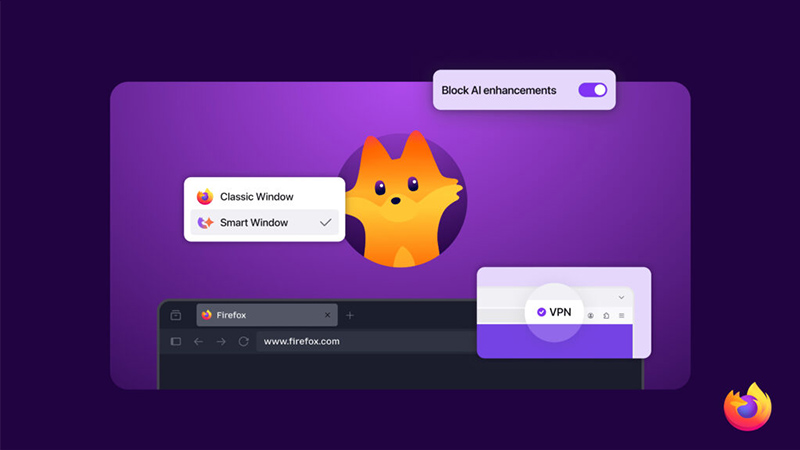
These days, free VPN tools are plenty to choose from, but using them can be risky, if not stressful.
This is because some companies behind some of those VPNs offer their services just to harvest user data for profit. While some do actually respect users' privacy, it's hard to trust a service that claims to offer all of that for free. It raises questions about how those services sustain themselves in the unforgiving world of the internet.
As such, a free VPN from a reputable company is pretty much the best deal anyone can get, as long as the business actually has a reason not to betray its user base.
Mozilla has long been a pioneer in web browsing privacy.
Now, it’s planning to launch a built-in VPN directly inside its Firefox.
This means that instead of requiring a separate app or extension, the VPN will be accessible right from within Firefox itself, making it far more convenient for everyday users who want a quick layer of privacy without extra setup.
The feature is designed to be simple and lightweight rather than a full replacement for premium VPN services.
It will route browser traffic through secure servers, helping mask a user’s IP address and encrypt activity while browsing. This can be especially useful on public Wi-Fi networks or when trying to avoid basic tracking. Because it’s built into the browser, it removes the friction that often comes with installing and managing third-party VPN software.
However, there’s a catch.
The free version comes with limitations that make it clear this is more of a starter privacy tool than a complete solution.
According to Mozilla in a blog post, users shall have "50 gigabytes of data monthly in the U.S., France, Germany and U.K. to start."
Reports also suggest there will be restrictions on bandwidth or usage, and it may only protect traffic within the browser itself rather than covering the entire device.
What this means, apps running outside Firefox won’t benefit from the same protection, which is something users should keep in mind.
Mozilla's approach in introducing a VPN in Firefox can be a gateway into its broader VPN offering.
At this time, the company already provides a paid VPN service, and this built-in feature could act as a preview that encourages users to upgrade if they want full-device coverage, faster speeds, or unlimited data. In that sense, this is the reason why the free VPN isn't just a standalone tool because it's also part of a larger strategy.
Alongside the VPN, newer Firefox updates are also experimenting with features aimed at improving productivity and usability, such as split-screen browsing. This suggests Mozilla is trying to make the browser more than just a tool for accessing websites, turning it into a more versatile environment for both work and everyday tasks.
Overall, the addition of a free built-in VPN feels like a practical move in a time when privacy concerns are growing and users are becoming more cautious about how their data is handled. While it may not be able to replace a full-fledged VPN service, it does lower the barrier to entry for safer browsing and gives users a trustworthy option right out of the box.