Unlike search engines, social media apps are built using a unique approach that entices users to keep on scrolling and scrolling.
Whereas search engines use paginations and most of them see users engage with the things that came up on top, social media platforms use endless scrolling so users would spend more of their time viewing contents.
While this approach translates to more user retention and more money to be earned, this approach is bad for users' well-being.
This is what exactly happened on TikTok.
Many of its users have complained about the hours they have lost because of the platform. Thanks to the app's ability to distract, entertain and engage users using its advanced recommendation technology, its addictive nature has been the subject of numerous psychological studies and parents' concerns.
As TikTok becomes increasingly common among youngsters, TikTok is taking responsibility, by rolling out a set of screen time feature designed to put users in better control of their TikTok usage.
In a newsroom website post, TikTok said that:
"Having a positive relationship with digital devices and apps isn't just about measuring screen time, it's also about feeling in control of how we use technology and ensuring that the time we spend online contributes positively to our sense of well-being."
"That's why we're announcing a number of steps today to help support our community's digital well-being as they create and discover on TikTok."
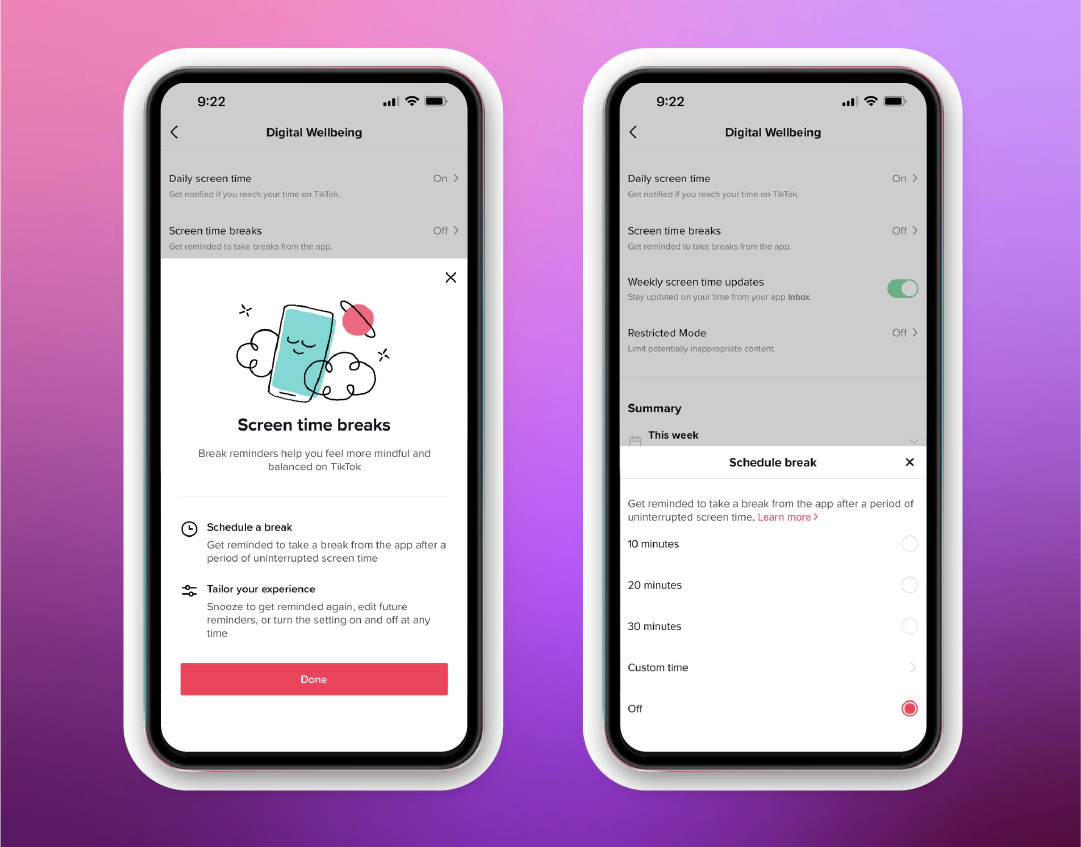
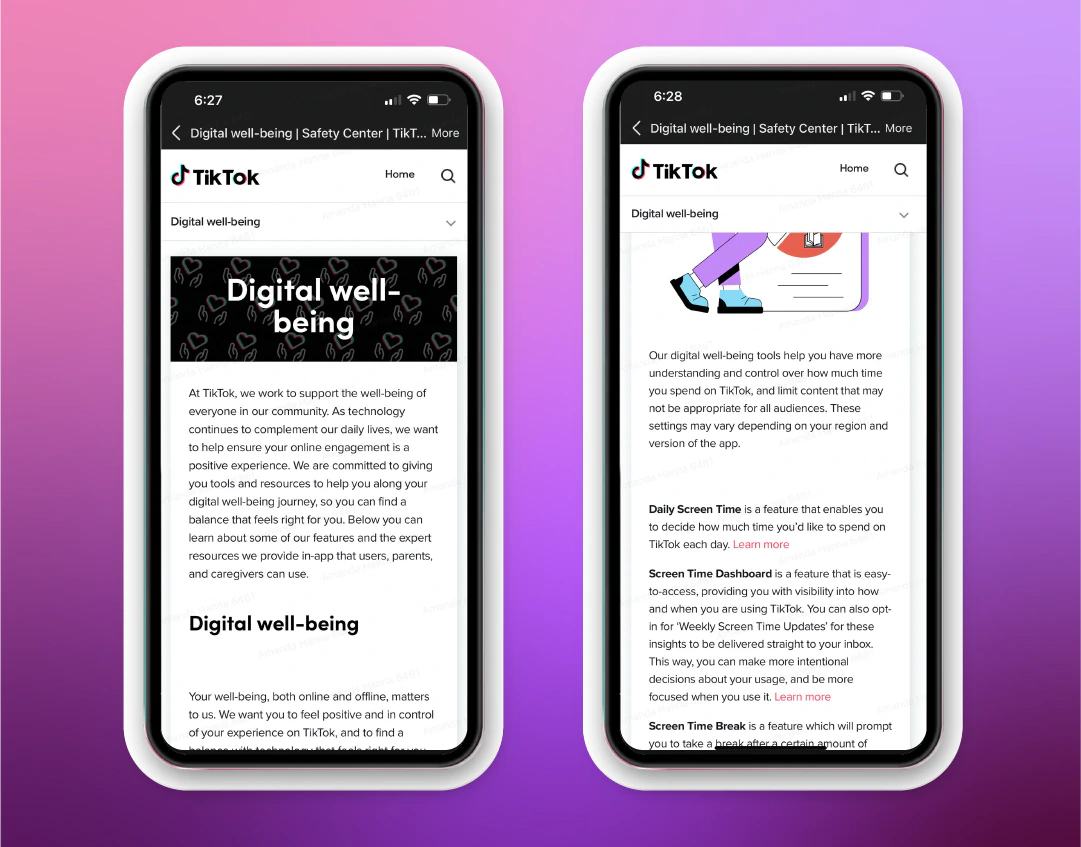
Among the new features are two controls for monitoring and managing screen time usage, as well as a new digital well-being guide that's being added to the app's Safety Center.
The guide, titled "How can I reflect on my digital well-being with my family and friends?" is meant to help users "reflect more holistically" about how they spend time online, TikTok said.
First of, is the screen time feature.
This feature helps users control how much time they spend on TikTok in a single sitting, by allowing them to schedule regular screen time breaks.
It aims to solve users' addiction issues that aren't related to total consumption, but to losing track of how long they are spending on TikTok each time they open the app.
In other words, the feature is essentially a tool for managing screen time on a per-session basis.
This screen time feature is an addition to the screen time control TikTok is already having for families, which has been available globally for a few years, which include a way for parents to set screen time limits for children.
The feature is also supplementary addition fo the daily screen time limits tool TikTok added in February 2020, which is available to all users from the app's existing digital well-being section.
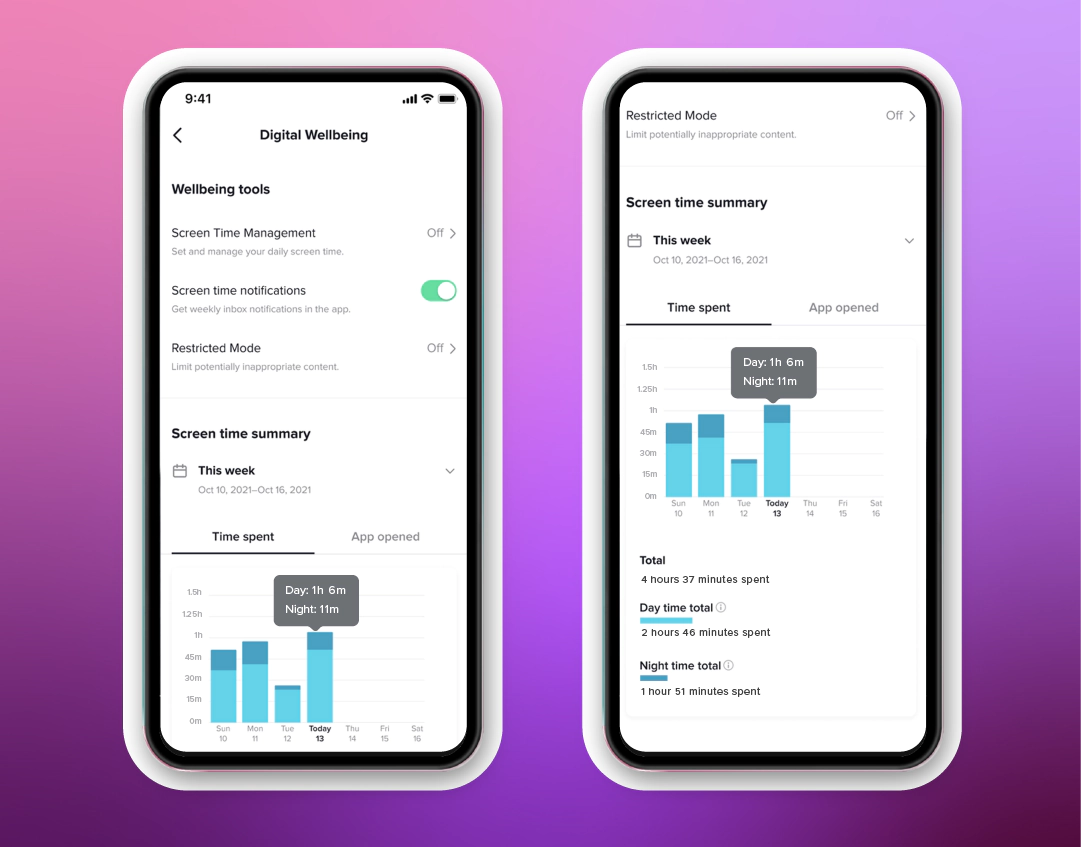
TikTok hopes that with the tool, users can ask the app to remind them to take a break after a certain amount of time of their choosing.
By default, it suggests break reminders of either 10, 20 or 30 minutes.
These default suggested times for session breaks are much reduced from the daily screen time limits TikTok's tool recommends, which asks users to set a daily screen time limit of 40, 60, 90 or 120 minutes.
Users can set reminders for a custom time if they want to.
They can set it to either longer or shorter, before the notification is to stop is shown to them.
In order to give users better control of their TikTok usage, TikTok also noted that users can snooze or switch off the notification.
For instance, users may not want to limit screen time on a lazy weekend at home but would want to limit their TikTok time during school, or when they have to get to bed early.
Related to this addition, TikTok is rolling out a new screen time dashboard that will provide more information about how much time users are spending on the app.
This feature includes summaries of the user's daily time spent on the app, the number of times they opened the app and a breakdown of daytime and nighttime usage.
Users can also opt in to receive weekly notifications that remind them to review their dashboard.
While the new screen time tools are rolling out to global users of any age, TikTok says it's also introducing new screen time prompts for minor users between the ages of 13 and 17.
Users in this age group are seeing weekly “digital well-being prompts” and get additional screen time reminders when they have spent more than 100 minutes in the app on a single day.
That such a feature even needs to exist suggests that many parents have still not bothered to configure TikTok's existing parental controls, leaving the company to stand in as the digital parent.
This should be considered a welcome move, since Millennial and Gen X users, who are at this time, parents of many youngsters on TikTok, are failing in supervising their children's screen time and digital device usage.
This happens despite many of the parents may have grown up with technology or used it throughout the majority of their adult lives.
The rollout of TikTok's screen time features follows a April 2022 investigation by the Wall Street Journal into the impact TikTok is having on children's brains.
The report cited a widely reported scientific study that examined how the app's algorithm activates the reward centers of the brain. And this can be associated with addiction.
While the study focused on young adults and not children, it was realized that about 5.9% of TikTok users may have "significant problematic use."
Young people have an even harder time with managing their screen time use, because their brain's prefrontal cortex, which targets impulse control and decision-making, isn't fully developed until age 25.




















































































































































































































































































