
 Music is a universal language, a kind of content on the internet that appeals to many people. Since music streaming and sharing are becoming a common thing, Twitter aims to further improve music experience inside its microblogging platform.
Although Twitter has provide a place where artists can meet fans and link their music, building music experience on Twitter is not that kind of thing people are fond of, expecially for mobile users.
Twitter has launched a strategy to initiate this experience. On Thursday, October 16th, 2014, Twitter in its company's blog introduced Audio Card on iOS and Android platform to allow users to listen to music embedded in tweets, and dock the music player so the rhythms can play while they use Twitter.
At first, the company partnered with iTunes and SoundCloud to integrate music services into its Audio Card.
The microblogging site is already used by many musicians and singers to promote their work and engage with fans. Audio Card is another form of card, a feature that was first introduced in June 2012. The Audio Card feature is Twitter's another move toward widening the variety of content available to users as it continues its steady transformation into more of a multimedia experience social media than one based more around text.
Music is different from photos or videos. You need to spare your time to see photos, or watch videos in order to understand them. Music, as well as audio, are totally different. Listening to streaming audio is not a standalone activity, and the strategy for Audio Card is to let Twitter provide the soundtrack to everything you do online.
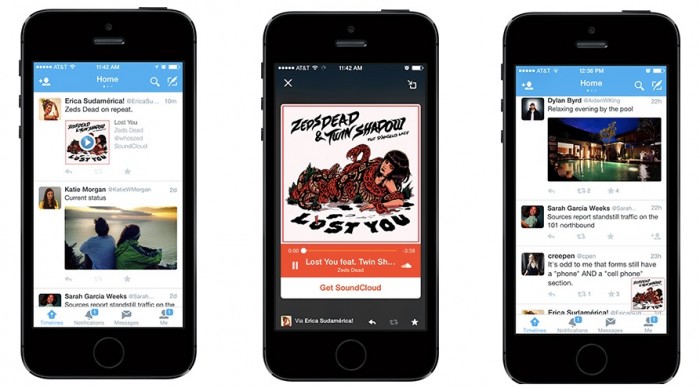
The Audio Cards are pretty much easy to use. If you follow artists that are also on iTunes or SoundCloud, they're going to start tweeting links to their tracks on one of both of these services. Clicking on the link in the tweet will show you the card where you can listen to the streaming audio. To browse the microblogging site while the audio streams, you simply need to swipe the card down to the bottom of your display.
While minimized, the audio kept streaming. You can tap of the miniaturized "dockable" music player card to stop the track, skip it, or purchase it. Other audio content such as podcasts is also available through the feature.
"Throughout your listening experience, you can dock the Audio Card and keep listening as you continue to browse inside the Twitter app," wrote Product Manager Richard Slatter on the company's blog.
Before, only users on desktop browsers that could listen to music while scrolling their timeline. Mobile users couldn't experience this because in order to play embedded music, they need to open a separate window, or in some cases, open external app. This means that users had to leave Twitter to listen to a song. If you don't want to do this, you would stop the audio streaming.
Since this does not promote a good mobile experience, Audio Card is Twitter's solution.
By making the listening experience better, audio tweets can get more engagement and deliver more value to people who see them. This unlocks an opportunity to get artists to tweet more about their masterpiece, and at the same time, attracting more people to tweet. This strategy encourages people to rely Twitter as a content discovery platform.
Rather than building and maintaining a separate Music app of charts and lists, in-tweet audio will get people to follow more artists and critics, and boost further engagement with other Twitter users.
While more than 50 SoundCloud partners already have the green light to post audio links inside Twitter, the microblogging platform is expecting for more artists and media outlets to join the crowd.