

The popular cross-platform messaging app WhatsApp, launches its first revenue-generating business, enabling businesses to establish an official presence on WhatsApp, similar to how they exist on Facebook.
With its own Business API, the company is allowing businesses to respond to messages from users for free for up to 24 hours. But after that, it charges businesses at a fixed rate per country, per message. Customers however, can use real-time support for free.
While businesses can only reply to those who contacted them first, the Business API allows those businesses to programmed messages about shipping confirmation, appointment reminders and others. With the API, businesses can also respond to customers through their own tools or third-party apps.
"In addition, messages will remain end-to-end encrypted and you can block any business with the tap of a button," said WhatsApp on its blog post.
Initially, some 100 companies have been testing the feature, including Singapore Airlines, Wish, and Uber.
WhatsApp was acquired by Facebook with a staggering amount of money. It is Facebook’s most expensive acquisition, and also one of Facebook's major properties that isn't making any money.
Facebook has allowed it to operate within its founder Jan Koum's goal for quite a long time, and introduced a hefty new features to make the messaging app a bit like Facebook Messenger, but with a twist.
Since then, the once was a small app, WhatsApp grew tremendously, becoming the most widely-used messaging service with more than 1.5 billion users.
But as time passes, Facebook experienced its own problems with declining number of daily users, declining young generation users, and also a decelerating user growth, criticisms about how aggressive it gathers data and so forth. And with the Cambridge Analytica scandal, the incident did gave founder and CEO Mark Zuckerberg some major headaches.
With all summed up, Facebook starts to see WhatsApp as a revenue source, as it put pressure on the messaging app to start making money.
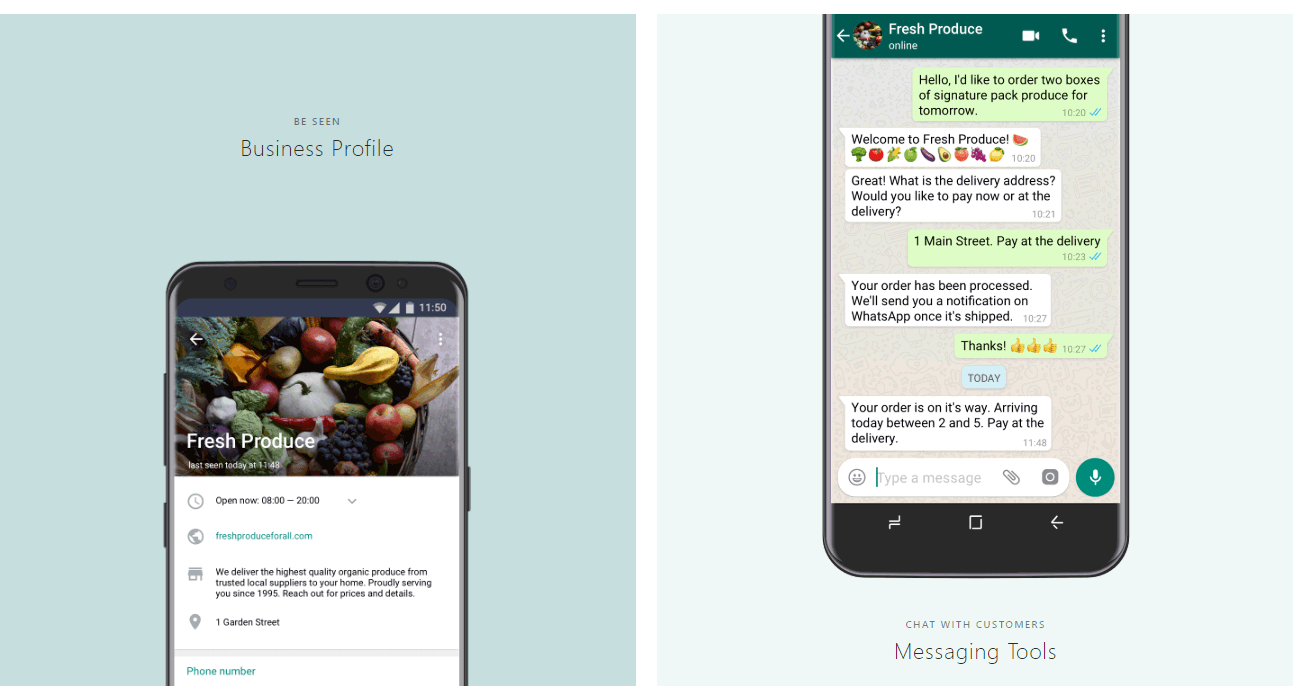
WhatsApp first announced it would charge for enterprise service in September 2017 when it launched its free WhatsApp For Business app.
The report notes that WhatsApp announcements came after the departures of WhatsApp’s co-founders, Jan Koum and Brian Acton, following disagreements with Facebook over monetizing the chat app, after once saying that advertising as an "insult to your intelligence."
This somehow marks the end of the WhatsApp people all knew. The dream of a versatile chat app, lightweight, intuitive and no gimmick that is straightforward, can officially be pronounced dead.
Since Facebook's acquisition, it was increasingly clear that WhatsApp will turn out to be yet-another Facebook platform with ads and data collection, as required by Facebook's main business mode.
And with the launch of this Business API, the transition of WhatsApp finally comes true.