
Not everyone knows that all Wi-Fi is not created equal.
Generations of Wi-Fi technology have different names, identified by a letter or a pair of letters that referred to a wireless standard. For example, there is the 802.11n which predates 802.11ac.
This method of naming was not comprehensible, as the combination of numbers and letters denoting what type of wireless connections it provides can be difficult to understand, or to remember.
Utterly, the naming is seen as nonsense to most people.
This is where the Wi-Fi Alliance, a non-profit organization that promotes Wi-Fi technology and certifies Wi-Fi products for conformity to certain standards of interoperability, is making things easier by introducing a new method of naming.
Here are their names:
- 802.11b (1999) → Wi-Fi 1.
- 802.11a (1999) → Wi-Fi 2.
- 802.11g (2003) → Wi-Fi 3.
- 802.11n (2009) → Wi-Fi 4.
- 802.11ac (2014) → Wi-Fi 5.
- 802.11ax (2019) → Wi-Fi 6.
So instead of 802.11ac, which is the ongoing generation of Wi-Fi, its name would simply be "Wi-Fi 5."
This way, instead of wondering whether "ac" is newer than "n" or if the two versions can work together, users can just look at the number: Wi-Fi 5 is higher than Wi-Fi 4, so it's obviously newer and better.
The Alliance also announced Wi-Fi 6 that is based on the IEEE 802.11ax standard. It offers higher data rates, increased capacity, good performance - even in crowded environments. It also boasts improved power efficiency, making it a better choice for smart home and IoT uses.
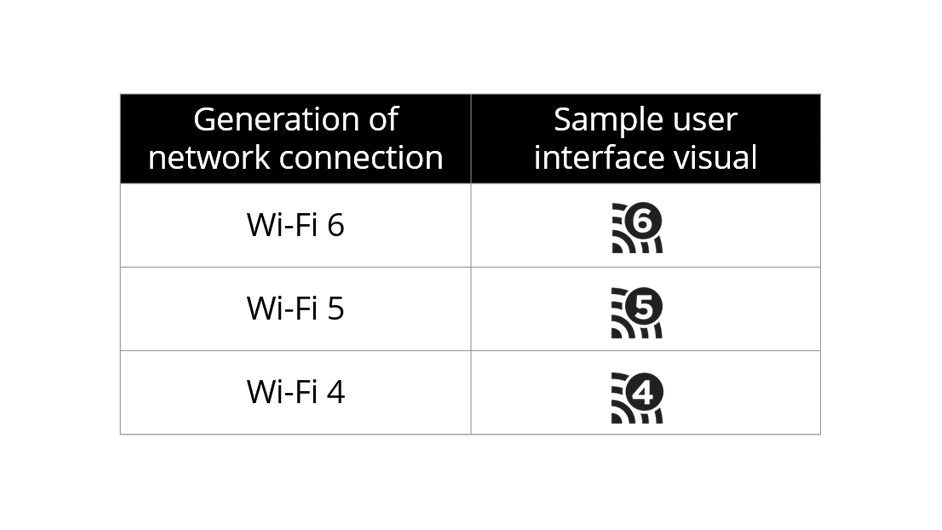
This method of naming is straightforward, and should make regular users to easily recognize which Wi-Fi versions their devices support and run, helping them to keep their devices updated with the latest Wi-Fi capabilities.
"To help users identify devices that provide the latest Wi-Fi experience, Wi-Fi Alliance has introduced simplified generational names that may appear in device names and product descriptions," said the Wi-Fi Alliance. "Wi-Fi devices supporting the latest generation of connectivity are based on the 802.11ax standard and are known as Wi-Fi 6 devices."
And because the Wi-Fi Alliance also certifies Wi-Fi products, the organization urges manufacturers, operators and software developers to adopt these simple naming into their user interfaces, instead of classic lettered versions. The Wi-Fi Alliance also introduced simple icons to make it easy for users to quickly spot what version of Wi-Fi network they are connecting to, straight from their devices.
The Wi-Fi Alliance represents just about every major company that makes product with Wi-Fi in it, so its actions usually reflect what the industry really wants.
The move is indeed very helpful, considering that almost every household owns at least one Wi-Fi router.
"The Wi-Fi Alliance expects very broad adoption of the term," said Kevin Robinson, the organization's marketing chief. "It’s very unlikely it will be immediately universally adopted - that is just not the way any of these things work. But the industry will move to this generational approach of naming, and ultimately the consumers and industry both will benefit from that move."




















































































































































































































































































