

YouTube has been around since 2005, to be acquired by Google in 2006, and to quickly garner the internet's audience for streaming videos.
As the internet's grip widens and mobile devices are practically in everyone's hand, YouTube is announcing "a new chapter in bringing the power of live video to creators anywhere."
With the announcement on June 23rd, 2016, YouTube live streaming is going to our hands.
Baked right inside YouTube's mobile app, the feature should be easy to use as Kurt Wilms who leads the company's immersive experiences products, said in a blog post:
"You won't need to open anything else, just hit the big red capture button right there in the corner, take or select a photo to use as a thumbnail, and you can broadcast live to your fans and chat in near real time."
With this feature, mobile users anywhere can broadcast live to fans in near real time.
And also because it is built right straight into YouTube's app, the mobile live streaming feature has all the features regular videos have. Like for example: users can search for videos, find them through recommendations and playlists and protect them from unauthorized users.
Because YouTube is built on a peerless infrastructure, and also with the service being backed up by Google's massive influence, it has a higher change to faster than any (if not all) at the competition. But the public has wondered: what takes YouTube this long to have such feature?
YouTube in launching its own live video broadcast is certainly a welcome move. But it's odd to see YouTube that is regarded as the world's largest and most popular video platform, to take its time before joining its competition. So why now?
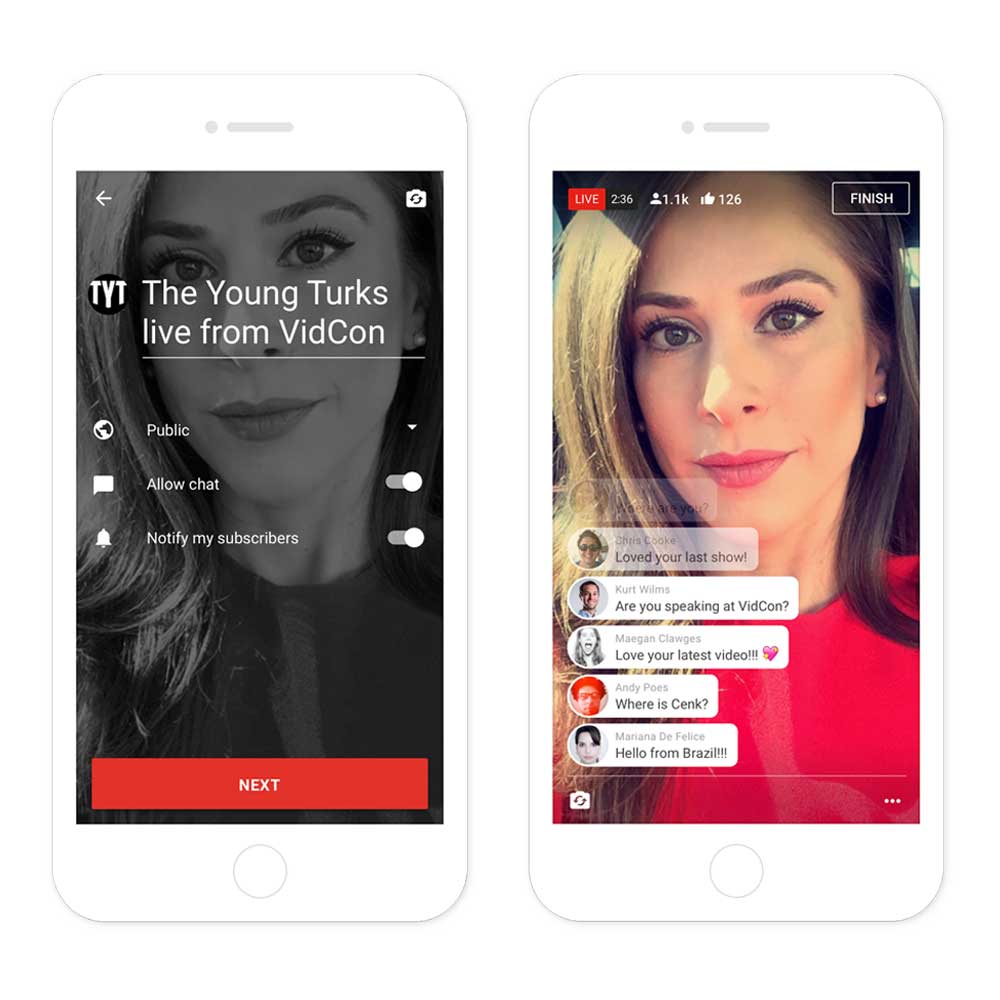
The concept of live video streaming was pioneered and initially introduced by Meerkat. And when Twitter came up with Periscope and Facebook with live video, the two quickly became the forefront of the live-video trend. So it's not surprise that YouTube, the king of video upload, wants a piece of the action. The question is, why did it take that long?
YouTube may have been first in the online video space, but as the digital ecosystem explodes, the online video giant has fallen behind in live video.
To answer this, YouTube in fact did already offered live broadcasting since 2011. But it was all dedicated and designed for a webcam-equipped laptop or desktop computers. Now with the new feature, a smartphone is all a user need to host a live feed to the world to see.
Wilms also added that what YouTube has in advantage if compared to its competitors is its Google-backed service. So searchers and live videos will show up on Google and YouTube searches, just like any other YouTube videos. This does make sense because Facebook and Periscope videos can only be searched from the inside of their respective app.
And as for the day of the announcement, YouTube came up with a surprisingly right moment. Just a few days after Facebook was revealed to sign contracts with some 140 athletes, celebrities and media companies to create Live videos. The news is like hitting Facebook back, reminding the social giant that YouTube still have superior influence on video upload service. Moreover, YouTube is still having an incredibly large and loyal user base on its side as it expands its live reach.
Previously, Tumblr also entered the live video market by working alongside other apps.