In war, there are established rules and principles designed to protect human dignity, minimize suffering, and maintain a certain level of humanity even amidst conflict.
For example, civilians should never be targeted, and that the wounded and the sick must be protected. Prisoners must be treated humanely, and that the looting of property in occupied or conflict areas should be avoided.
Both sides should always maintain human dignity, ensure accountability, and support humanitarian access.
Adhering to these principles helps to mitigate the horrors of war, providing a framework for humane conduct and protecting those who are most vulnerable.
These rules are embodied in international humanitarian law (IHL), including the Geneva Conventions.
But in Israel's war against the Palestinian Hamas, pretty much all of the above are violated.
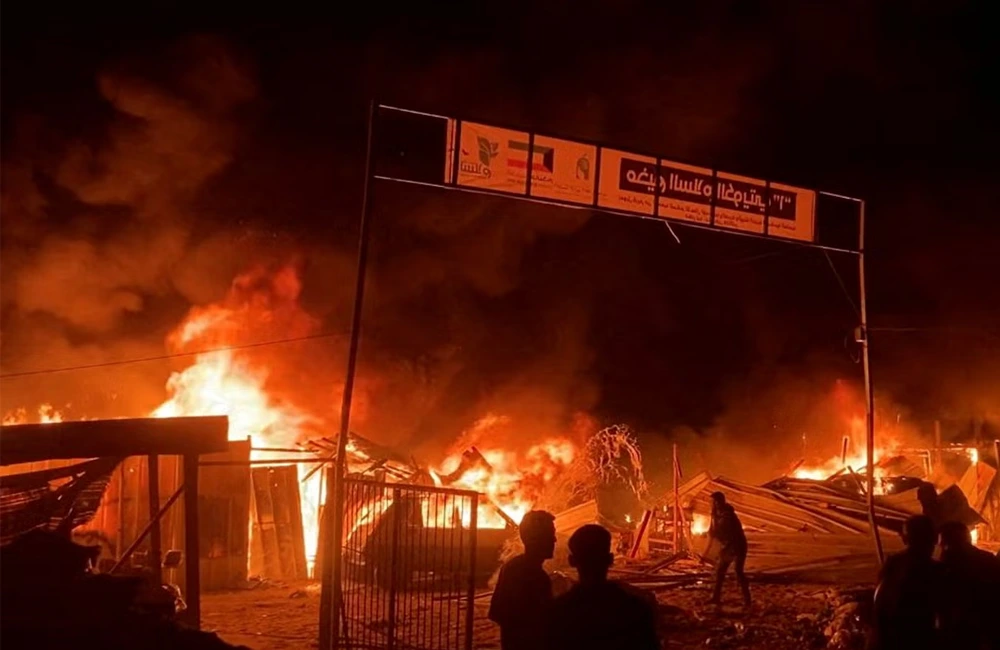
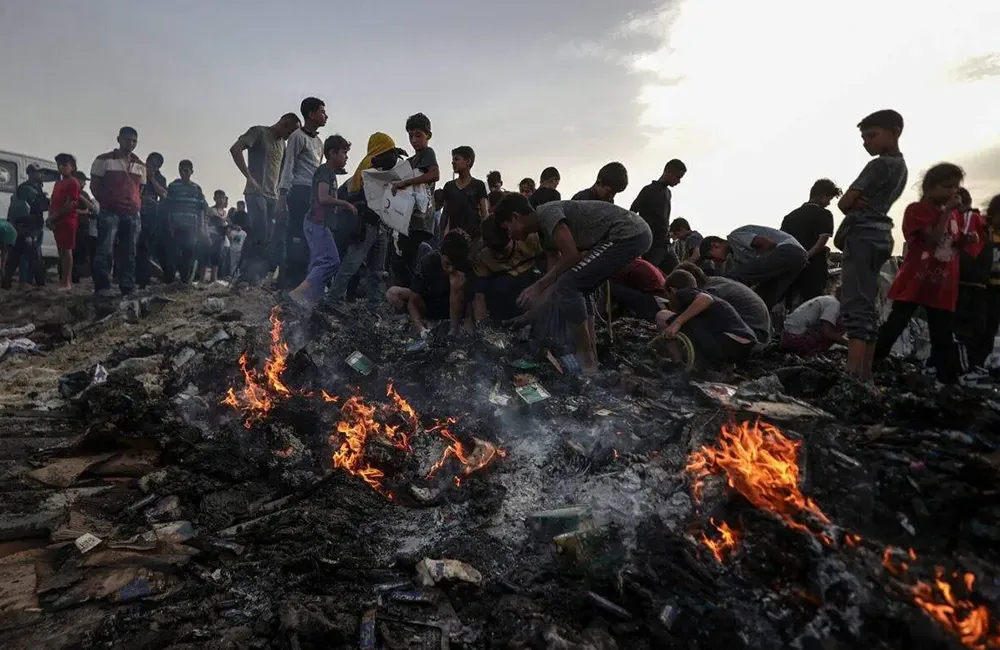
This time, the world has its eyes on Rafah, as dozens of civilians are killed in an attack on refugee camps, most of whom are non-combatants, including women and children.
The victims were burned alive as the attack ignited fire to their tents, the Gaza Health Ministry said.
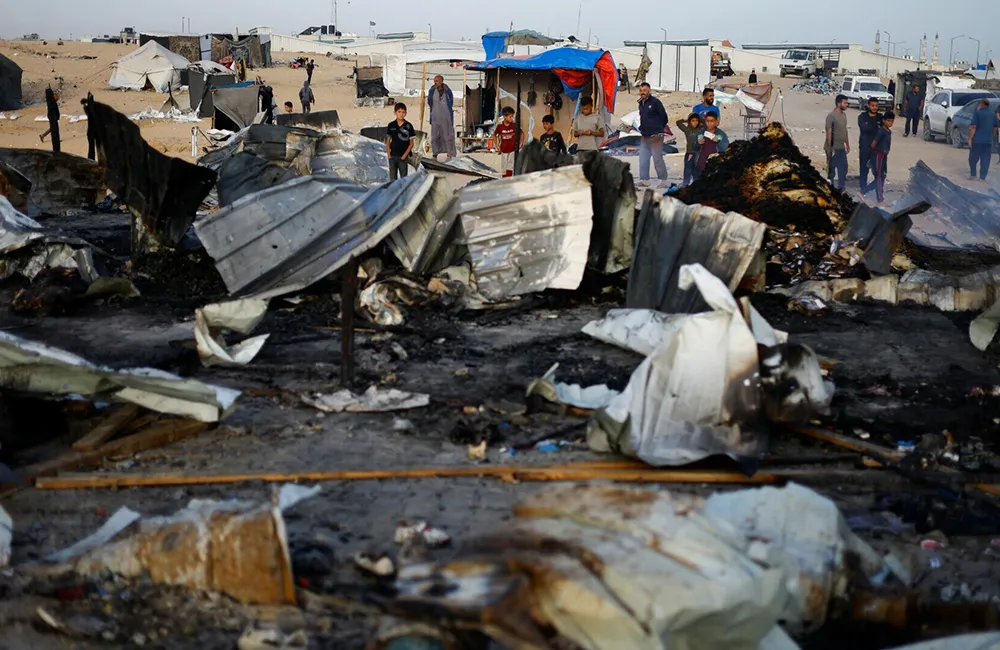
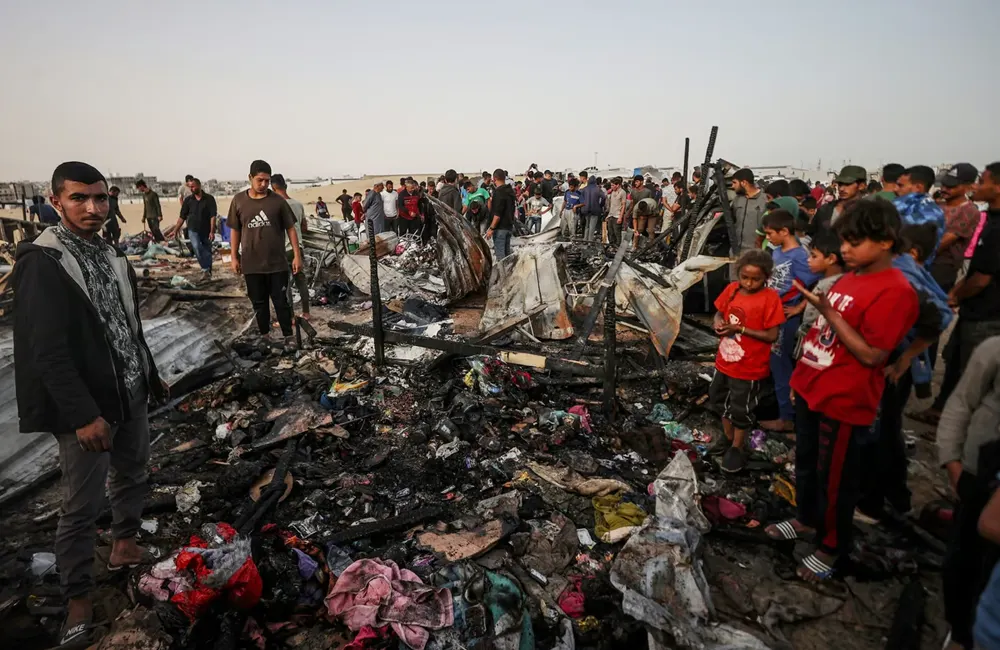
These burned camps were temporary facilities built to provide immediate protection and assistance to the Palestinians who have been forced to flee their homes due to the war.
They were their home away from home, because they no longer have homes.
But Israel has its own argument.
Its military described the strike as a precision airstrike that killed two senior Hamas officials, including Yassin Rabia, Hamas's chief of staff in the West Bank.
But it later added that it's reviewing the incident in Rafah following reports that the attack also caused fires.
Israeli Prime Minister Benjamin Netanyahu has vowed that Israel will not leave Gaza until all remaining Hamas control in the territory is ended.
He also said that Israel must capture Rafah to eliminate the Hamas battalion there and achieve the goal of “total victory” over the militants, who have recently regrouped in parts of Gaza previously controlled by the Israeli military.
#Gaza has become hell on earth. Families continue to seek refuge, trying to escape war, but there is no such thing as a safe place in the Gaza Strip.
No one is safe: not civilians, not aid workers, no one has been spared. We need a #CeasefireNow. pic.twitter.com/ZbaEmBBjjb— UNRWA (@UNRWA) May 27, 2024
Following the Israeli attack in Rafah, the United Nations Relief and Works Agency for Palestine Refugees (UNRWA) described the situation in Gaza as "hell on Earth."
"Information from Rafah regarding further attacks on families seeking shelter is horrifying," UNRWA said.
"There are multiple reports of mass casualties, including children and women among the dead."
We do not have an established communications line with our colleagues on the ground. We are not able to confirm their location & are extremely concerned for their wellbeing, and the wellbeing of all the displaced people sheltering in this area.
No place is safe.
No one is safe.— UNRWA (@UNRWA) May 27, 2024
Qatar’s Foreign Ministry on Monday said the attack could complicate efforts to mediate a ceasefire and the return of hostages held in Gaza.
EU Foreign Policy Chief Josep Borrell cited the attack and stated on Monday that the international community faces a dilemma on how to “enforce” last week’s International Court of Justice (ICJ) order calling on Israel to immediately halt its offensive in Rafah.
The ICJ is a UN body, but it lacks mechanisms to enforce its orders.
The attack on the camp happened a day after Hamas said it launched a “massive rocket attack” targeting Israel’s commercial center in Tel Aviv.
The attack was the first long-range rocket attack from Gaza since January, although rockets and mortars have been fired at Israel from along the Gaza border since then.
Eight projectiles crossed into Israel after being launched from near Rafah, where Israeli forces recently conducted an operation.
Israel said several of those projectiles were intercepted.
At the time, air raid sirens sounded in the city, but Israel reported no casualties or damage.
Read: Miss Indonesia And Miss Israel Caught In A Heated Israel-Palestine Debate On Instagram
At this time, UN Secretary-General Antonio Guterres welcomed the delivery of humanitarian aid and fuel through the Kerem Shalom crossing, emphasizing the need for the protection of civilians and their access to food, water, and shelter.
“With the humanitarian operation near collapse, the Secretary-General emphasized that Israeli authorities must facilitate the safe collection and delivery of humanitarian aid supplies from Egypt entering Kerem Shalom for those in need,” said Guterres’s spokesperson, Stephane Dujarric, in a statement.
Aid trucks crossed into Gaza from southern Israel through a new agreement to pass through the Rafah crossing with Egypt after Israeli forces captured Palestinian territory there earlier this month.
This happened because Egypt has refused to reopen the Rafah crossing on its side until control over Gaza is returned to the Palestinians.
Egypt agreed to temporarily divert traffic through the Kerem Shalom crossing in Israel, Gaza’s main cargo terminal, following a phone conversation between U.S. President Joe Biden and Egyptian President Abdel Fattah el-Sissi.






















































































































































































































































































