
Amazon's AWS Snowcone SSD offers edge processing capabilities with multiple layers of encryption—all in a simple, ultra-portable form, the smallest of the Snow family.
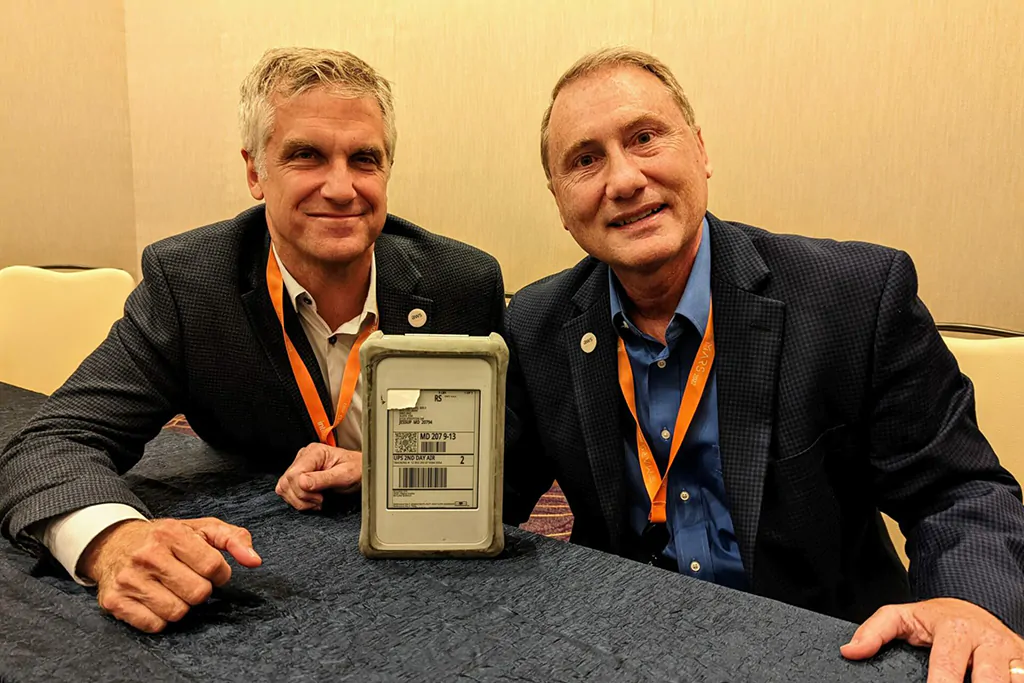
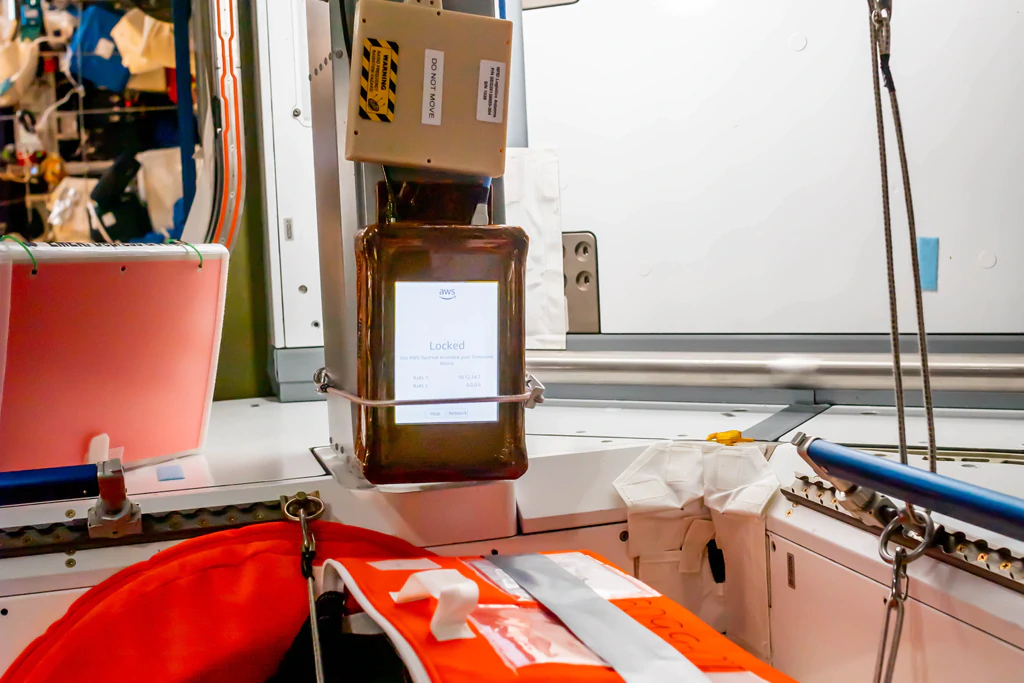
One particular Snowcone device was built just like every other Snowcone devices for the market. But unlike all others, this Snowcone device was not sold for people on Earth, because the company sent it into space to the International Space Station (ISS).
For the most part, the Snowcone in question is just like any other off-the-shelf Snowcones, which is already a rugged device.
But to make it capable of spaceflight, AWS had to do months of testing to get it certified.
AWS had to run the particular Snowcone device through five months of NASA’s thermal, vacuum, acoustic and vibration testing.
It's worth noting, that the device was not tested with radiation because it was going to be used only in the shielded ISS environment.

Once it arrived on the space station, the team, which was led by AWS’s Daryl Shuck, connected the Snowcone to the ISS, and uploaded a machine-learning model for object detection, in order for it to be able to run throughout the time during the Axiom Mission 1 (known as the Ax-1, the first all-private mission to the ISS).
The astronauts on the Axiom mission performed a total of 25 experiments — including the Snowball experiment.
The news was delivered during Amazon's re:Mars conference.
"When you think about providing cloud computing to the edge, in remote, disconnected, rugged environments — after 35 years in the space industry — there is no more harsh, remote or rugged environment or unforgiving, quite frankly, than the space environment," said Clint Crosier, the director of Aerospace and Satellite at AWS.
Crosier has had numerous experiences in this field, considering that he was a United States Air Force major general who helped oversee the foundation of the U.S. Space Force before he retired and joined the AEWS team in 2021.
"With space a $425 billion global industry today that’s projected to be a $1 trillion industry by 2040 by all the major analysts — tripling the number of satellites that are launched between 2018 and 2022 — for all those reasons, customers are telling us that they need the same cloud computing capabilities close to their workloads that happen to be off the planet in space as they do on the ground."
During the mission, as Crosier noted, the team had to take pictures and document all of the equipment they brought on board and then transported down with them.
And here, Snowcone's object detection model helped the team catalog all of these items.
It also helped the team flag those that were to be excluded from public distribution.
Having the Snowcone onboard the ISS avoided the need to transfer data back to Earth for analysis, which sped up the task of analyzing images tremendously.
Crosier admitted that this was a relatively simple demonstration, but having the device undergone the certification process has taught the company a lot.
"That was the demo that we did in orbit, but the whole process, as we think about the future requirements for cloud computing in space, that’s what we’re really excited about because we think it ushers in a whole new era in space innovation — when you can now, for the first time ever, bring edge computing capabilities onto orbit," he said.
In the end, the goal of bringing the particular Snowcone device, was not so much about having a Snowcone in space, but to learn from the mission.
At this time, Amazon is already working with Axiom on future missions, and the company has plans to integrate even more sophisticated edge computing capabilities into man-made devices put into space.
"We work with our customers to meet their needs," Crosier said.
"That’s one of the hallmarks at AWS and of the things I’ve learned about joining them after 33 years in the U.S. military. And so if customers see the value and need for putting [edge] computing capabilities on satellites, you can rightly expect that we’re listening to that and we’re figuring out how we can meet their needs."
Ax-1 is the first of several private space missions to ISS planned by Axiom Space, with the ultimate goal of building the first commercial space station.
It's also worth noting, that Amazon's founder Jeff Bezos, also owns Blue Origin, a U.S. privately funded aerospace manufacturer and sub-orbital spaceflight services company.
Amazon's AWS is already the supplier of some of Blue Origin's computing capabilities.