When rivals have spent years iterating on foldable smartphones, it's looked like Apple was sitting on the sidelines and falling hopelessly behind. But that narrative is shifting fast.
Recent leaks suggest the long-rumored foldable iPhone isn't just a distant concept anymore. It's now inching toward reality. What once felt like speculation now feels like inevitability, and the people making Apple the most nervous are the very ones pushing those rumors into the spotlight.
Mark Gurman and Ming-Chi Kuo have been thorns in Apple's side for years, but Jon Prosser is the one Apple actually sued. Yet, he continues doing what he does, and even leaks hardware of the upcoming device with full 3D renders.
On Christmas Eve, he dropped what he claims is an early look at Apple's book-style foldable, a device Apple hasn’t publicly acknowledged but is reportedly targeting for a 2026 launch alongside the iPhone 18 Pro lineup.
"Screw it," he says.
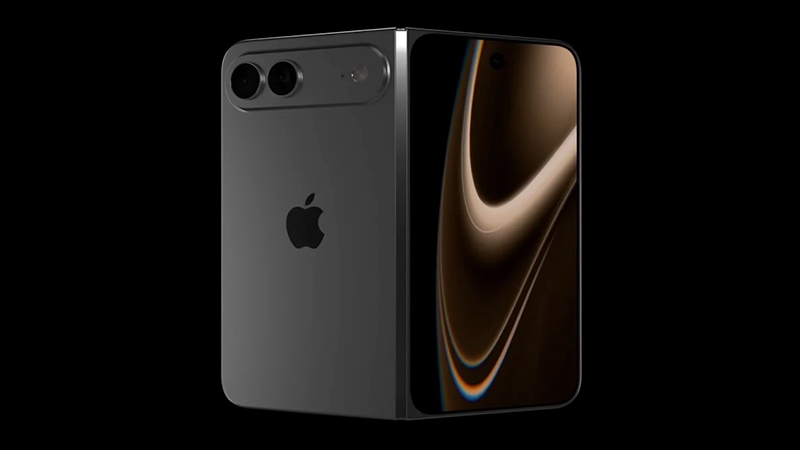
Prosser’s visuals depict a wider-than-tall foldable that closes like a book, with a roughly 5.5-inch outer screen and a 7.8-inch interior display.
The outside dual camera setup sits on a slim plateau rather than a massive bump, and the LED flash stands alone.
This is a cleaner, more minimal direction than recent iPhones. At the front, one camera, and on the inside, there is one camera. In total, there are four cameras.

Closed, the phone reportedly measures around 9mm thick, which breaks down to about 4.5mm per side when unfolded, which is thinner than Apple's current ultra-slim iPhone Air. These dimensions line up with other supply-chain whispers that Apple has been engineering a design in that size range and experimenting with ultra-thin flexible glass to support the form factor.
The boldest claim is that Apple has supposedly tackled the industry's most obvious flaw: the crease.
Samsung, Google, Oppo, and every other foldable contender still share the same problem: a visible crease where the display bends.
No matter what they promise or how they refine the hardware, that line is unmistakable.
It's there like a fault line across the screen, a wrinkle the technology just can't iron out.
It’s a visible reminder that the dream of foldables is still more hype than reality, a proof that the future isn't seamless just yet.
According to a report from a China-based industry source, Apple is testing a new type of ultra-thin flexible glass that varies in thickness across the panel.
The concept is simple: make the glass thinner only where it needs to bend, and keep the rest thicker to preserve strength, durability, and overall structural integrity. By doing this, Apple aims to create a foldable display that flexes where it should, and stays rigid where it matters.
This marks a clear departure from the ultra-thin glass used in today's foldable phones.
Current solutions often deform at the hinge over time, eventually leaving that familiar crease.
With more usage, the crease becomes the visible scar, the evidence of repeated folding. Apple’s approach, however, redistributes stress across a wider area instead of focusing it on a single fold line.
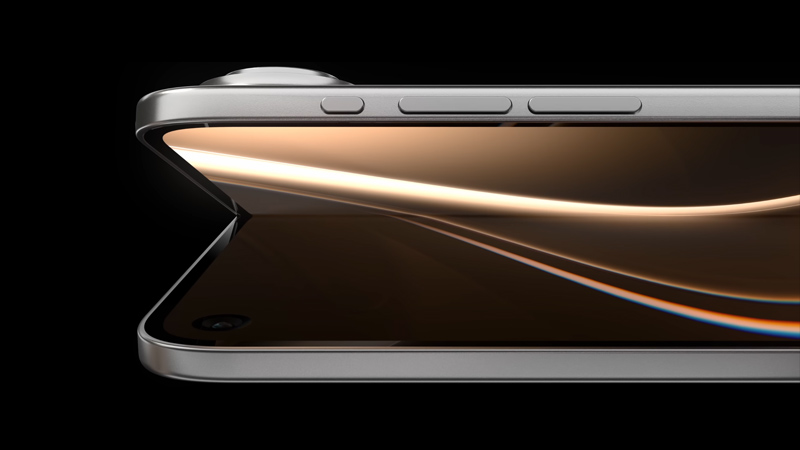
In theory, this could minimize the crease dramatically, maybe even to the point where it’s barely noticeable in everyday use.
According to Prosser, he said that Apple also uses a metal stress-distribution plate beneath the panel and a liquid-metal hinge, a combination intended to disperse tension so evenly that no crease appears.
It sounds like the kind of moonshot Apple would chase, but proving it in mass production is another matter, especially as reports indicate Apple is still in advanced validation testing to ensure the display survives long-term folding cycles.
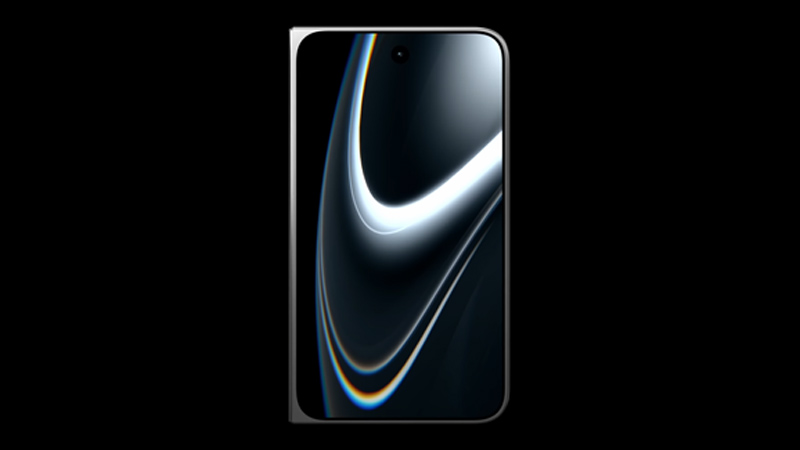
Internally, leaks suggest Apple is rethinking some fundamentals to make a foldable actually work. Touch ID may return through the power button, a practical compromise if Apple wants to avoid cramming Face ID’s sensor stack into a bendable frame. Rumors also point to a second-generation C2 modem and denser battery tech designed to offset the demands of a foldable display.
But the first shock won't be the specs, but the price.
Early estimates place Apple's foldable anywhere between $2,000 and $2,500, which would immediately make it the most expensive iPhone ever sold. That's well above today's Pro Max lineup, long considered the ceiling of Apple’s pricing.
If these numbers stick, Apple's foldable won't just be a product. Instead, it'll be a statement.
Early production expectations are cautious; even if Apple announces in 2026, shipments could be tightly controlled before scaling up.
Some analysts have suggested 2027 wouldn’t be out of the question if hinge or material stress testing exposes issues.
The biggest question isn't whether Apple can build the device. It's more about whether people will actually buy it.
The iPhone Air proved that engineering brilliance doesn't guarantee sales; consumers gravitated toward the models with better battery life and cameras over the slim novelty. A foldable iPhone will get headlines, dominate tech feeds, and drive hype like the original iPhone reveal did, but success will hinge on what people value more: the promise of tablet-sized productivity in their pocket or the practicality of a standard iPhone at a far lower cost.
If Apple truly solved the crease, the foldable market could shift overnight. If not, it risks being another niche experiment at a luxury price.
However, history has shown that Apple isn't afraid to stumble with a product or two.
The company is willing to take a hit today if it means shaping the market tomorrow, and remain the benchmark of what can happen when things are done without cutting corners or going cheap.
The Apple Vision Pro is a perfect example. It's technically impressive, but commercially underwhelming, yet still a sign of where Apple believes the future is headed.






















































































































































































































































































