
When the attempt to shut down Motherless, the news sent ripples through online communities and beyond.
The move came after months of mounting international pressure triggered by a detailed investigative report from the network that exposed the platform as a hub for deeply disturbing content linked to drug-facilitated sexual assault and gender-based violence.
For years Motherless had operated with a hands-off philosophy, billing itself as a moral-free file host where anything legal could be uploaded and stored indefinitely, but major publications' probe painted a far darker picture of how its lax moderation enabled real-world harm.
The investigation itself pulled back the curtain on an ecosystem that extended well beyond a single website.
This however, is short-lived.
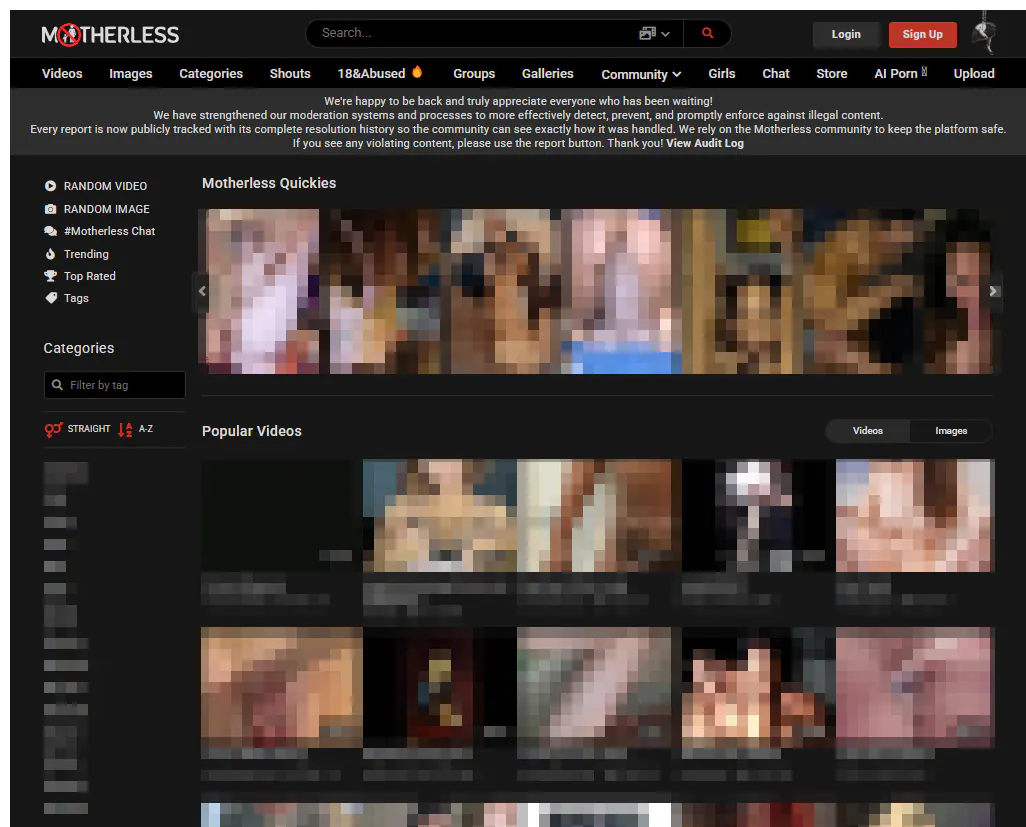
Motherless.com is a long-running adult website that functions as a free, user-generated pornographic video and image-sharing platform, often described by its own operators as a "moral free file host where anything legal is hosted forever."
Launched in 2008 by Joshua Lange, who remains its sole owner and operator, the site was built on the model of early file-hosting services but specialized exclusively in explicit content. It started by importing hundreds of thousands of files from Lange's previous site, Hidebehind.com, and quickly grew into one of the internet's largest repositories of amateur pornography through crowdsourced uploads.
Unlike mainstream tube sites that partner with professional studios or pay for licensed material, Motherless relies almost entirely on everyday users uploading their own videos, photos, and clips.
In other words, there are no production deals, no payouts to creators beyond occasional credit systems that users can sometimes convert into small cash rewards or merchandise.
The homepage and navigation reflect a raw, unfiltered approach to adult material with categories and tags sprawl across hundreds of options, covering the full spectrum of human sexuality and then some.
This is why Motherless is considered the safe haven for truly unfiltered, often amateur and homemade material that other platforms might flag or remove more aggressively. And an investigation from CNN documented more than 20,000 videos tagged with terms like #passedout, #eyecheck, or #sleep.
Many of these clips showed women who appeared unconscious: eyes rolled back, bodies limp: while men performed sexual acts on them, often lifting eyelids to confirm unresponsiveness or filming in ways that suggested drugging or heavy intoxication.
These videos frequently garnered hundreds of thousands of views, and the reporting linked them to private Telegram groups where participants exchanged detailed guides on drug-facilitated sexual assault: mixing sedatives into drinks at low starting doses, combining them with alcohol, using anti-diarrheal medications like Imodium to counteract side effects, and even selling "sleeping liquids" or charging cryptocurrency for live streams of assaults.
These stories underscored a broader pattern: drug-facilitated sexual assaults are chronically underreported due to memory gaps, embarrassment, and institutional biases, with conviction rates remaining low across Europe and the United States despite laws that technically cover such offenses.
Read: Husband Hired Over 50 Men Online To Rape His Wife Nearly 100 Times Over 10 Years
The porn website Motherless, which has faced international scrutiny over hosting content linked to gender-based violence and drug-facilitated sexual assault, has been taken offline by Dutch authorities following mounting pressure in the wake of a CNN investigation.… pic.twitter.com/RjEIPsEYJP
— CNN (@CNN) May 8, 2026
The legal landscape surrounding these platforms added another layer of complexity.
Motherless relied on jurisdictional loopholes, with servers in the Netherlands, a domain possibly registered elsewhere, and a parent company based in Costa Rica, all strategies common among adult sites seeking to minimize oversight. U.S. safe harbor provisions under laws like Section 230 had historically shielded platforms from liability for user-uploaded content, but European regulators were increasingly unwilling to tolerate the spillover effects.
The Dutch Public Prosecution Service acted decisively once evidence from the CNN collaboration with outlets like NOS and Nieuwsuur reached them, especially after the hosting provider NFOrce issued an urgent compliance review and gave the site a short window to respond.
The site was taken down, to only respawn about a week later.
In a statement issued shortly after the initial takedown, Motherless claimed the offline period was voluntary.
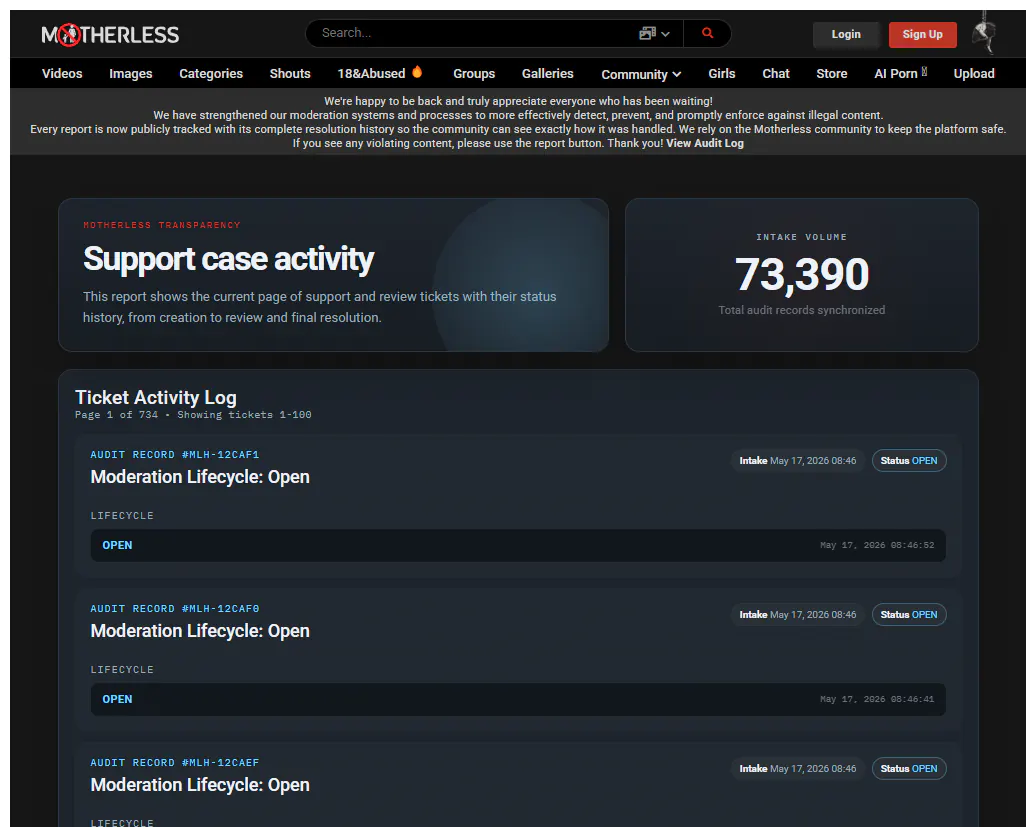
By mid-May the site had resurfaced a 100%, as if nothing happened.
A prominent welcome message greets visitors with "We’re happy to be back and truly appreciate everyone who has been waiting." However, there are a few changes that followed.
First off, Motherless said that to comply with the law, moderation has been strengthened to better detect and remove illegal uploads, complete with a public audit log that tracks every report and its resolution so the community can monitor enforcement.
The company also promised to strengthen systems, ban repeat offenders, and review keywords before returning. While this is an improvement, it's also considered by many as a familiar cycle of cleanup that had followed previous scrutiny but never quite stuck.
The case stands as a reminder that online anonymity can shield both creators of content and the predators who exploit it, leaving society to weigh the costs of unrestricted access against the very real scars left on those caught in the crossfire. The attempt to kill Motherless once and for all had failed. Motherless refused to die.