Google and Mercedes just offered a glimpse of what Gemini is capable of inside cars, and it’s nothing short of impressive.
In a demo, Mercedes-Benz Chief Software Officer Magnus Östberg and Google Cloud’s Head of Automotive Steve Basra took a ride to showcase how the Gemini-powered MBUX Virtual Assistant can engage in fluid, natural conversations.
What was once a simple voice command system is now evolving into a true conversational co-pilot.
During the demo, the experience immediately stood out.
The two interacted with Gemini in the car like what they normally would with Gemini Live on their phones.
With that in mind, the Mercedes CLA just happens to be the first to showcase it in action.
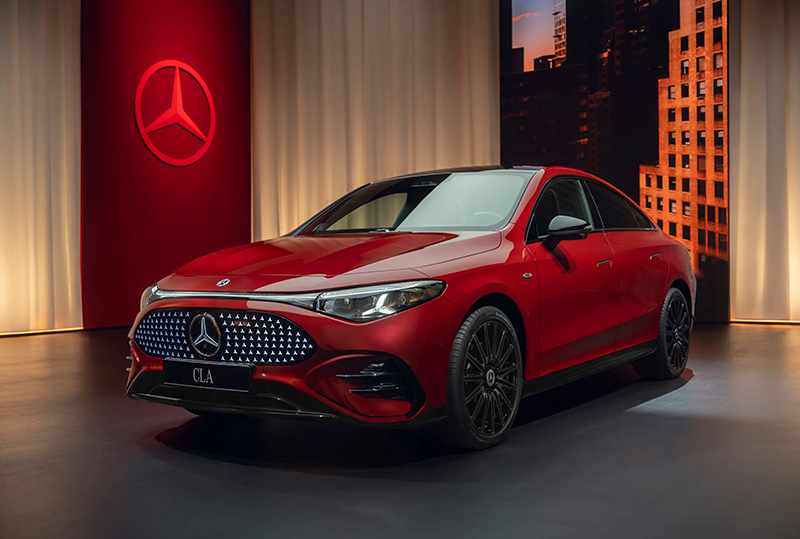
Östberg asked the car to navigate to a specific address, then followed up by requesting nearby coffee shops. Google Gemini managed to respond to those request like it should. It even pulled up options, recommended one, and even confirmed whether the café served pastries by checking its details on Google Maps.
Later, Basra joined the drive and asked for an Italian restaurant with a good wine list. Gemini offered to call the restaurant directly so he could ask about their selection.
These are possible because under the hood, this system can pull live data from Google Maps, reviews, and business listings. It can plan routes, add pitstops, and handle vague requests along the way, without missing context. It’s also capable of more human-like understanding.
Because Gemini is an AI that understands context, users can ask for highly specific things, like looking for a specific road with certain landmark, or request a parking spot that faces "the big statue," and actually getting results.
The possibilities extend beyond navigation. Gemini can pull calendar or email information to identify destinations, manage calls, and even take notes during conversations. In the near future, drivers will be able to say things like "message my wife that I’m on my way and share my location," and the system will handle it all seamlessly.
That’s where Gemini’s true strength lies: in comprehension that mirrors how people naturally think and speak.
Best of all, the interactions require no console tapping, no repeating commands, just smooth, context-aware dialogue.
This isn’t just a minor upgrade to the old Google Assistant; it’s a complete reinvention of in-car interaction.
For years, automakers have been adding bigger screens, more apps, and endless menus. Some cars even went stepped further by deleting physical buttons for some car features, and put them inside the software, accessible only through tapping on the screen.
In other words, in this ever-connected world, where people are already glued to their screens, car manufacturers are also "forcing" drivers to have their eyes on the screen and dig into some of the menus, just to do some of the most basic things, like turning on the air conditioner, or folding the side mirrors.
Before this, all these were possible by simple buttons, switches or knobs.
Because drivers have to have their eyes on the road, and the trends seemingly pressure drivers to have their eyes on the screen, Google wants to change that dynamic.
With Gemini that understands follow-ups, nuances, and intent, Google wants to make driving both safer and more human.
While this Gemini integration cannot control those in-car features yet, one thing is certain: users can can talk to their car like they would to someone sitting beside them.
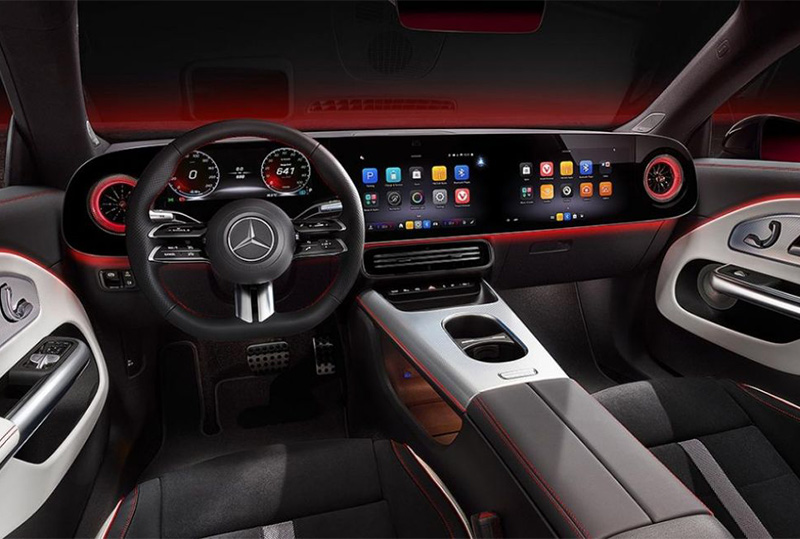
It’s not just a convenience upgrade.
This is like showcasing the beginning of a new relationship between drivers and machine they're driving.
Where once assistants could only obey commands, now they can converse, infer, and adapt. And in the process, Gemini may be redefining what “smart” really means inside the modern car.
Mercedes and Google’s collaboration began in early 2025, with a goal to integrate Gemini’s conversational AI into the MBUX Virtual Assistant.
Ten months later, that vision is taking shape in the new CLA, which will debut in the U.S. before the end of 2025.
The video presentation wasn’t just another flashy promo; it was a real demonstration of how AI can quietly transform daily driving.
Compared to the clunky, sometimes frustrating behavior of traditional assistants, including Google Assistant itself, Gemini feels like a major leap forward.
Gemini’s integration won’t stop with Mercedes. Google previously confirmed it’s coming to Android Auto and cars with Google built-in, such as the Lincoln Nautilus, Renault R5, and Honda Passport.
For drivers who’ve long struggled with the limitations of voice assistants, Gemini represents a long-overdue evolution.
And as it begins rolling out across platforms, from phones to dashboards, one thing is clear: the road ahead for AI-powered mobility looks remarkably bright.