
A woman entering a public toilet to relieve herself in South Korea is nothing out of the ordinary.
But it's only after that, that a video that recorded everything she did in the toilet goes online for millions of people to watch livestreamed, or as a streaming media, or for download.
That video can end up, and circulated, as well as consumed as entertainment and pornography in various male-dominated online spaces, even on social media sites like Twitter and Tumblr.
That woman isn't the only woman, because in the country, voyeurism through spy cameras has become extremely common.
It's the ugly truth that follows the high demand for such content, and the high availability of smartphones and tiny spycams in the market.
Cases of voyeurism in South Korea is so high, that its government has been forced to confront its own epidemic of secretly filmed images and videos of a sexual nature, known as "molka".
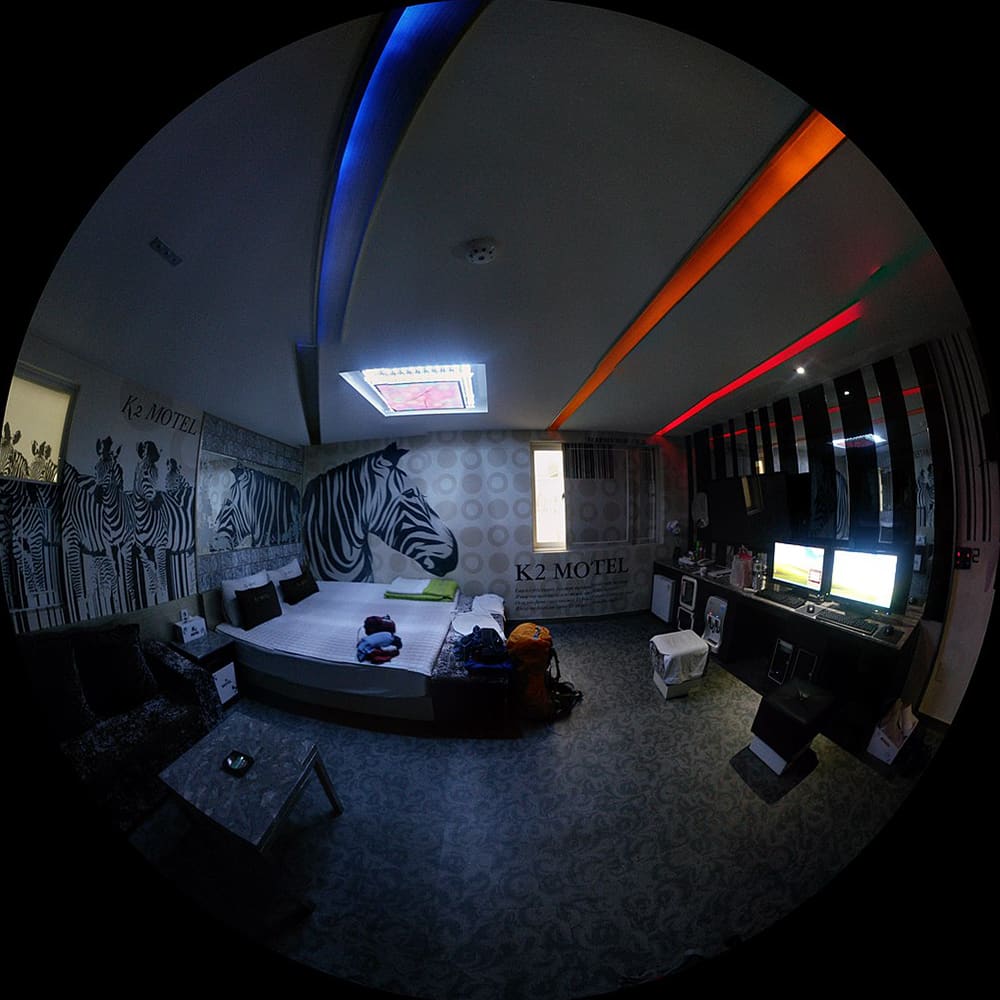
This kind of illegal recordings can happen in public places, or in any other places where the perpetrators have access to.
Places include, and not limited to, public toilets and bathrooms, hotel and motel rooms, changing rooms, hospitals, saunas and spas, on the streets, at swimming pools, and more.
To make the recordings, the perpetrators can use pin hole cameras, which are tiny cameras with very tiny lenses, and place them on strategic places, like beneath the toilet seat, at the toilet bowl, behind the toilet near the trashcan, beneath tables, behind a clock, inside TV sets, at wall sockets and cloth hangers, hairdryers, behind two-way mirrors, and more.
Sometimes, these cameras are equipped with fisheye lens, which allow them to have a wider view of the subjects, even in tight spaces.
Those tiny spycams can be so small, that they can even be placed inside pens and watches, increasing their portability.
Footage of molka include, and not limited to, people changing their clothes, upskirts, to full nudity of the subjects, to even include people urinating, and defecating, and also footage of people engaged in various sex acts.
In one instance, suspects were caught in an alleged molka campaign, where they were accused of hiding hidden cameras inside dozens of rooms at 30 hotels located in 10 South Korean cities.
They were arrested after their scheme, which recorded videos of more than 1,000 hotel guests across South Korea, and livestreamed them to online subscribers.
Out of that many, hundreds were recorded having sex.
The arrest came a week after singer and TV celebrity Jung Joon-young admitted to have secretly filmed himself having sex with women and shared the footage online without their consent.
Cases can be so extreme that at least in once instance, a woman was filmed through her 22nd-story apartment window by a voyeurist on the rooftop of a nearby building.
At in of the cases, a man managed to sneak into a woman's apartment after finding out the door code through a hidden camera placed nearby, and then use the hidden camera to also record the woman while inside her apartment.
The growing threat from voyeurism in the country has also reached the celebrity-sphere, as described by a number of K-pop girl groups.
Jung Ye-rin, known mononymously as Yerin, a South Korean singer and actress, made headlines when she caught a fan in the act of wearing hidden cameras in the form of glasses.

According to the police, the number of molka-related arrests soared from 1,110 in 2010 to more than 6,600 in 2014, although the real number of cases is thought to be many times higher.
And between 2012 and 2017, out of the 16,201 people arrested between for making illegal recordings, 98% were men.
84% of the 26,000 recorded victims over that period were women.
Even during COVID-19 pandemic, perpetrators were still conducting their activities because the demand was still high.
Cases were so severe, that the President of South Korea, Moon Jae-in, has acknowledged that illegal spycam 'trend' had become "a part of daily life" and called for tougher penalties for perpetrators.
Whereas offenders could face a fine of up to 10 million won, or a maximum prison sentence of up to five years, many argued that the law is not implemented at full force because many offenders have ended up paying only modest fines, and some even got away without any punishment.




Because of this, hundreds of thousands of people have signed petitions, calling the police force to properly investigate all molka allegations.
Most of the protesters, which are women, have taken it to the streets of Seoul, in what local media reported as the biggest women’s rights demonstration in South Korea’s history.
Women’s rights campaigners also want tougher penalties, saying that voyeurists should not be let off lightly just because they stop short of an actual physical assault.
The protest was called after a woman was arrested and paraded in front of the media, after she was found secretly filming a nude male model during a university drawing class and posted the video online.
The speed of her arrest led to accusations from an anonymous collective that organized the Right to be Uncomfortable march, which argues that the law has a double standard, and considers female victims to be different than male victims.
In response to the protest, the police have also denied people's accusations that they fail to take women’s complaints seriously, citing the difficulty of verifying the allegations based on footage because many of them don't show the victims' face.
This happens because in many of the videos, they're often focused on the lower side of the body, especially the subjects' nether regions, and not the face.
The South Korean government said it would take preventative measures, including manual checks on tens of thousands of public toilets, and inspections of public buildings.
In September 2018, for example, the Seoul city government increased its public toilets and bathrooms inspection by assigning 8,000 employees to inspect the city's 20,000+ toilets and bathrooms on a daily basis, a massive increase from the previous 50 employees and monthly inspections.
It was during this activity, that many more spycams were discovered.
The thing about this inspection, according to police, many of the spycams they found were actually installed for short periods of time, maybe as brief as 15 minutes, mainly because the perpetrators may only want to target a few of their targeted victims, or because of the portability of the cameras which have small battery capacity.
All of which may mean that they have to be retrieved sooner than later.
While this means that the perpetrators should be nearby, it's still difficult to really catch them.

In the world where the internet has taken the entirety of Earth, it's disheartening for the victims to experience and endure the emotional and psychological pain, and social embarrassment.
Whereas many people have faced offline consequences of their online activity, like losing their jobs, or got expelled from their studies or their society, got divorced, or put shame to their family and friends for posting something they shouldn't, these molka cases can affect victims the same way, in which going about one’s day-to-day life offline leads to violations of one’s online self.
The subjects of molka are victimized for merely existing offline and are unaware that their privacy and dignity have been violated until someone recognizes them in the footages and lets them know.
And in South Korea, a country that has one of the highest suicide rate in the world, this is certainly not a good news.
Nearly one in four women who has been harassed or secretly filmed has thought about committing suicide, according to a survey of 2,000 victims by the Korean Women’s Development Institute, a government think tank.
Lee Yu-jung, one of the victims, took her own life after a colleague secretly filmed her in the changing room of the hospital where they both worked. Her death was South Korea's first reported ‘spycam’ death.
Molka and the so-called revenge porn is not the same. Whereas revenge porn is about releasing or leaking private photos and/or videos of former partners, molka is about distributing photos and/or videos of people the perpetrators don't personally know.
Around the world, sexual predators have capitalized on technology to target women, and molka is just one of the many byproducts that came following the internet.