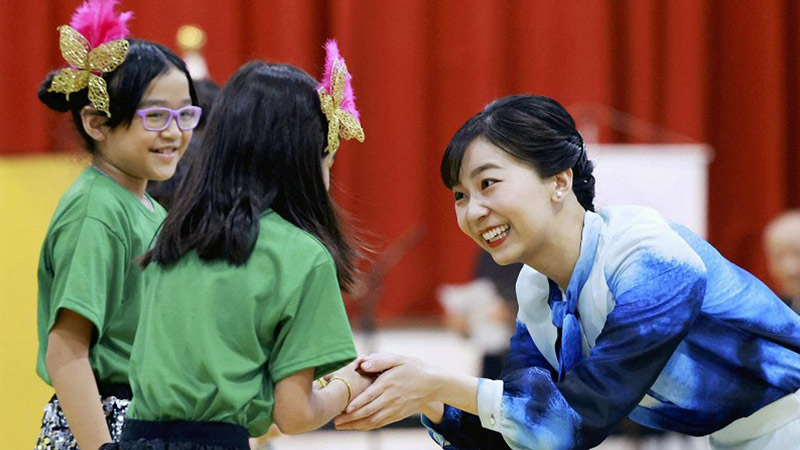
Princesses, much like Kings, Queens, and other members of royal families, often seem distant—enshrouded in centuries of tradition, ceremony, and public expectation. Born into worlds defined by rigid etiquette and duty, their lives are endlessly observed, scrutinized, and shaped by the institutions they represent.
Travel for royals is no ordinary affair; it is a carefully choreographed blend of privilege, protocol, and often, surprising impracticality. For senior royals, every journey is executed with military precision: security, diplomatic clearances, itinerary planning, and media management all interlock seamlessly. Simply put, when royals travel, it isn’t a trip—it’s an operation.
But Princess Kako of Akishino tells a different story.
During her official 11-day diplomatic tour of Brazil—commemorating 130 years of Japan–Brazil relations and covering eight cities—a candid video captured a quietly powerful moment: Princess Kako, daughter of Japan’s Crown Prince and Crown Princess, seen traveling in economy class on a domestic flight.
Her head rested gently against the window, eyes closed in calm exhaustion—a rare and deeply relatable glimpse of imperial grace in its most human form.
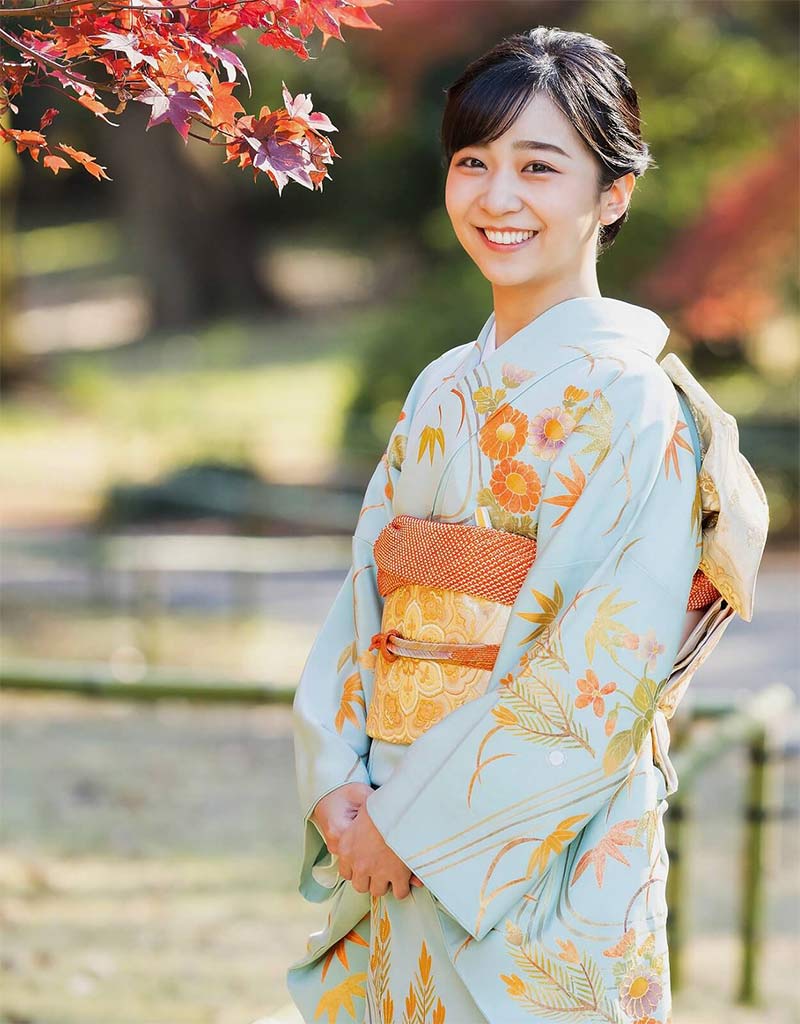
Born on December 29, 1994, at the Tokyo Imperial Palace’s hospital, Kako Naishinnō is the second daughter of Crown Prince Fumihito and Crown Princess Kiko.
She is niece to Emperor Naruhito, sister to former Princess Mako (now Mako Komuro), and elder sister to Prince Hisahito. Educated at prestigious Gakushuin schools and later at International Christian University and the University of Leeds, her academic interests have spanned performing arts and psychology, reflecting a multifaceted intellect.
Princess Kako’s public role has steadily grown in prominence.
Following her sister Mako’s marriage in 2021, Kako assumed honorary patronage of the Japan Tennis Association and presidency of the Japan Kogei Association. She actively supports inclusivity initiatives with the Japanese Federation of the Deaf and champions sustainability, gender equality, and regional cultural engagements. Her calendar in 2023 alone included 58 public appearances in Tokyo and additional visits across Japan’s regions.
Her international duties began with solo visits to Austria and Hungary in 2019, followed by Peru in 2023 and Greece in 2024. Her trip to Brazil in June 2025 was historic—the first official visit to the South American nation by a Japanese imperial family member since Princess Mako’s in 2018.
When a monarch—such as a king or queen—travels abroad on the formal invitation of another nation’s head of state, the journey is known as a State Visit—the pinnacle of diplomatic exchange, complete with ceremonial honors, military salutes, state banquets, and speeches.
For other royal family members, including princes and princesses, international trips are often termed official visits or royal tours. These engagements carry diplomatic, cultural, or charitable significance but lack the full ceremony of a state visit.
In either case, royals never travel unaccompanied. Their trips are supported by meticulously coordinated entourages—personal aides, security officers, logistics experts, and stylists—ensuring every detail is flawless, from security to wardrobe.
The British royal family, for example, often uses the RAF Voyager, a military aircraft dedicated to government and royal travel. In contrast, monarchies in oil-rich nations such as Saudi Arabia or Brunei favor private jets lavishly adorned with gold, marble, and opulent furnishings.
Every monarchs have their standards.
Vajiralongkorn, the tenth monarch of Thailand from the Chakri dynasty, even took this to another level, and made headlines on the internet when he was seen wearing a crop top.
Yet the Japanese imperial family is known for a more understated approach to travel—and life.
Princess Kako exemplifies this modesty. She has been spotted flying commercial airlines multiple times, a choice rarely seen among royals on official business. Of course, modesty here is relative: she is never truly “just a passenger.” Accompanied by staff and protected discreetly by security embedded among other travelers, her presence is quietly safeguarded.
It is crucial to recognize that Princess Kako is far from unique in flying economy class. Catherine, Princess of Wales, has been spotted flying economy during private family holidays, sometimes drawing applause for her humility. Prince William, Zara Tindall, and other European royals have similarly taken budget or commercial flights, usually maintaining a low profile. Kate’s trip to Scotland with her children, blending effortlessly with other passengers, was widely admired as an eco-conscious, hands-on parental image.
Swedish and Dutch royals also frequently travel commercially, often in business class for personal journeys.
So, why did Princess Kako’s economy flight spark such viral attention?
It wasn’t merely the class of her seat. It was the moment itself.
First of, her travel was far from leisurely.
Princess Kako’s trip from June 5 to June 15, 2025, was an official 11-day tour of Brazil, conducted at the invitation of the Brazilian government. The visit celebrated 130 years of diplomatic relations between Japan and Brazil, and marked the first official journey to Brazil by a Japanese imperial family member since her sister’s 2018 visit.
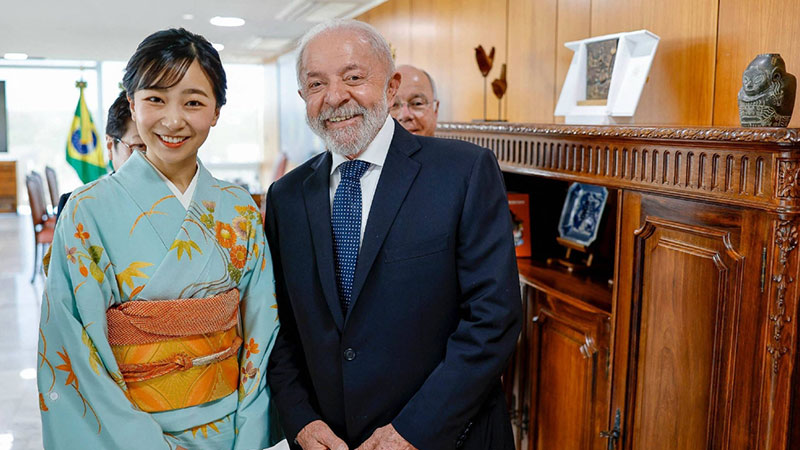
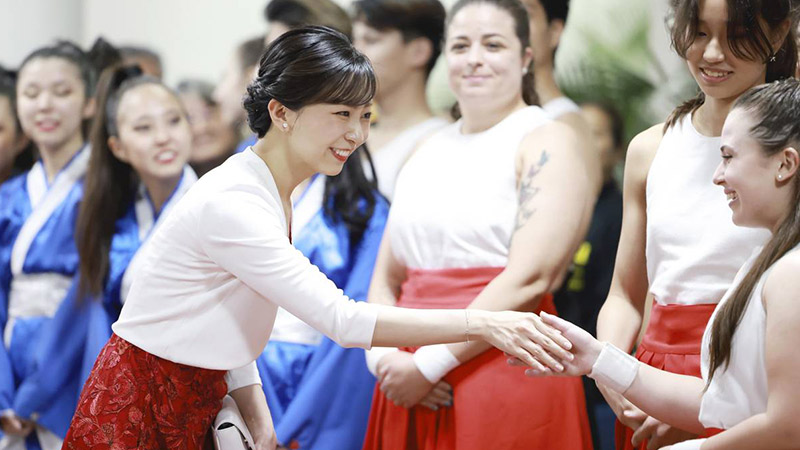
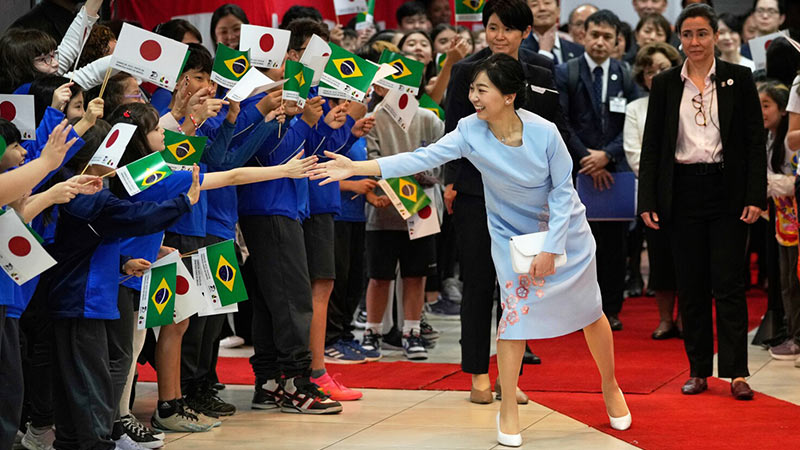
During her stay, she received São Paulo’s highest state honor—the Order of Ipiranga—shortly after arriving. She paid tribute to early Japanese immigrants at the Ibirapuera Park memorial, planted a cherry tree at the Japanese Pavilion, and engaged with the Japanese-Brazilian community through school visits and cultural events. The tour culminated in a celebration at the Brazilian Congress marking the diplomatic milestone, including a private audience with President Luiz Inácio Lula da Silva.
In essence, Princess Kako was on a state visit of significant diplomatic importance, bridging two nations with shared history and mutual respect.
But what truly hits, is the candid photo that caught her mid-flight—eyes closed, head resting gently against the window—unguarded and without any hint of royal presentation.
No polished PR, no stiff protocol. Just a young woman, weary after a packed day of diplomatic engagements, taking a brief moment to rest.
That image resonated deeply. While the world is familiar with royal formality and composure, what it glimpsed in Princess Kako was rare: vulnerability. Exhausted yet serene, intimately human.
In that quiet instant aboard a Brazilian domestic flight, where she went to the lavatory like anyone else in the flight, brushed shoulders with other passengers and crews, and ate and drank whatever provided onboard the flight, she connected with the public more profoundly than any official speech or orchestrated appearance could.
It was this intimate glimpse of quiet exhaustion that instantly captivated the world—peeling back the polished veneer of royal protocol to reveal something profoundly human. In that unguarded moment, Princess Kako embodied a feeling that millions could recognize: the simple, universal fatigue of a long journey.
A scene not of privilege, but of shared experience—one that ordinary people around the world could genuinely relate to.
Princess Kako reminded us all that even those born into privilege, title, and tradition experience the universal need to pause and simply rest.
When the photo of her mid-flight rest surfaced, the reaction was one of warmth and admiration.
Many praised her humility in choosing economy seating and finding time to rest during a demanding schedule, calling her modest and down-to-earth. Admirers likened her to a delicate “porcelain doll,” visibly tired but steadfast.
At the same time, the Imperial Household Agency expressed concern over the unauthorized capture of this private moment, emphasizing the need to respect her privacy.
Ultimately, that fleeting glimpse humanized Princess Kako, revealing a young woman dedicated to her duties yet refreshingly authentic and approachable. She gracefully navigates the delicate balance between time-honored tradition and modern sensibility, embodying a royal presence both compassionate and sincere.
In that quiet moment on a Brazilian flight, Princess Kako became someone we all could recognize: a royal striving, caring, and simply in need of a well-earned nap.