
Elon Musk executed one of the most audacious corporate maneuvers in modern history: SpaceX, his pioneering rocket and satellite company, officially acquired xAI, his fast-rising artificial intelligence venture.
The all-stock transaction created a combined entity valued at an astonishing $1.25 trillion, instantly crowning it the world's most valuable private company. SpaceX was valued at $1 trillion in the deal, while xAI came in at $250 billion, marking this as the largest merger ever recorded and dwarfing previous blockbuster tie-ups across tech and industry.
The announcement came via a statement on SpaceX's website, accompanied by a memo from Musk himself, where he framed the union as a natural evolution of his long-term vision.
He has repeatedly emphasized the severe limitations facing AI development on Earth: skyrocketing energy demands, constrained solar exposure, regulatory hurdles, and the sheer scale of infrastructure required for next-generation models.
By folding xAI into SpaceX, Musk aims to leapfrog these barriers entirely.
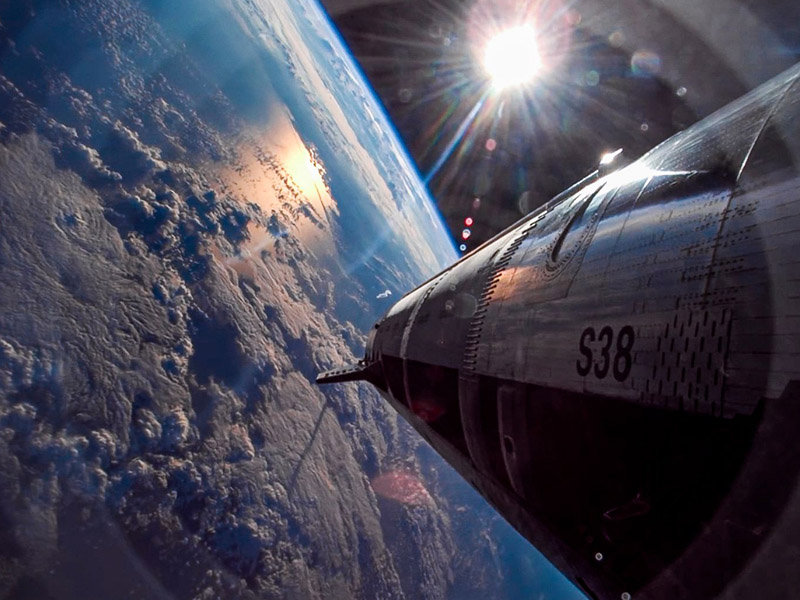
The merged company will pursue orbital data centers powered by constant, unobstructed sunlight in space, delivered via Starlink's vast satellite constellation and potentially scaled through future Starship launches.
Musk described the new powerhouse as "the most ambitious, vertically integrated innovation engine on (and off) Earth," with early priorities including AI-capable satellites and long-range goals that extend to lunar bases, Mars settlements, and humanity's multi-planetary future.
This isn't mere speculation; Musk has long drawn inspiration from science fiction giants like Arthur C. Clarke and Isaac Asimov, viewing space-based compute as the logical next frontier for sustaining exponential AI growth.
The timing feels deliberate.
Whispers of a SpaceX initial public offering had intensified since late 2025, with reports pointing to a potential mid-2026 debut that could raise tens of billions and value the company north of $1.5 trillion in some optimistic scenarios.
By absorbing xAI first, Musk crafts a more compelling story for future public investors: a unified platform blending proven space hardware, satellite broadband dominance through Starlink, and cutting-edge AI capabilities via Grok and beyond.
The merger also follows xAI's earlier absorption of the social media platform X (formerly Twitter), creating tighter synergies across Musk's ecosystem.
To the stars!@SpaceX & @xAI are now one company https://t.co/2SPVVhZQsp
— Elon Musk (@elonmusk) February 3, 2026
While Tesla remains separate as a public company, though it has invested billions in xAI and pursues overlapping AI goals in robotics and autonomy, analysts speculate this could foreshadow a broader "Musk trinity" down the line, even if regulatory and shareholder complexities make such a step far from guaranteed.
The financial ripple effects have been seismic, particularly for Musk personally.
Forbes and other trackers quickly updated estimates, pushing his net worth to approximately $852 billion in the immediate aftermath, making him the first individual in history to surpass the $800 billion threshold.
Much of this surge stems from his controlling stake (around 43%) in the combined SpaceX-xAI entity, now worth over $500 billion to him alone, supplemented by his Tesla holdings and other ventures.
Bloomberg's Billionaires Index placed him firmly atop the list, with the gap to the second-richest widening into something almost abstract.
Whoever said “money can’t buy happiness” really knew what they were talking about
— Elon Musk (@elonmusk) February 5, 2026
Yet Musk, ever the contrarian, took to social media with characteristic wryness, posting that "Whoever said ‘money can’t buy happiness’ really knew what they were talking about." The quip underscores a recurring theme: his drive appears rooted less in personal fortune than in existential missions—sustainable energy, preserving consciousness through multi-planetary life, and building truth-seeking AI.
Praise for the move has centered on its sheer scale and foresight, positioning Musk to outmaneuver rivals like Google, Microsoft, Amazon, and OpenAI in the race for AI dominance.
The integration of rocket reusability, massive satellite networks, and AI compute could unlock efficiencies no terrestrial player can match.
Skeptics, however, point to practical challenges: orbital data centers remain largely theoretical, with immense hurdles in latency, radiation hardening, heat dissipation, and launch economics. Regulatory scrutiny looms large, given past controversies around Grok's outputs, antitrust concerns in Musk's consolidated empire, and the unprecedented power concentrated in one private entity.
Some critics even dismiss parts of the vision as vaporware, noting how valuations ballooned dramatically for the merger despite no fresh external capital.
Still, the deal reinforces Musk's signature pattern of relentless integration and bold risk-taking.
From reusable rockets revolutionizing access to space, to Starlink blanketing the globe with internet, to Grok challenging established AI chatbots, his companies have repeatedly defied conventional timelines.
Now, with SpaceX-xAI as a single colossus hurtling toward a historic IPO, the stakes feel higher than ever. This merger doesn't just combine balance sheets; it fuses two of humanity's grandest frontiers, space exploration and superintelligent machines, under one roof.
Whether it delivers on the promise of orbital intelligence or encounters cosmic roadblocks, it marks a pivotal chapter in Musk's quest to reshape civilization's trajectory, one audacious step (and valuation leap) at a time.