The Earth is huge. With the advancements of technology, the internet and satellites, it's easy to venture to any part of the world. But apparently, not every part of it is explored.
In particular, not everything out of the unknown must be known.
Some things are meant to be left alone.
John Allen Chau was a man in his 20s. He was an explorer, but with a huge passion in spreading his faith.
He ventured when only a small number of people have ventured before him. But unfortunately for the young man, this led to his demise.
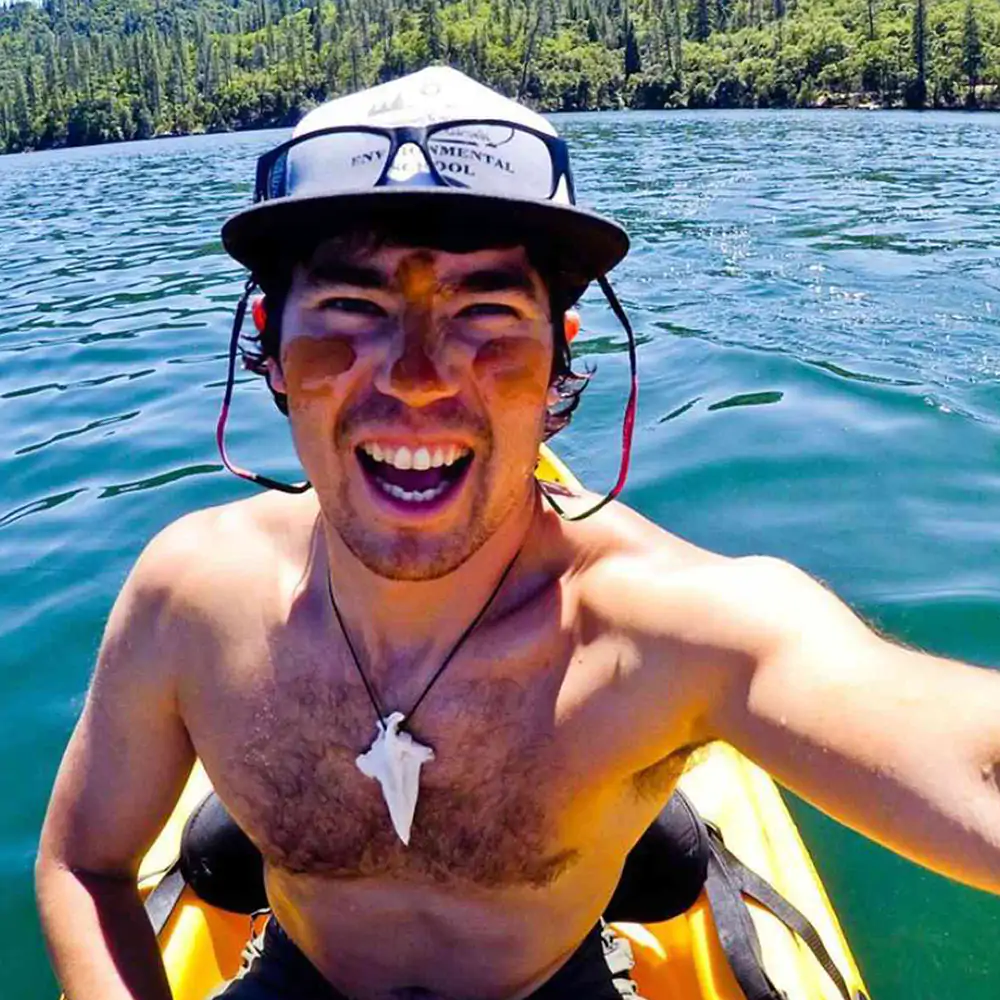
John Chau wasn't an influencer in the conventional sense.
Chau was relatively unknown.
But after his death, and as the internet mourned, he became famous for what he did.
Instead he was a Christian missionary.
And with a passion for spreading his faith, he embarked on a journey to North Sentinel Island, which he thought could be "Satan's last stronghold on Earth," with the goal of living with the Sentinelese, and "establish the kingdom of Jesus on the island."
He came prepared.
It all began a year earlier, in 2017, when Chau participated in a "boot camp" missionary training, where he first became interested in visiting native tribes.
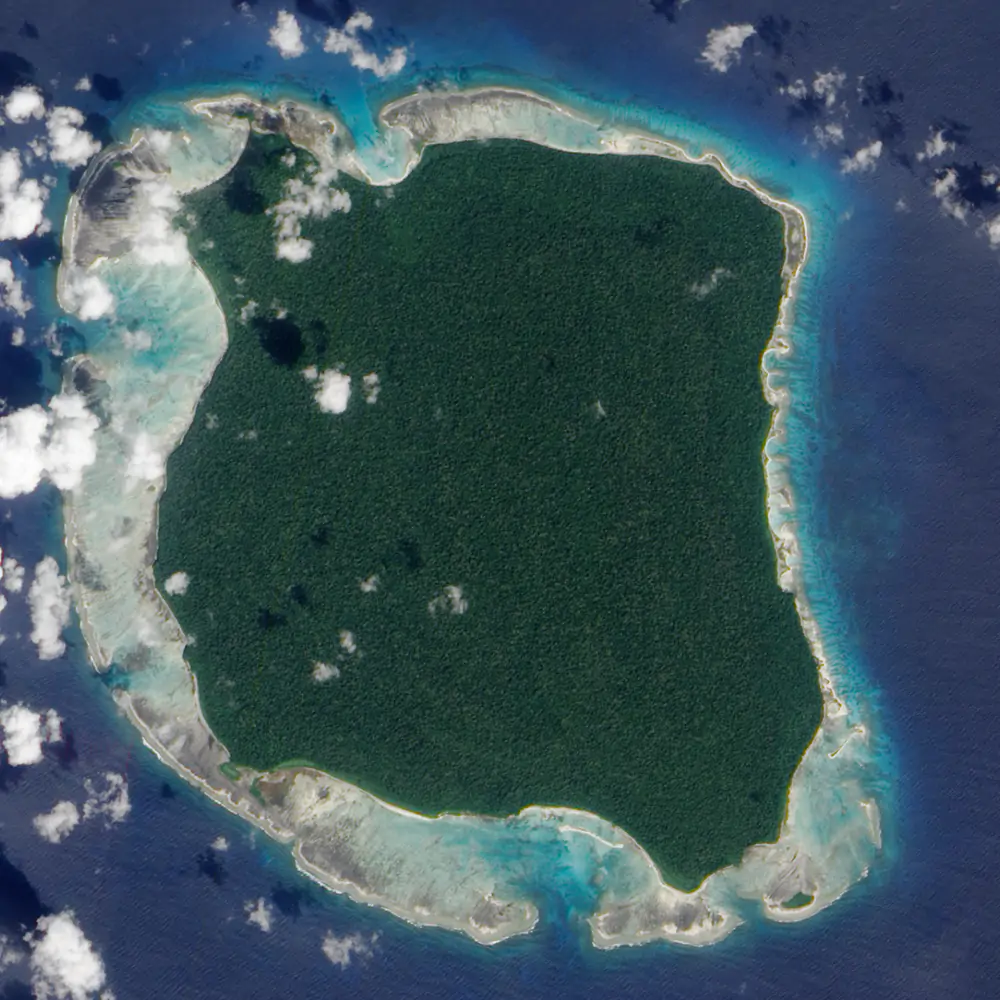
And the North Sentinel Island, which is one of the Andaman Islands, an Indian archipelago in the Bay of Bengal which also includes South Sentinel Island, is the place he thought he must go.
While visits to the island are documented, not that many information can be gathered about the island's inhabitants because the tribe at the North Sentinel Island is regarded as one of the most secluded tribes on Earth, and has been there since at least 30,000 years.
The island, which is uniquely squarish in shape, is far from the crowded space of ships and airplanes, and its location makes it even rarer for anyone to visit it.
But whoever for whatever reason came to the vicinity of the island, is urged to not approach it closer than 5 nautical miles.
According to the Andaman and Nicobar Islands Protection of Aboriginal Tribes Act of 1956, this is to protect the remaining tribal community from "mainland" infectious diseases against which they likely have no acquired immunity.
It's also said that visiting North Sentinel Island without government permission remained illegal under the regulation.
Chau here, disobeyed those rules.
It was in October 2018, that Chau traveled Port Blair, the capital city of the Andaman and Nicobar Islands, which serves as the main entry point for visiting the Andaman and Nicobar Islands.
Chau established a residence there, and prepared everything he could for his journey and his initial contact with the tribe.
Chau also took cues from Indian anthropologist named T. N. Pandit, who became the first man who made peaceful contact with Sentinelese was in 1967. While his several encounters with the native tribe weren't exactly "friendly," but he managed to get close to them for physical contact. Pandit did this by giving the people gifts, which were handed to the tribes at the beach.
Chau attempted to do the same by also bringing them gifts.
According to Chau's diary, he expressed his desire to convert the tribe to Christianity, even if that would cost his life.
Chau was aware of the legal and mortal risks he was taking by his efforts.
"Lord, is this island Satan's last stronghold, where none have heard or even had the chance to hear your name?", "The eternal lives of this tribe is at hand", and "I think it's worthwhile to declare Jesus to these people. Please do not be angry at them or at God if I get killed ... Don't retrieve my body."
To do what he had to, in November 15th, Chau paid two fishermen ₹25,000 (~$300) to take him near the island.
The fishermen only dared taking him about 500 meters from the shore, and warned him to not go any further. Chau didn't listen, and canoed to the shore with a bible.
Chau soon retreated after facing hostile responses.
Next day, on November 16th he returned to the island for his second visit. This time, according to his diary, he made contact with the tribe, and saw that the islanders were both amused and hostile to him. He tried singing worship songs to them, and attempted to communicate with them, all of which to no proper response.
He tried other methods, but only made them laugh.
Chau who had no idea what language the tribe uses, stated that they communicated with "lots of high-pitched sounds" and gestures.
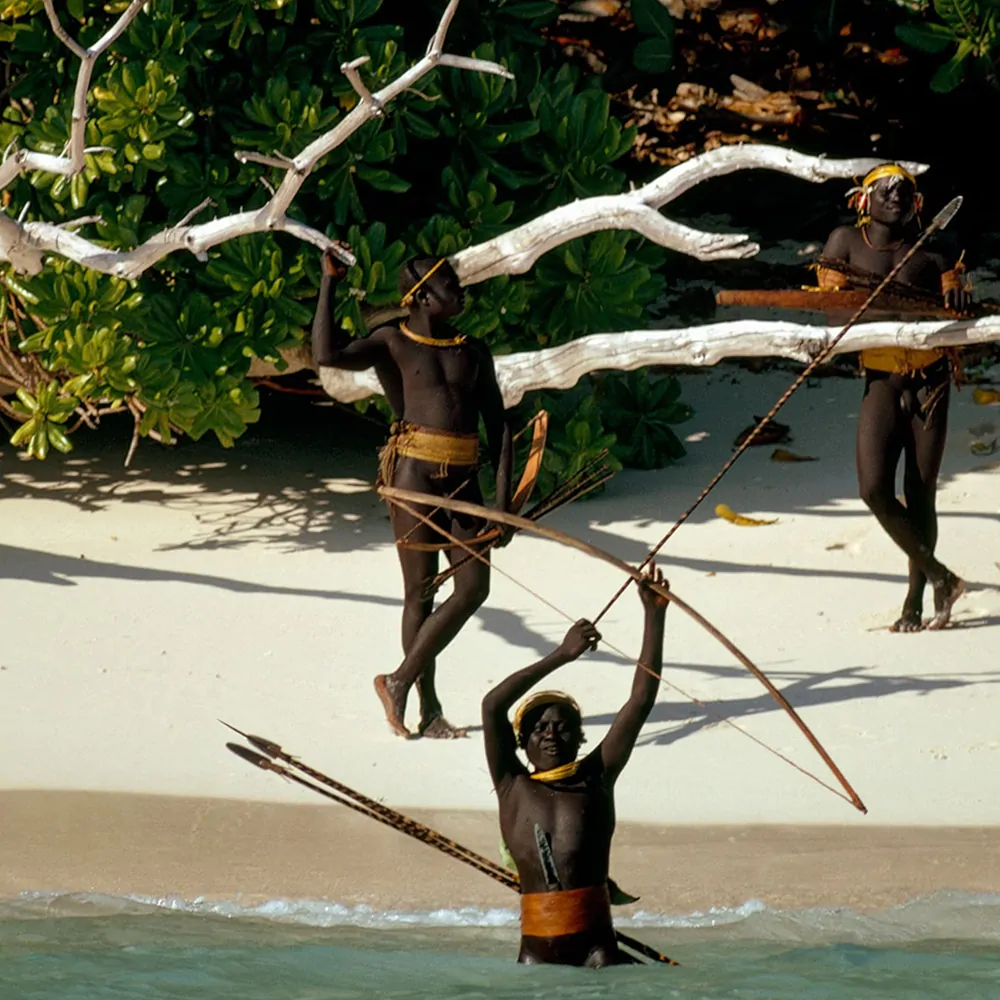
Then, when he tried to approach one of the people with fish and gifts, a boy shot an arrow to him, which pierced the bible he was holding in front of his chest.
Chau retreated again.
The next day, on November 17th, Chau returned to the island once again, but unlike the days before, he instructed the fishermen to not wait for him.
This was the last time Chau was seen alive.
This is because the fishermen later saw from a far, that Chau's deceased body was dragged and was later buried on the shore.
While Chau might not have been an influencer in the typical social media sense, his actions and the subsequent discussions around them did influence public discourse on issues such as cultural respect, the rights of isolated tribes, and the risks associated with missionary work in such sensitive areas.
The isolated Sentinelese people are long known for their their hostility towards outsiders, and appear to have consistently refused any interaction with people that aren't their own.
They are hostile to outsiders and have killed people who approached or landed on the island, and this can be traced back in the 18th century.
Because of what he did, and due to the controversial nature of his mission, Chau gained attention globally.
After he was presumed dead, the fishermen returned to Port Blair, and gave Chau's diary to his friend. The person then contacted Chau's family in the U.S., who then contacted contacted the Consulate General of the United States in Chennai for assistance.
The Andaman government was notified a few days later, and after that, the police issued a restriction to anyone wishing to visit or even come close to the North Sentinel Island.
The Andaman government, aided by the Indian government, attempted to recover Chau's body, but failed dur to the tribe's hostile encounters.
Eventually, the authorities abandoned the effort, because the risk of a clash was too great to justify any further attempts.
While a murder case was opened following this, the legal charges for the murder were criticized. Many said that Chau's death should serve as a warning, and to also urge the government to have a more strict rules.
Chau's family blamed Chau's death on the missionary community for inculcating Chau an extreme Christian vision. But upon reading the diary, the family began to understand that Chau was doing what he wished, and that everything he did was not forced.
In one way or another, and after Chau's family refused to continue this case, people began considering Chau as a martyr.
Before his first visit, Chau was vaccinated and underwent self quarantine.
Chau's knew that his visit to the island could bring new diseases to the tribes, which could be deadly to them. Without literally no contact with the outside world, the natives live and thrive by cultivating what they can find on the island, and that they're never exposed to anything outside the island.
So here, he did everything he could to prevent bringing pathogens that are foreign to the native Sentinelese.
But what he did was not enough, because visiting the North Sentinel Island is already a violation in the first place.
What this means, even though Chau did whatever he could, the contact he made is considered an uncontrolled contact.
His death could be avoided, if only he obeyed the rules.
Born in 1991, Chau was only 26-years-old when he died.