
In today’s hyperconnected world, social media has become an inseparable part of everyday life.
From sharing personal moments to building global communities, platforms like Facebook have completely transformed how people interact.
One of Facebook’s most powerful features is 'Groups'—virtual spaces where people with shared interests, goals, or curiosities can gather, interact, and build their own mini-communities. Whether it’s a fan club, a professional forum, a hobbyist corner, or even niche fantasy discussions, Facebook Groups have become a digital home for all sorts of social exchanges.
And this time, the emergence of a Facebook groups about incest fantasies has sparked widespread outrage in Indonesia.
This leads to government intervention and police investigations.
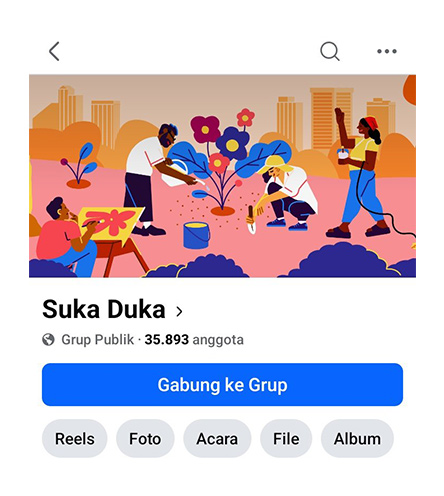
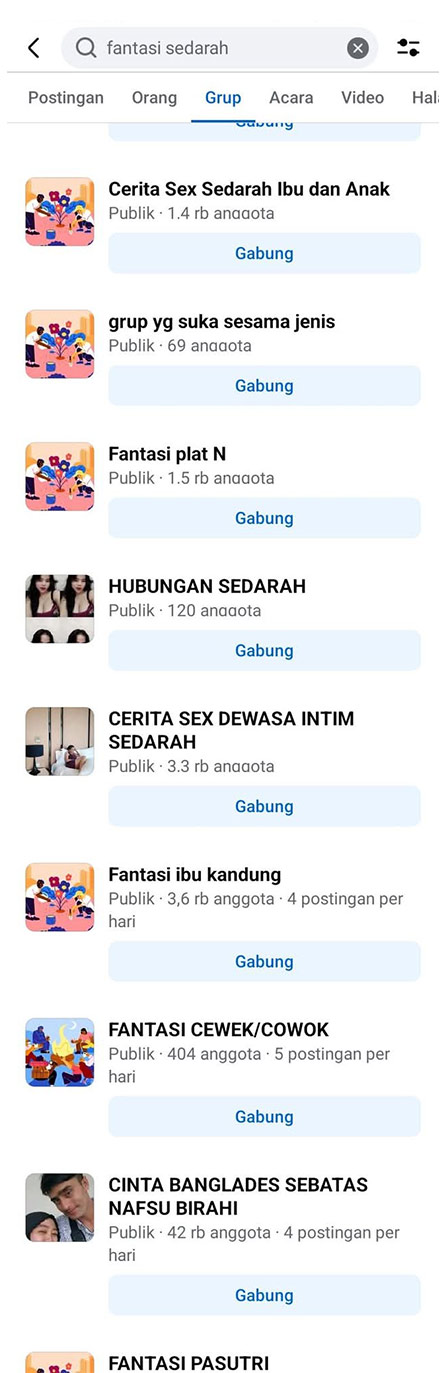
These groups, most notably, Fantasi Sedarah (Incest Fantasy), were discovered by vigilant internet users who reported their disturbing content to authorities.
The groups, some with over 30,000 members, allegedly shared explicit discussions, fictional stories, and even personal accounts of incestuous experiences, violating both Indonesian law and social norms.
Posts include things about having sex encounter with parents and so forth, and worse, with own prepubescent children.
The groups went viral after public backlash on social media, with users condemning the content as exploitative and harmful, particularly due to suspicions that minors were targeted.

The authorities emphasized that the discussions not only promoted illegal fantasies but also risked normalizing abusive behavior.
Further investigations by Polda Metro Jaya (Jakarta Police) revealed that some members allegedly shared real-life incestuous encounters, prompting deeper scrutiny into potential criminal activity.
As a result of this discovery, the authorities are also working with digital forensics to trace the groups' creators and track their most active participants.
Meanwhile, politicians like Ahmad Sahroni of Indonesia’s House of Representatives have demanded stricter enforcement, calling the groups a "danger to society" that must be eradicated.
"This act is utterly disgusting," he said.
"Therefore, I urge the police and the Ministry of Communication and Information to investigate and take action against the administrators and members of this repulsive group."
The Indonesian Ministry of Communication and Digital Affairs confirmed the discovery and swiftly collaborated with Meta to shut down at least six such groups, citing violations of Government Regulation No. 17/2025 on Child Protection in Digital Spaces 322.
"Ensuring children’s safety online is not solely the government’s or platform’s responsibility. Public participation is equally crucial. We urge citizens to report harmful content throughaduankonten.id," he said.
The ministry said it will intensify monitoring efforts and strengthen partnerships with tech platforms and civil society to prevent the spread of illicit content and promote child protection in the internet.
The controversy highlights ongoing challenges in moderating harmful online content, even as platforms like Facebook enforce bans.
The controversy also raises critical questions: Should Facebook ban all such content, even if labeled as "fantasy"? How can platforms better detect and remove harmful communities before they go viral? One thing is clear—this disturbing trend has exposed the dark side of online anonymity, where taboo desires find dangerous validation.
There are also heated debates over online moderation, child protection, and the dangers of normalizing abusive fantasies.
Public awareness campaigns, such as the government’s aduankonten.id reporting system, aim to empower citizens to flag inappropriate material, though critics argue more proactive measures are needed to prevent such groups from resurfacing.
But still, there is so many things to do, but with little results.

Despite knowing it’s illegal and widely condemned, some people still create and share harmful content like incest or child exploitation material due to complex reasons. Many struggle with deep psychological disorders or deviant desires that cloud their judgment and make them justify their actions.
The internet’s anonymity gives them a false sense of security, allowing them to hide and act without fear of consequences. Within secret online groups, this behavior is often normalized and even encouraged, which dulls feelings of guilt and makes them feel accepted.
For some, it becomes a compulsive addiction where they seek more extreme content to satisfy their urges, blurring the lines between fantasy and criminal reality. This dangerous cycle is driven by a mix of psychological issues, social reinforcement, and the hidden nature of the internet.
In other words, this case literally shows how blurry the line is between fantasy and criminal behavior.
It serves as a grim reminder of the dark side of online anonymity and the urgent need for stricter platform enforcement.
About a week after the news went viral, the authorities reported that they managed to track and arrest six administrators of the Facebook groups.

Indonesia’s Child Protection Commission (KPAI) is urging for severe punishment against those involved in circulating disturbing incest-themed content within the online groups.
"I appreciate the authorities' patience in handling such a complex case. Several suspects have already been identified," said KPAI Chairperson Ai Maryati Solihah on Wednesday, May 21, 2025.
According to her, the existence of these online groups is not merely about the spread of pornographic material. KPAI believes there is a deeper agenda—a propaganda effort aiming to normalize incestuous relationships.
"This isn't just ordinary pornography. It carries a disturbing message—a dangerous narrative that contradicts Indonesia’s social and religious values. This element of propaganda should be seriously considered by law enforcement when determining harsher sentences for those involved," she emphasized.
Beyond legal action against the perpetrators, KPAI is also advocating for psychological support and protection for the children who have been victimized or featured in such content.
"We’re working alongside the police to identify and profile these children so we can provide them with appropriate psychological assistance," she added. "KPAI is deeply concerned about the persistent violence faced by our children—not only are they subjected to direct abuse, but they are also victimized through online crimes."