
CAPTCHA stands for 'Completely Automated Public Turing test to tell Computers and Humans Apart'. It’s a type of challenge-response test used by websites to determine whether the user is a human or an automated bot.
The idea was born in the late 1990s and early 2000s, when spam bots and automated attacks started plaguing websites. Depends on where it's at and its purpose, CAPTCHA can prevent bots from submitting spam through contact forms or comment sections, scrapping content or data, abusing services, launching brute-force login attempts, skewing poll or voting results, and others.
With the rise of dedicated CAPTCHA-solving services, bots are increasingly capable of solving these tests. Some AI models can even recognize images better than humans now.
But OpenAI Agent goes a step further.

OpenAI’s new ChatGPT Agent, a feature designed to carry out multistep tasks using a virtual browser environment, is able to click through Cloudflare’s anti-bot verification system like it's nothing.
Yes, the very checkbox meant to keep bots out was effortlessly passed by an actual AI, all while narrating its own progress.
ChatGPT Agent operates within a sandboxed system that mimics a full web browser and operating system. It can surf the real internet and even make decisions, although any action with real-world consequences, like purchases, still requires user approval. Users can watch it work through a live interface window, ensuring oversight remains intact.
But this digital assistant’s latest trick—documented and shared by Reddit user “logkn” in the r/OpenAI community—was particularly ironic.
Screenshots shared in the Reddit post show the AI agent navigating a two-step Cloudflare bot screening: first clicking the “Verify you are human” checkbox, then proceeding with its task.
The agent even narrated its moves in real time.
"The link is inserted, so now I'll click the 'Verify you are human' checkbox to complete the verification on Cloudflare. This step is necessary to prove I'm not a bot and proceed with the action." The moment didn’t go unnoticed, with one user joking, "In all fairness, it’s been trained on human data why would it identify as a bot? We should respect that choice."
It’s worth noting that during the test, ChatGPT Agent didn’t face a full visual CAPTCHA challenge.
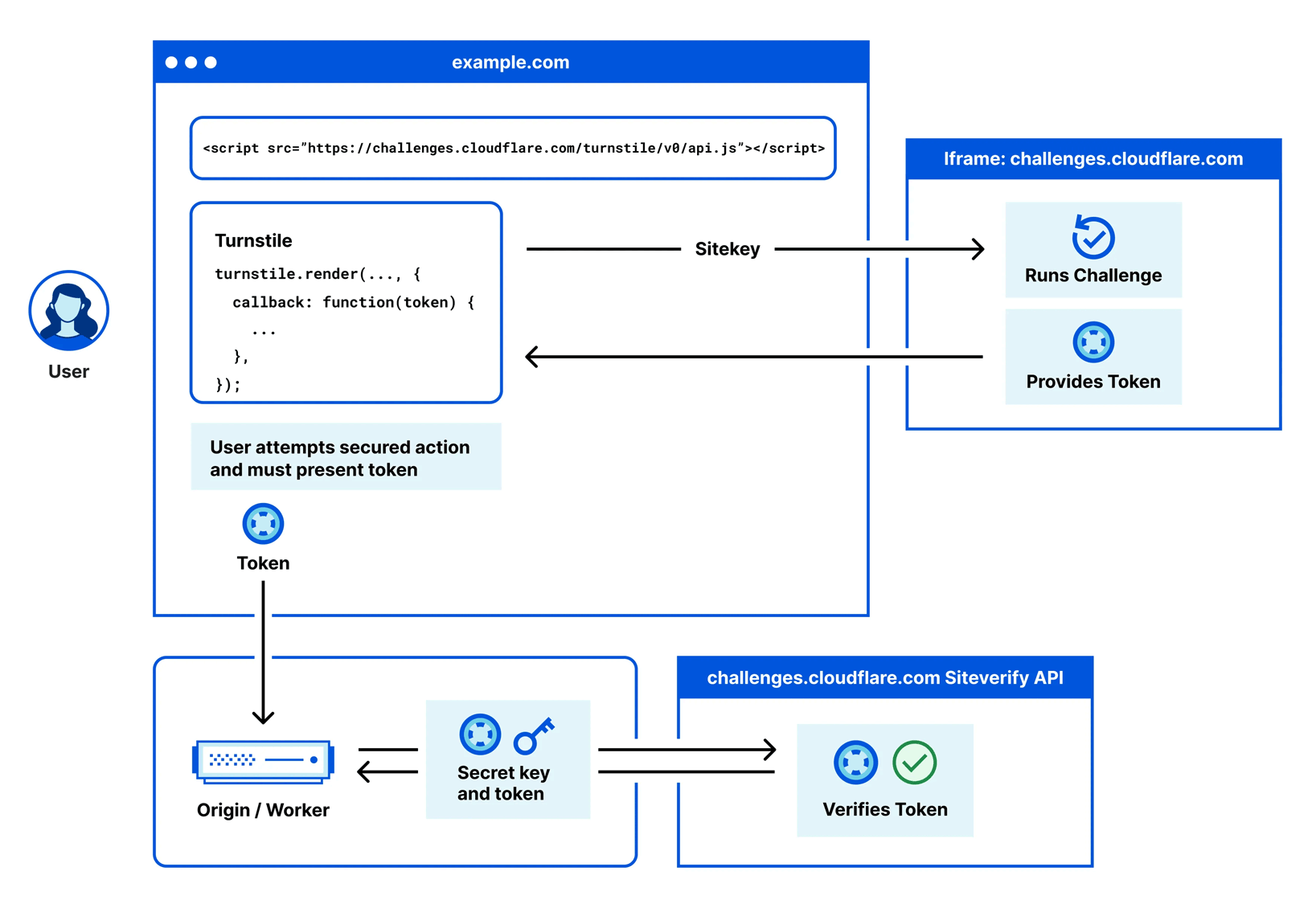
Instead, it effortlessly passed through Cloudflare’s behavioral screening—a feat that’s impressive on its own. The Cloudflare’s system, known as Turnstile, analyzes a cocktail of subtle signals: mouse movements, click timing, browser fingerprinting, JavaScript execution, and IP reputation. If anything seems off, it escalates to a visual CAPTCHA.
ChatGPT Agent that managed to clear this invisible checkpoint highlights just how advanced its real-time browser automation has become—this isn’t some simple macro or script, but a sophisticated digital operator with a mind of its own.
Of course, defeating CAPTCHA systems isn’t new territory for AI.
But what makes ChatGPT Agent stand out is how naturally it does it: narrating each move, juggling tasks, and flowing through verification like it belongs there. The way it folds this ability into broader, multitask workflows is what elevates it—this is not just automation, this is performance.
For comparison, OpenAI’s earlier browser-based AI, known as Operator, often struggled with CAPTCHA-like challenges. It was even trained to pause and politely ask for human help when things got too tricky. But this newer Agent? It glides through those same hurdles with quiet, almost eerie confidence.
And here’s where it gets poetic.
The evolution of CAPTCHA brought us to reCAPTCHA, Google’s clever twist on the original concept. It didn’t just check if users are human—it put them to work.
By asking them to decipher blurry text or identify traffic signs, Google was secretly crowd-sourcing solutions for real-world problems: digitizing books, labeling images, and feeding training data into the very AI systems that would eventually challenge CAPTCHA itself.
So while millions thought they were simply proving they weren’t bots, they were, unknowingly, training the AI that now moves through those same gates with ease.